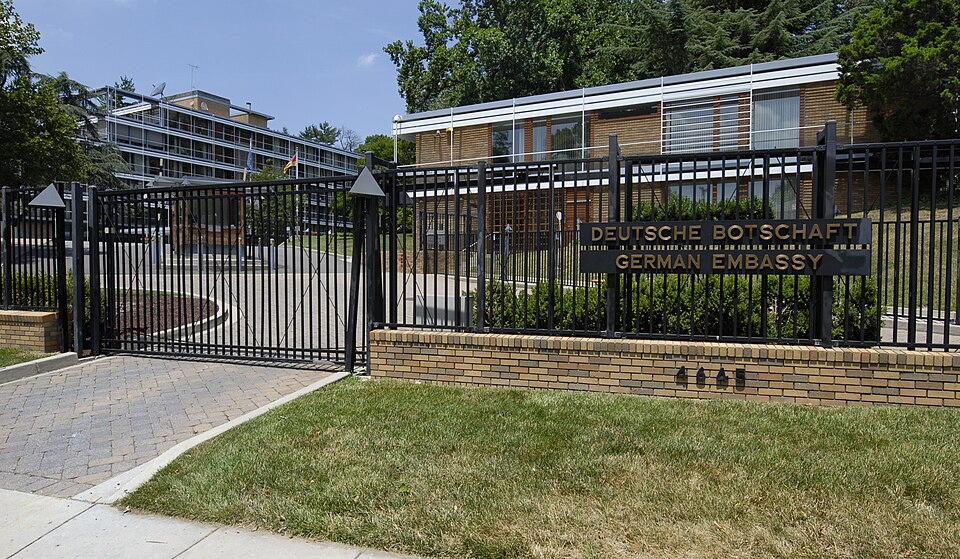
German companies sharply reduced their investment in the United States during the first half of 2026, with new direct investment falling to its lowest level in three years as uncertainty
over President Donald Trump’s trade policies weighs on transatlantic business ties.
Direct investment by German firms dropped by almost two-thirds compared with the same period last year, reaching €4.3 billion ($5 billion), according to calculations by the German Economic Institute (IW) based on data from the German central bank.
The figure represents an even steeper decline compared with the first half of 2024, when investment was almost four times higher. The latest data point to a continuing retreat in new German capital commitments to the US since Trump returned to the White House in January 2025.
“This continues the downward trend that has been evident since the start of Donald Trump’s second term,” IW researcher Samina Sultan said.
Trump’s return has been accompanied by a more confrontational approach to international trade, with the administration threatening or imposing tariffs on major trading partners in an effort to extract concessions from foreign governments.
The uncertainty has been particularly significant for European businesses with large US operations. Last year, the European Union agreed a trade arrangement with Washington designed to avert the threat of substantially higher tariffs on European exports. As part of that agreement, the EU committed to a $600 billion investment programme in the United States.
The latest German figures nevertheless underline the reluctance of companies to commit fresh capital.
During the five years before the Covid-19 pandemic, German companies invested an average of €15.8 billion in the US during the first half of each year — almost four times the amount recorded in the first six months of 2026.
IW cautioned, however, that comparisons with the pandemic years need to be treated carefully. Investment flows between 2020 and 2023 were distorted by the exceptional economic conditions created by Covid-19, with some years recording net outflows.
The composition of German investment in the US also offers a more nuanced picture.
IW researchers found that, during 2025, loans from German parent companies to their US operations and the reinvestment of profits generated in America were both unusually strong. By contrast, equity investment in the narrower sense — reflecting new capital injections against liquidations — remained below its longer-term average.
That suggests German businesses already established in the US have not abandoned the market.
“Companies that are already active in the United States are therefore continuing to reinvest the profits they earn there in the country,” Sultan said.
The pattern indicates that America remains an important and potentially attractive market for German companies, despite the increasingly difficult policy environment.
The more immediate concern is new investment. While established operations continue to receive funding, businesses appear increasingly cautious about committing additional capital while the direction of US trade policy remains uncertain.
For German industry, heavily dependent on international supply chains and exports, the figures highlight a growing divide between maintaining an existing US presence and making the long-term investment decisions needed to expand it.
The fall in investment also comes as Washington seeks to encourage European companies to move more production and capital into the United States — a strategy that has been central to the Trump administration’s trade agenda.
The latest data suggest that, for German businesses, uncertainty over tariffs and the wider direction of US economic policy is making that decision considerably harder. Photo by © Simon Mannweiler / Wikimedia Commons / CC BY-SA 4.0, Wikimedia commons.