
More than 6,000 additional pupils secure grade 7 or above in maths as overall GCSE performance edges higher
Thousands of young people across England are celebrating their GCSE results, with a sharp rise in high-level mathematics grades providing one of the clearest signs of academic progress in this year’s results.
More than 6,000 additional 16-year-olds achieved grade 7 or above in GCSE maths compared with last year. The Department for Education described the increase as the largest rise in top-end maths attainment on record, highlighting growing numbers of pupils reaching the standards expected for further academic study.
Overall GCSE performance also moved modestly upwards. The proportion of 16-year-olds achieving at least a grade 4 increased by 0.2 percentage points, although significant differences between regions and groups of pupils remain.
The results also point to stronger demand for technical education, as the government seeks to put vocational qualifications on a more equal footing with traditional academic routes.
There were almost 8,000 more Level 2 Technical Award passes this year than in 2025. The North West recorded 55,230 certifications, while Yorkshire and the Humber followed with 52,480.
Yorkshire and the Humber saw the largest regional increase, with 2,120 more technical certifications than a year earlier. Courses ranged from engineering and other technical subjects to health and social care.
For pupils receiving their results, the next decision could lead in several directions, from A levels and sixth-form education to T Levels, college courses, apprenticeships or employment.
The government says that choice will expand further. From next year, students will be able to take new V Levels alongside an expanded T Level programme and fully funded apprenticeships for people aged under 25.
Plans are also being developed to give 14-year-olds earlier exposure to technical education, workplace experience and links with employers in their local communities.
But beneath the headline improvements, ministers face a continuing challenge over educational inequality.
The latest figures show that the gap between regions remains substantial, while the government has pledged to tackle differences in attainment linked to geography and disadvantage. There has, however, been a modest narrowing of the gender gap, with the difference at both grade 4+ and grade 7+ falling by 0.2 percentage points.
Another focus is the number of teenagers repeatedly required to resit English and maths.
Among 17 to 19-year-olds, attainment rates have fallen to 18.8% in English and 13.6% in maths. Ministers argue that the current system can leave young people trapped in a cycle of repeated examinations without addressing the underlying gaps in their knowledge.
New Level 1 preparatory qualifications are planned to provide students with the basic skills needed before attempting another GCSE. Changes to school performance measures are also intended to ensure pupils are entered for examinations when they are genuinely ready.
The government is meanwhile directing additional resources towards schools and communities where educational outcomes remain weakest. New Regional Improvement for Standards and Excellence teams are being deployed, while 93 Attendance and Behaviour Hubs are intended to help schools create more stable learning environments.
Separate initiatives, including Mission North East and Mission Coastal, will focus on improving outcomes in some of England’s most disadvantaged communities.
Prime Minister Andy Burnham congratulated pupils receiving their results, saying that the next stage of education should offer young people a wider choice of routes into employment and further study.
Education Secretary Lucy Powell similarly welcomed the rise in top maths grades and the improvement in technical qualification results, arguing that pupils should be able to choose a route that matches their ambitions rather than being defined by a single academic pathway.
The government is also linking the education reforms to a broader programme aimed at reducing barriers faced by children and families. It says £4 billion will be invested in transforming support for children with special educational needs and disabilities, while expanded family hubs, childcare measures, free school meals and breakfast clubs are intended to widen access to opportunities.
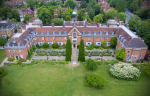
For this year’s GCSE cohort, however, the immediate focus is simpler: results day marks the beginning of the next chapter. And while the national improvement remains modest overall, the surge in top maths grades gives ministers one particularly strong result to point to. Photo by Wallpoper, Wikimedia commons.