New evidence suggests that efforts to improve inclusion and prevent violence are contributing to safer and more supportive school environments across London, with suspension and
permanent exclusion rates now standing at around half the national average.
The findings follow the first full academic year of the Mayor of London’s Inclusion Charter, an initiative led by the London Violence Reduction Unit (VRU) to address persistent absence, exclusions and other factors that can leave young people disconnected from education.
City-wide figures show that the rate of permanent exclusions fell by 14 per cent over the latest academic year, while suspensions declined by 7 per cent and persistent absenteeism dropped by 2 per cent. The reductions have been particularly pronounced in some boroughs that have adopted the Charter's principles alongside several VRU-supported programmes.
Compared with 2022/23, the academic year before the Charter was introduced, Sutton recorded a 63 per cent decline in its permanent exclusion rate, while suspensions fell by 22 per cent and persistent absence by 18 per cent. In Lewisham, suspensions and persistent absence both declined by about 11 per cent. Wandsworth recorded a one-third reduction in permanent exclusions, alongside a 5 per cent fall in suspensions and a 12 per cent decrease in persistent absenteeism.
The VRU launched the Inclusion Charter in February 2024 in response to concerns over rising absence and school suspensions. The initiative is based on the principle that keeping young people engaged in education can reduce the risk of them becoming disconnected from school and missing essential learning and support.
This is particularly significant because research cited by the Mayor’s office indicates that young people are twice as likely to become involved in violence during the first year after permanent exclusion.
A central part of the strategy has been a £1.4 million investment in UNICEF UK’s Rights Respecting Schools Award. The programme gives state-funded schools across London free access to resources designed to place children's rights, participation and inclusion at the centre of school policies and everyday practice.
More than 730 schools have taken up the offer, reaching an estimated 360,000 pupils. The programme is now being used by almost a quarter of London's schools and will remain available free of charge to state-funded education settings for another two years.
An independent 12-month evaluation commissioned by the VRU and conducted by the University of Strathclyde provides additional evidence about the programme's impact. Researchers surveyed almost 2,000 pupils and teachers in primary and secondary schools.
The evaluation found that pupils in schools with an established rights-respecting approach were more likely to report feeling safe, listened to by adults and connected to their school community. The research also identified stronger relationships between pupils and staff, greater opportunities for student participation and improvements in safeguarding.
According to the evaluation, schools that had embedded the approach also reported positive effects associated with clear boundaries, consistent rules and an understanding of consequences. These factors were linked to pupils' behaviour and attitudes within the school environment.
The Inclusion Charter forms part of a wider £16 million VRU programme aimed at reducing lost learning and keeping children connected to education.
Among the measures supported by the programme are communication and oracy interventions in primary schools. Monitoring data indicates that 96 per cent of participating children narrowed the communication gap with their peers. The programme has also been associated with stronger communication skills and fewer physical incidents in playgrounds.
The VRU has additionally funded mentoring programmes in pupil referral units across every London borough. The initiative is reaching around 2,200 young people and has reported improvements in school attendance.
The Mayor's office says the wider approach is part of more than £100 million invested in young people, with the VRU using prevention and early intervention as key elements of its public-health approach to reducing violence.
Established as the first Violence Reduction Unit in England and Wales, the VRU says it has funded more than half a million targeted interventions and positive opportunities for young people over the past seven years. The Mayor's office has also pointed to recent Office for National Statistics data showing a 15 per cent fall in knife crime over the latest 12-month period.
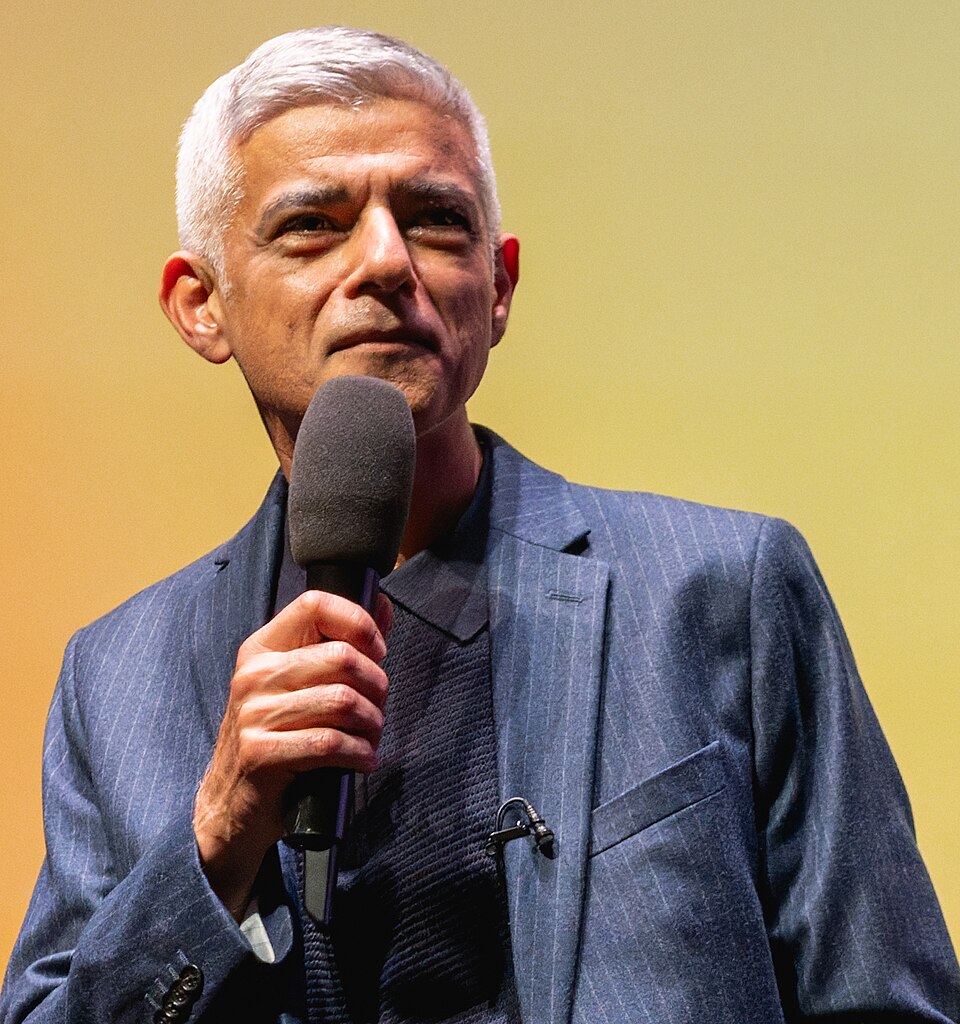
The latest findings were highlighted during a visit to St Augustine's School in Kilburn, where the Mayor of London and Lib Peck, director of the London VRU, met representatives of UNICEF UK and saw how the Rights Respecting Schools approach is being implemented.
The Inclusion Charter has received public backing from 30 London boroughs and 30 national charities. City authorities are now encouraging schools that have not yet joined the programme to make use of the free resources and adopt measures designed to strengthen inclusion, attendance and pupil safety.
The Mayor of London, Sadiq Khan, said: “I firmly believe that the best way to keep our young people safe and give them the best possible start in life is to keep them in school. Evidence shows why that’s crucial, with young people twice as likely to be involved in violence after being excluded.
“It’s why my Violence Reduction Unit has invested so much into London’s Inclusion Charter and it’s pleasing to see exclusion and suspension rates drop to half the national average.
“Our investment and partnership with UNICEF UK shows that when we invest in children’s rights and support London’s hardworking teachers with the right tools, we create classrooms where young people feel safe, feel they belong and can thrive. I urge more schools to take advantage of this game-changing offer as we continue to build a safer, fairer London for everyone.”
Lib Peck, Director of London’s Violence Reduction Unit, said: “Keeping young people in school and safe is a critical part of the Violence Reduction Unit’s approach to driving down violence in London.
“The strength of London’s Inclusion Charter has always been genuine partnership and whilst we have seen reductions in exclusions, suspensions and persistent absenteeism, it’s clear there is more to do to ensure no child misses out on learning and becomes vulnerable to violence.
“The independent evaluation shows the true value of putting children’s rights front and centre. It changes how safe and connected they feel to school. Almost a quarter of London schools have now signed up and we have built incredible momentum, but we want to increase that number so that we work to ensure young people are safe and supported to thrive.”
Anna Kettley, chief impact and influence officer at UNICEF UK, said: “Every child and young person should feel that they belong, that their voice matters and that their rights are respected. That is what UNICEF UK’s Rights Respecting Schools Programme helps make possible. Schools like this one in West London show how putting the rights of their students at the heart of school life can shape a whole school ethos, really helping the young people in their care to feel safe, included and confident to learn, grow and thrive.”
Rachel Kelly, Headteacher of St Augustine’s CE High School, said: “Educating our young people about their rights is an incredibly important part of preparing them for their future.
“These conversations are not simply about teaching students what their rights are; they are about creating a school culture where young people feel safe, valued, listened to and that they genuinely belong. When students understand their rights and know that adults will listen to them, they are more confident to speak up, seek support and contribute positively to their school community.
“For us, the Rights Respecting Schools programme provides an important framework for making these principles part of everyday school life. It strengthens relationships between students and staff, supports our safeguarding work and gives young people meaningful opportunities to have their voices heard.”
Rayan, Year 13 student at St Augustine’s CE High School, said: “Rights respecting schools is very important as it allows students to be given the space so that they can speak freely and communicate about their thoughts and issues to teachers who are there for them every day, without them feeling restricted and unheard.
“It’s our right to feel protected and respected no matter the colour, background, race or religion. Young people should feel they are always valued and appreciated in a school like we do at St Augustine’s.”
Sara Rahman, Director of Children's Services at Lewisham council, said: “We’re pleased to see suspensions and permanent exclusions continuing to fall in Lewisham. This reflects the hard work and commitment of our schools to inclusion, anti-racism and building positive relationships through a variety of initiatives such as the Tackling Race Inequality in Education Pledge.
“While there is still more to do, particularly to address the disproportionate impact of exclusions on Black Caribbean pupils, it’s encouraging to see more young people staying engaged in education and getting the support they need. We’re grateful to the Violence Reduction Unit for its investment and support, and I’d like to thank all the staff and partners helping to make this progress possible.”
Sara Martin, Strategic Lead for Children known to social care at Sutton Virtual School, said: “In Sutton, the Virtual School has worked in partnership with the Attachment and Research Community to develop a comprehensive programme that helps schools to embed inclusive, relational practice and build supportive and inclusive environments where children have the support they need to thrive. To date, 81 per cent of participating schools have reported improved alternatives to isolation and exclusion, including reductions in suspensions. This, alongside investment in targeted programmes funded by the Violence Reduction Unit, have fostered a strong culture of collaboration across the borough and schools are sharing their expertise and experience to support others.”
Lisa Fenaroli, Director of Education at Wandsworth council, said: “Wandsworth schools have seen tangible benefits from the London VRU’s programmes over the past year. The Rights Respecting Schools Award and PRU mentoring scheme in particular have strengthened our borough’s wider work on belonging, equalities and engagement, helping pupils feel more connected to their school communities and supporting improved attendance and positive participation across the borough.” Photo by Raph_PH, Wikimedia commons.