A London address that once offered refuge to one of Austria’s most celebrated writers has been formally marked in honour of Stefan Zweig, the Jewish novelist and essayist who fled the
rise of Nazism and later found himself listed among the regime’s most wanted enemies.
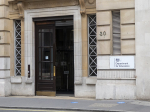
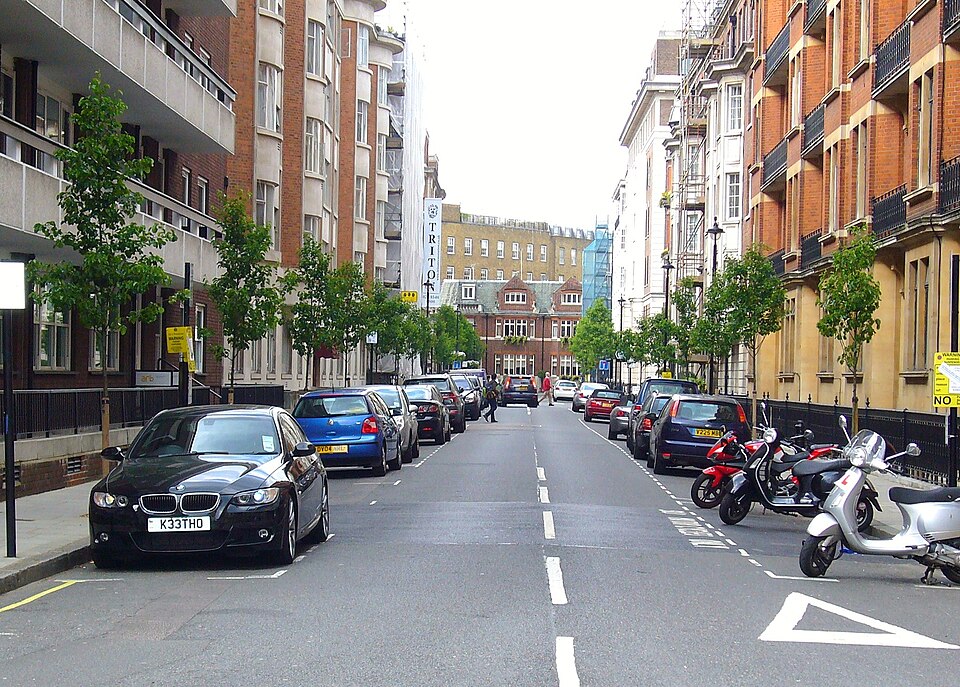
An English Heritage Blue Plaque has been unveiled at 49 Hallam Street in central London, where Zweig lived in flat 71 between 1936 and 1939. The unassuming mansion block now carries a permanent reminder of a literary career overshadowed by the catastrophe that destroyed much of the European world he knew.
Zweig arrived in Britain after leaving Austria as Adolf Hitler’s movement gathered strength. By the time war broke out in Europe, the writer had become one of the most internationally recognised authors of his generation.
During his lifetime, Zweig was among the world’s most widely translated writers. Yet his reputation faded considerably after his death, only to be revived in recent decades – not least through the influence of filmmaker Wes Anderson, whose 2014 film The Grand Budapest Hotel drew heavily on Zweig’s literary world and sensibility.
The new plaque carries a starkly simple inscription: “Stefan Zweig 1881-1942, Austrian Writer lived in flat 71, 1936-1939.”
But the history attached to the address is anything but simple.
A name on Hitler’s secret list
Had Nazi Germany invaded Britain, Zweig was likely to have been among those targeted for immediate arrest.
His name appeared on the secret Sonderfahndungsliste G.B., or “Special Search List Great Britain” – a Nazi document identifying about 2,820 people regarded as political or ideological enemies. The list included politicians, writers, journalists, scientists, refugees and other prominent opponents of the regime.
SS units were expected to locate and detain those named.
Zweig’s Hallam Street address was one of only two British residences explicitly identified in the document. The other belonged to English science-fiction pioneer H. G. Wells.
For a writer who had spent his career celebrating European culture and intellectual exchange, the listing represented a brutal reversal of fortune.
English Heritage historian Susan Skedd said Zweig’s relationship with Britain during his years in London was deeply conflicted.
His correspondence suggests that the city initially provided him with a degree of security and relief, she said, even as aspects of British society during wartime frustrated him.
“He feels that civilisation is lost,” Skedd said, describing the increasingly bleak outlook evident in Zweig’s writings and correspondence.
His work on his memoir, The World of Yesterday, further drew him back towards the vanished world of Vienna and the cosmopolitan Central Europe of his youth.
Zweig had left Vienna in 1933. By the time he settled in Hallam Street, the political and cultural order he had known was already being dismantled.
A final farewell to Freud
London also became the setting for one of the most poignant episodes of Zweig’s British exile.
In September 1939, following the outbreak of the Second World War, he delivered the funeral eulogy for fellow Austrian exile Sigmund Freud at Golders Green Cemetery.
The two men represented different strands of Vienna’s extraordinary intellectual culture, both ultimately driven from their homeland by Nazi persecution.
Zweig would never see the end of the war.
After leaving Britain, he eventually settled in Brazil. In February 1942, he and his wife, Lotte, died by suicide in Petrópolis.
His death marked the end of a life shaped by the extraordinary cultural confidence of pre-war Europe and its subsequent destruction.
From forgotten writer to cultural influence
Zweig’s literary output was remarkably broad. His works included Letter from an Unknown Woman, Twenty-Four Hours in the Life of a Woman and Beware of Pity, the latter written and published during the period in which he lived at Hallam Street.
His final years also produced The World of Yesterday, a memoir that became one of the most evocative accounts of the disappearance of the old European order.
The writer’s influence has nevertheless extended far beyond literary circles.
Wes Anderson has repeatedly acknowledged Zweig as a major inspiration. In a video message marking the new plaque, the director recalled that he had not encountered Zweig until discovering Beware of Pity, which led him to seek out another of his works, The Post Office Girl, published posthumously in 1982.
The campaign to commemorate Zweig’s London home was supported by admirers including the late playwright Tom Stoppard and novelist Julian Barnes.
Ninety years after Zweig first arrived at Hallam Street, the blue plaque now gives his former home a place in London’s public memory.
The modest marker does more than identify a celebrated writer. It records the story of a European intellectual forced into exile, pursued by a regime determined to erase the culture he represented – and of a London address that briefly became a refuge before Europe descended into war.
This version keeps the factual core but gives it a more London Weekly/SW1 treatment: stronger scene-setting, sharper historical context, shorter narrative paragraphs and a more distinctly London-focused angle. Photo by Portlandvillage, Wikimedia commons.