Nick Kyrgios has been provisionally suspended from professional tennis after testing positive for cocaine, bringing fresh turmoil to the career of one of the sport’s most unpredictable and
controversial figures.
The International Tennis Integrity Agency (ITIA) confirmed on Wednesday that the 31-year-old Australian returned a positive test for benzoylecgonine, a metabolite produced by cocaine use. The sample was collected during an ATP 250 tournament in Mallorca in June.
A World Anti-Doping Agency-accredited laboratory confirmed the adverse finding on July 17, with Kyrgios’ provisional suspension taking effect on August 4.
The former Wimbledon finalist, who once climbed as high as world No. 13, acknowledged the offence publicly and accepted responsibility.
“I recently failed a drug test in Mallorca after testing positive for cocaine. I made a huge mistake and I take full responsibility for it,” Kyrgios said in a statement posted on Instagram.
He apologised to his supporters, relatives, commercial partners and, in particular, young fans who look up to him.
“I know the example this sets and I’m deeply disappointed in myself,” he said.
Cocaine is listed by WADA as a prohibited stimulant and substance of abuse. Under tennis anti-doping regulations, it is prohibited during competition.
Kyrgios also sought to explain the circumstances surrounding his recent struggles, pointing to a prolonged series of injuries and the psychological strain of confronting the later stages of his playing career.
“The last couple of years of injuries have taken a huge toll on me, both physically and mentally,” he said.
The Australian has spent much of the past several seasons battling fitness problems, limiting his appearances and making it increasingly difficult to reproduce the form that took him to the Wimbledon final and the upper reaches of the world rankings.
“My body hasn’t been able to do what my mind expects it to do,” Kyrgios said, adding that accepting the possibility that his professional career may be nearing its conclusion had proved particularly difficult.
He described tennis as something that had defined his entire life and said walking away from the sport was an emotional challenge.
“At times I’ve felt helpless and alone,” he said.
The provisional suspension means Kyrgios is currently barred from competing in or coaching at events sanctioned by the ATP, WTA, Grand Slam tournaments, World Tennis and national tennis associations. He is also prohibited from attending such events while the suspension remains in force.
Kyrgios has not appealed the provisional suspension.
Instead, he said he would withdraw from social media and public life for 28 days, using the period to concentrate on his wellbeing and address the issues he has been facing.
“I’m sorry. I’ll do the work and come back better,” Kyrgios said.
The suspension adds another difficult chapter to the career of a player whose extraordinary talent has repeatedly been accompanied by controversy, injuries and personal struggles. Kyrgios has long attracted enormous attention both for his performances on court and for his outspoken personality away from it.
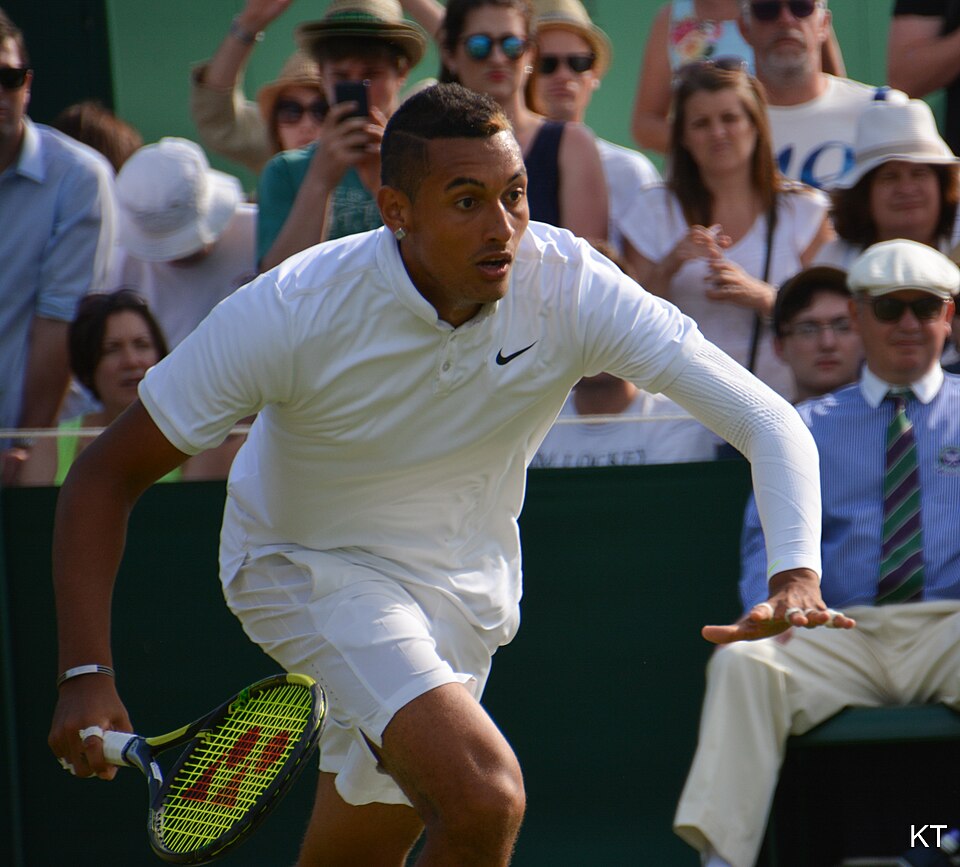
For now, his return to competitive tennis will depend on the outcome of the anti-doping process and any further action taken under the sport’s disciplinary rules. Photo by Carine06 from UK, Wikimedia commons.