An unprecedented gathering of works by one of the Northern Renaissance’s greatest masters will bring Jan van Eyck’s portraiture into focus at the National Gallery this winter, with all 10 of
the artist’s surviving portraits assembled for the first time.
Van Eyck: The Portraits, running from 21 November 2026 to 11 April 2027, will bring masterpieces from major European collections together with works held by the National Gallery. The exhibition will offer an exceptionally rare opportunity to examine around half of the approximately 20 surviving paintings generally regarded as autograph works by the Flemish master.
At the heart of the exhibition will be nine painted portraits, accompanied by van Eyck’s only surviving drawing, Portrait of an Elderly Man, created around 1438. The silverpoint and goldpoint drawing, lent by the Kupferstich-Kabinett of Dresden’s Staatliche Kunstsammlungen, is among the most important surviving records of an artist preparing a portrait in the 15th century.
The sheet is remarkable for its intricate web of lines, which builds the sitter’s features with extraordinary precision, as well as detailed notes about colour. It is considered the only securely identified preparatory study for a Netherlandish painting of the period and offers rare insight into how van Eyck translated direct observation into a finished image.
The drawing will be reunited for only the second time with the painting it is believed to have inspired, Portrait of an Elderly Man (A Scholar?), now in the Picture Gallery of Vienna’s Kunsthistorisches Museum. The pairing provides a rare chance to follow van Eyck’s creative process from preliminary study to completed portrait.
The exhibition will also include three other drawings that demonstrate the influence van Eyck exerted on generations of artists. Among them is Portrait of a Young Woman, made around 1435–40 by his close contemporary Rogier van der Weyden and probably produced in response to van Eyck’s innovations. Two additional drawings by artists associated with van Eyck’s circle or with traditions shaped by his work will further illustrate how his approach transformed portrait-making.
One of the exhibition’s most anticipated reunions will take place at the National Gallery itself. Its celebrated Arnolfini Portrait, painted in 1434, will be displayed alongside Portrait of a Man (Giovanni Arnolfini?), a panel from Berlin’s Gemäldegalerie dating to around 1435–38.
The juxtaposition raises one of the enduring questions surrounding van Eyck’s work: whether the same individual appears in both paintings. If the identification is correct, van Eyck portrayed the man twice within a remarkably short period — an unusual practice at a time when repeated portraiture was largely associated with rulers and members of the highest elite.
Another major pairing will bring together van Eyck’s Portrait of a Man (Self Portrait?), painted in 1433 and recently conserved, with his portrait of his wife, Margaret, dated 1439 and held by Musea Brugge. Margaret’s image has particular historical importance as the earliest dated and identifiable portrait of a non-aristocratic woman.
Together, these works demonstrate a fundamental change taking place in European art. Portraiture was gradually moving beyond the representation of dynastic power and social rank to encompass merchants, craftsmen, relatives, friends and other members of an increasingly diverse society.
Among those portrayed was probably the goldsmith Jan de Leeuw, whose 1436 portrait will travel from Vienna. His direct gaze establishes an unusually immediate relationship with the viewer and is another feature associated with van Eyck’s groundbreaking approach.
The loan of Jan de Leeuw alongside Portrait of an Elderly Man (A Scholar?) represents a further milestone: it is the first time the Kunsthistorisches Museum has lent both of its van Eyck paintings simultaneously.
A revolution in the art of likeness
Van Eyck is widely regarded as one of the artists who helped establish the foundations of modern European painting. His portraits changed expectations of what an image of an individual could achieve.
Earlier medieval portraiture often emphasised status, idealised appearance or symbolic identity. Van Eyck instead pursued an unusually precise observation of the individual. His sitters appear distinctive and psychologically present, with small imperfections and transient details — reddened eyes, stubble, uneven hair and other signs of ordinary human life — rendered with astonishing clarity.
His command of oil paint allowed him to create an illusion of physical reality that was unprecedented in its immediacy. The result was not simply a representation of social status but an encounter with an individual who appears capable of looking back at the viewer.
Yet van Eyck’s fascination with illusion extended beyond the faces themselves. He frequently painted frames and the backs of panels to resemble precious metals, stone and other expensive materials. These trompe-l’oeil effects deliberately blur the boundary between the real and the painted.
The exhibition will highlight this rarely seen aspect of his work by presenting several portraits in the round. Visitors will be able to examine the backs of the panels, including surviving decorative marbling, reinforcing the idea that these works were conceived as three-dimensional objects rather than simply images intended to hang on a wall.
Van Eyck’s portraits were designed to be handled, inspected and discussed at close range — an approach that makes the exhibition particularly valuable for understanding the physical experience of his art.
The artist behind the masterpieces
Much about van Eyck’s early life remains unknown, including the precise circumstances of his training. His career, however, brought him into the orbit of one of Europe's most powerful courts.
In 1425, he became court painter to Philip the Good, Duke of Burgundy, and remained in his service until his death in Bruges in 1441. His responsibilities went well beyond painting. The duke trusted van Eyck with diplomatic assignments, including confidential journeys on his behalf.
One of the most significant missions took place in 1428–29, when van Eyck travelled to Portugal as part of a Burgundian delegation negotiating Philip the Good’s marriage to Princess Isabella of Portugal. He produced a portrait of Isabella for the duke, although that work has since been lost.
The relationship between patron and artist appears to have been particularly close. In 1434, Philip the Good became godfather to one of van Eyck’s children — an indication of the painter’s unusually elevated position at court.
By the time of his death, van Eyck had achieved international recognition. His paintings entered the collections of influential patrons throughout Europe, establishing a reputation that would endure long after his lifetime.
New research into a transformative artist
The National Gallery exhibition will also place new scholarship at its centre. Research into van Eyck’s materials and techniques, the original frames and inscriptions, as well as continuing debates over the identities of his sitters, will form a major part of the accompanying catalogue.
The publication is set to become the first English-language monograph devoted specifically to van Eyck’s portraits, filling a notable gap in the extensive literature surrounding the artist.
Emma Capron, Curator of Early Netherlandish and German Paintings at the National Gallery, describes van Eyck as a transformative figure in the history of portraiture, arguing that the genre appears with a new sense of individuality under his brush in the 1430s.
She highlights the painter’s ability to exploit oil paint to create highly convincing human likenesses while simultaneously challenging viewers through mysterious inscriptions and elaborate material illusions.
National Gallery Director Sir Gabriele Finaldi said the portraits represent a crucial part of the institution’s collection and of the broader history of European art. Bringing the works together, he said, will provide an exceptional opportunity to experience van Eyck’s sensitivity to his subjects alongside his extraordinary technical skill.
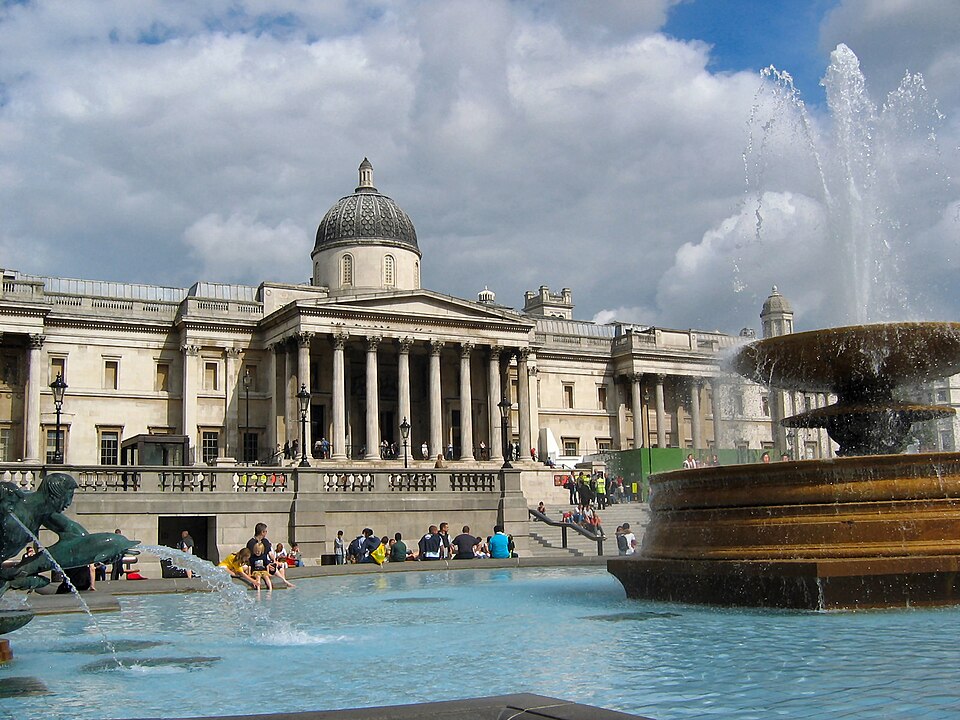
Van Eyck: The Portraits will run at the National Gallery in London from 21 November 2026 to 11 April 2027. Photo by Yorick Petey (Yorick), Wikimedia commons.