Russia and Germany have held their first face-to-face foreign ministerial talks since the start of Moscow’s full-scale invasion of Ukraine, reopening a narrow channel of direct
communication between two countries whose relations have deteriorated sharply since 2022.
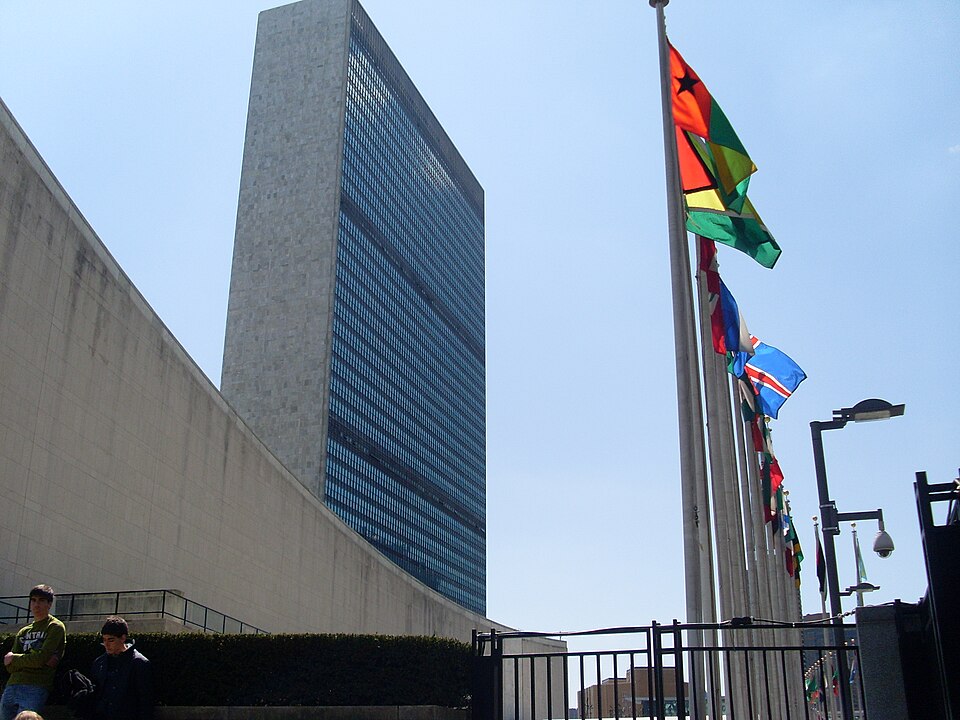
Russian Foreign Minister Sergey Lavrov and German Foreign Minister Johann Wadephul met on Saturday on the sidelines of the United Nations General Assembly in New York. The encounter was the first meeting between the two countries’ top diplomats since before Russia launched its full-scale invasion of Ukraine in February 2022.
The talks took place against a backdrop of deep mistrust. Germany remains one of Ukraine’s principal European supporters, while Berlin and Moscow have exchanged increasingly serious accusations over security incidents and alleged hybrid activity.
Despite the meeting, there was little indication of a broader diplomatic thaw.
Lavrov said afterwards that Wadephul had not presented any position that Germany had not already made public. According to the Russian minister, the discussion largely repeated Berlin’s previously stated positions.
Nevertheless, the two sides addressed bilateral relations, the war in Ukraine and efforts to restore secure commercial shipping in the Black Sea.
Black Sea exports dominate discussion
One of Germany’s main objectives was to press Moscow to help establish conditions for the resumption of grain shipments through the Black Sea.
A member of the German delegation said Wadephul urged Lavrov to take all possible steps towards an agreement on grain exports, arguing that continued disruption of food supplies could have consequences well beyond Europe.
“Time is of the essence,” Wadephul told Lavrov, according to the German delegation. He stressed the importance of constructive engagement because of food shortages affecting countries, particularly in the Global South.
Berlin argued that a practical arrangement over Black Sea shipping could potentially create an opening for further diplomatic measures.
Russia, meanwhile, said it was discussing proposals on maritime security with India, Egypt and Turkey. Lavrov said Moscow believed separate discussions with Ukraine would also be necessary, while insisting that Kyiv should not approach the issue through what he described as requests.
Ukraine has said it is prepared to consider arrangements that protect shipping, while continuing to hold Russia responsible for the disruption caused by the war.
Germany raises security concerns
The meeting also highlighted the growing strain in German-Russian relations beyond the battlefield in Ukraine.
Germany recently concluded that Russia was responsible for an attempted drone attack at Leipzig/Halle Airport in eastern Germany. Berlin subsequently announced the closure of a Russian consulate and a Russian cultural centre.
Moscow has rejected the German allegations, describing them as fabricated and accusing Berlin of fuelling anti-Russian sentiment.
During the New York talks, Wadephul reportedly warned Lavrov against further escalation directed at Germany, Europe or NATO.
The German minister also made clear that incidents such as the Leipzig airport case, as well as alleged future hybrid attacks, would not alter Berlin’s commitment to supporting Ukraine.
Meeting underscores diplomatic divide
The decision to meet Lavrov required careful handling in Berlin. Wadephul informed European counterparts about the encounter afterwards, according to a message seen by Reuters.
He said the meeting had provided an opportunity to restate Germany’s position on Russia’s war against Ukraine and to call for an immediate and comprehensive ceasefire, with particular attention to grain exports and energy infrastructure.
The encounter therefore represented a resumption of direct high-level contact rather than a restoration of normal relations.
For Germany, the talks offered an opportunity to communicate directly with Moscow on issues where limited practical cooperation could have wider consequences, particularly Black Sea shipping and food security. For Russia, the meeting provided another channel for presenting its position on Ukraine and relations with Germany and the wider West.
The exchange nevertheless showed how far bilateral relations have deteriorated since the two countries last maintained regular high-level diplomatic contact. Both sides remain sharply divided over the war in Ukraine, European security and a series of alleged attacks and hybrid operations.
The New York meeting may reopen a diplomatic channel, but the statements following it indicated that the fundamental disagreements between Moscow and Berlin remain unresolved. Photo by Dendodge, Wikimedia commons.