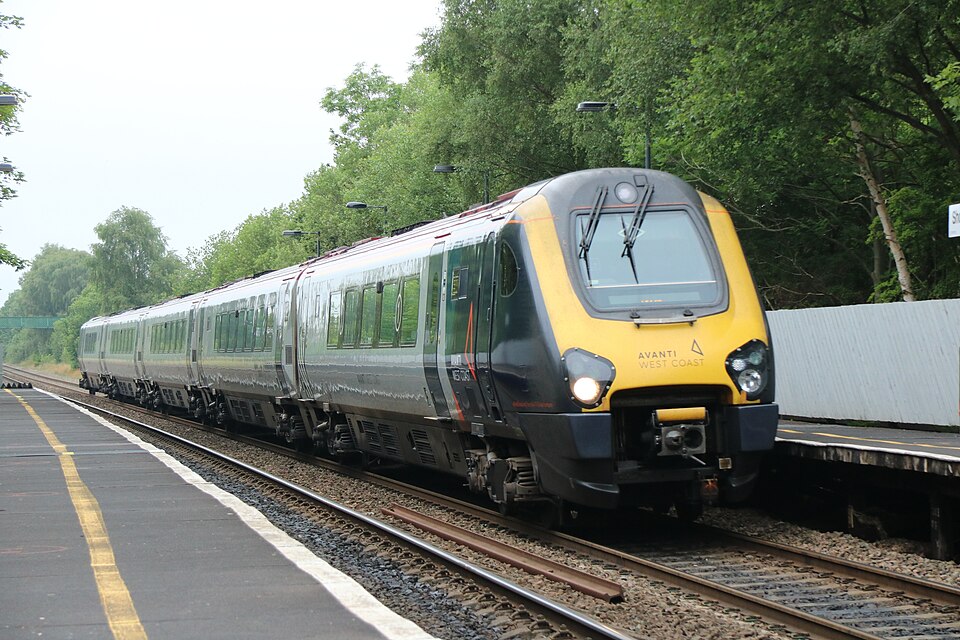
The UK government will take direct control of Avanti West Coast services from 7 March 2027, bringing one of the country’s major intercity rail operators into public ownership and
accelerating Labour’s wider programme to return passenger rail services to state control.
Transport Secretary Heidi Alexander is expected to confirm the move at the Labour Party conference. Avanti currently operates long-distance services linking London Euston with Glasgow and Edinburgh, as well as major English cities including Birmingham, Manchester and Liverpool.
The government is ending Avanti’s contract at the earliest available opportunity. The operator had been due to continue under its existing arrangement for several more years, but ministers are exercising a contractual termination provision to bring the company into public ownership in March.
Government promises investment and reliability improvements
The takeover is being presented by ministers as part of a broader attempt to address persistent problems on the West Coast Main Line, one of Britain’s most important rail corridors.
The government says the transition will be accompanied by a specific improvement programme targeting delays, cancellations, infrastructure problems and passenger facilities. It has announced an additional £10 million for power and signalling maintenance, on top of an existing £840 million programme to improve infrastructure on the West Coast Main Line.
Further investment is planned at London Euston, where the government says £50 million will be allocated to improvements including additional seating, upgraded waiting facilities and toilets. Other stations along the route are also expected to receive investment, with £10 million earmarked for station improvements by the end of 2027.
The government also plans to revise timetables, with particular attention to services serving Manchester and other major cities on the route. Better onboard connectivity, including improvements to Wi-Fi, is another stated objective.
Alexander said the government wanted to use public ownership to create a railway focused on passengers and service quality rather than the interests of private shareholders.
Avanti disputes the picture of its performance
Avanti West Coast, which is jointly owned by FirstGroup and Trenitalia, has defended its record while accepting the government's decision.
Managing director Andy Mellors said the company was proud of its work since taking over the operation, highlighting the refurbishment of its Pendolino fleet, the introduction of new Evero trains and increased capacity and connectivity. He said Avanti would cooperate with the government to ensure a smooth transfer.
The company introduced its 23-train Evero fleet in 2024 following a reported £350 million investment. Avanti also says its 56 Pendolino trains have undergone a major refurbishment programme.
The government's decision nevertheless follows years of criticism over delays, cancellations and disruption. Transport for the North called for Avanti's contract to be terminated in 2024, arguing that poor performance on the West Coast Main Line had persisted for too long.
Avanti's own performance reporting also illustrates the operational difficulties experienced on the network, although punctuality and cancellation figures vary considerably by period and route.
Avanti is part of a much bigger rail restructuring
The takeover is not an isolated decision. It forms part of Labour's programme to move most passenger rail services currently operated under Department for Transport contracts into public ownership.
The Passenger Railway Services (Public Ownership) Act 2024 established the legal framework for the programme. According to the government, services operated by South Western Railway, c2c, Greater Anglia, West Midlands Trains, Govia Thameslink Railway and Chiltern Railways have already transferred to public ownership. Great Western Railway is scheduled to follow in December 2026, while the wider programme is expected to be completed by the end of 2027.
The government's longer-term objective is to bring these publicly operated services together under Great British Railways (GBR), the proposed body intended to provide greater coordination across the national rail system.
A recently published government factsheet indicates that the future railway will not consist exclusively of state-operated trains. GBR will coexist with devolved operators such as ScotRail, Transport for Wales and Transport for London, as well as privately operated open-access services such as Lumo and Hull Trains.
What the change means for passengers
For passengers travelling between London and Scotland, the immediate change will primarily concern who operates the service, rather than the physical railway itself. The West Coast Main Line, stations and much of the rolling stock will continue to form the backbone of the network.
The government hopes that bringing the operator into public ownership will make it easier to coordinate train operations with infrastructure management and investment decisions. However, many of the problems affecting the route are connected to infrastructure constraints, meaning that a change in ownership alone cannot guarantee an immediate improvement in reliability.
The March transition therefore represents both a significant political change and a practical test of the government's rail strategy. Ministers will be under pressure to demonstrate that public ownership can translate into fewer cancellations, better punctuality, improved passenger facilities and more dependable connections between London, Birmingham, Manchester, Glasgow and Edinburgh.
If the transfer proceeds as planned, Avanti will become one of the most prominent pieces of Britain's intercity rail network to return to public control, marking another major step towards the government's planned restructuring of the national railway system. Photo by Steven's Transport Photos, Wikimedia commons.