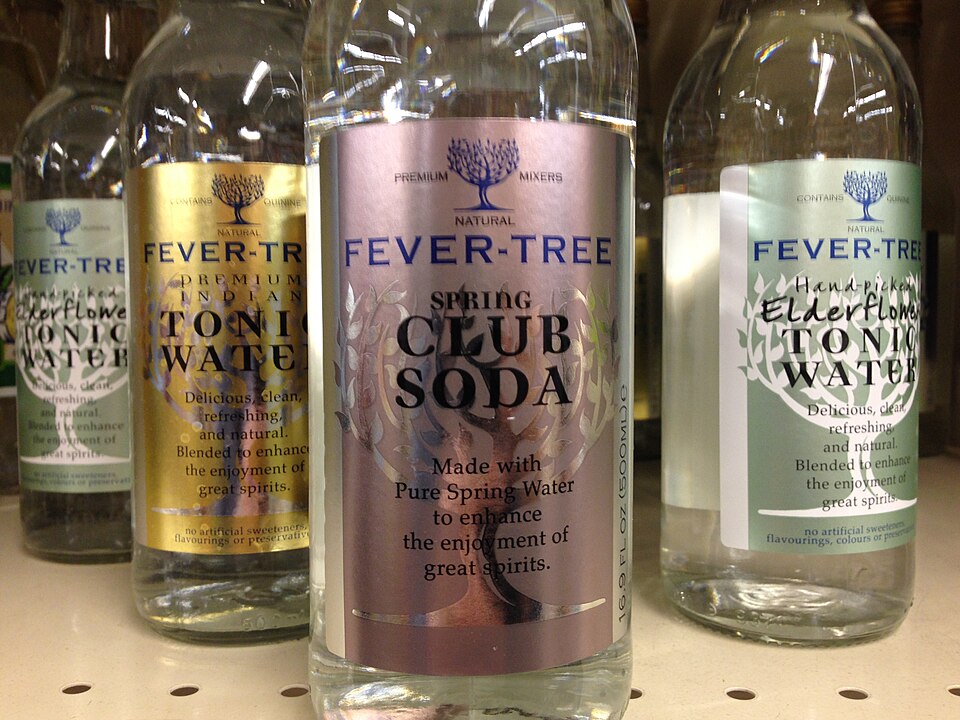
British premium drinks maker Fever-Tree has delivered a stronger first-half performance, with profit climbing 9% as a recovery in the UK and a hot summer helped lift demand, while
aggressive cost hedging offered investors greater protection against global economic shocks.
Fever-Tree Drinks reported adjusted core profit of £20.1 million ($27.24 million) for the first six months of the year, compared with £18.4 million a year earlier.
The results provide a welcome boost for the company as consumer businesses across Britain continue to navigate higher costs, uncertain household spending and geopolitical disruption.
The group's UK operation returned to growth, with revenue increasing 3%. Fever-Tree attributed the improvement to stronger demand, market-share gains and favourable summer weather, which supported sales of ginger beers, Mexican lime sodas and other drinks designed for warmer-weather consumption.
The performance also strengthens the company's argument that its premium positioning can continue to deliver growth despite pressure on consumers' disposable incomes.
US market remains the key investor test
The picture in the United States, however, was more complicated.
Fever-Tree's US revenue increased 11% on a constant-currency basis, underlining the importance of its largest market to the group's long-term growth strategy.
But profitability declined sharply. Adjusted core profit in the US fell 18%, largely because Fever-Tree stepped up marketing expenditure as it sought to build the brand and expand its presence in an increasingly competitive market.
For investors, the US numbers highlight the central challenge facing the company: converting strong top-line growth into sustainable margins.
Management is nevertheless expecting an important boost in the second half. Fever-Tree has transferred part of its exposure to US tariffs to its partner Molson Coors and has already begun receiving tariff refunds.
The company expects those refunds to improve profitability in its US operation during the second half of the year.
Hedging strategy shields group from global volatility
Fever-Tree has also moved aggressively to protect its margins from another major threat confronting manufacturers: volatile commodity and packaging costs.
The company said it is substantially hedged against glass and aluminium costs through 2026, limiting its exposure to sudden price increases and geopolitical disruption.
It has also hedged a substantial proportion of its other commodity requirements as far ahead as 2028.
That strategy could prove increasingly valuable as businesses across Europe contend with unpredictable energy, raw-material and supply-chain costs.
For investors, the extensive hedging programme provides greater visibility over future margins at a time when geopolitical tensions can quickly translate into higher production costs.
Confidence despite economic uncertainty
The latest results come against a difficult backdrop for British consumer businesses, where inflation, interest rates and cautious household spending continue to shape purchasing decisions.
Fever-Tree's ability to increase UK revenue while simultaneously maintaining strong growth in the US suggests that demand for its products remains resilient.
The company said it had continued to trade well throughout the summer and remained confident that it would meet market expectations for the full year.
The next test will be whether the strong seasonal performance can translate into sustained growth after the summer boost fades.
For investors, the second half will therefore be closely watched for three reasons: whether US revenue growth begins to deliver stronger margins, how much tariff refunds contribute to earnings, and whether Fever-Tree can maintain its UK market-share gains.
With commodity costs largely secured and the prospect of additional US tariff-related income, the company enters the second half with considerably more financial visibility than many consumer-facing businesses exposed to global cost volatility. Photo by Fever-Tree Drinks, Wikimedia commons.