Britain’s accelerating investment in defence is beginning to reshape the commercial property market, with landlords increasingly looking to military technology companies, defence
contractors and research firms as a new source of demand for offices, laboratories and industrial facilities.
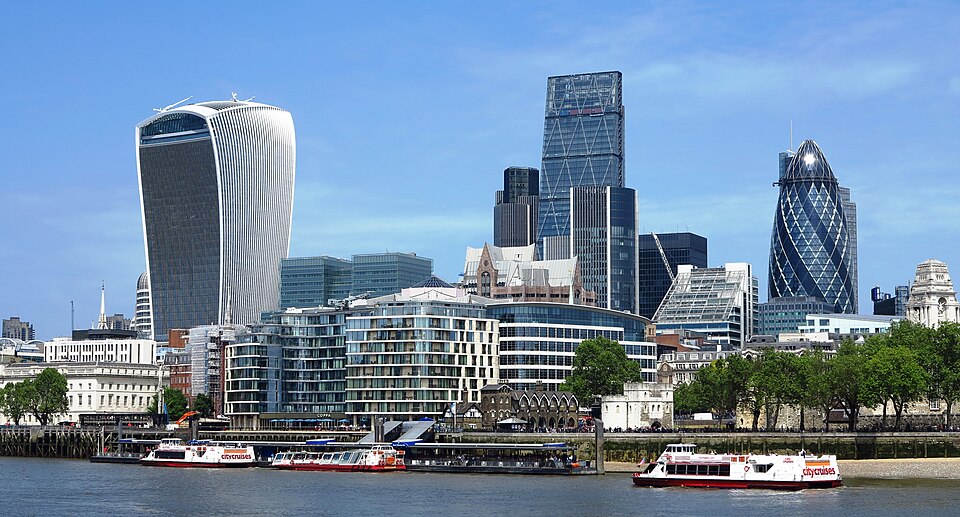
Property groups told Reuters that the expansion of defence spending is creating opportunities in locations that have traditionally been associated with finance, technology and life sciences. London’s Canary Wharf is among the areas where landlords are now exploring whether former banking offices could be repurposed for defence and artificial intelligence companies.
The shift reflects the changing nature of the defence industry. Beyond weapons manufacturing, a growing share of investment is flowing into technologies such as drones, artificial intelligence, cybersecurity and advanced engineering. These businesses often require specialised workplaces and laboratories and, importantly, seek locations close to universities and research centres where they can recruit highly skilled employees.
“Defence used to be all about munitions, but that's totally changed. Now it's about these new technologies,” said Jennifer Townsend, a partner at Knight Frank.
European governments are increasing defence budgets as they work towards higher NATO spending commitments. According to Savills estimates, this could generate demand for approximately 37 million square metres of industrial and logistics property across Europe over the next seven years — an area roughly equivalent to 5,200 football pitches.
Britain alone could require as much as 3 million square metres of additional industrial and logistics space, while nearly 250,000 square metres of offices and research-and-development facilities could also be needed, according to the property consultancy.
The additional office demand comes as Britain's commercial property market continues to adjust to the post-pandemic era, when widespread hybrid working reduced companies' requirements for traditional office space.
Canary Wharf looks beyond finance
The transformation is particularly visible in Canary Wharf, which for decades was synonymous with Britain's banking and financial-services industry.
LS Estates, which operates within the estate, is exploring the possibility of attracting defence and AI companies to a refurbished nine-storey building that was previously occupied by Credit Suisse support staff.
The property, 17 Columbus Courtyard, is undergoing a refurbishment costing more than £100 million, backed by Singapore's sovereign wealth fund GIC and Oaktree. It was initially marketed primarily towards life sciences companies, with as much as 60% of the building planned for laboratory use.
However, demand from life sciences tenants has so far been weaker than anticipated, prompting the developer to consider other technology-intensive sectors.
Mark Swetman, chief executive of LS Estates, said the building's technical specifications could make it suitable for defence and AI businesses. The property includes reinforced floors, backup power systems and sophisticated ventilation infrastructure.
He also suggested that Canary Wharf's controlled environment and dedicated security arrangements could be attractive to companies handling sensitive technologies.
“There is sadly a significant boom in defence,” Swetman said, pointing to the growing flow of money into defence research and development.
The changing tenant mix could provide another source of demand for London's office market, particularly as companies in technology and defence increasingly seek highly secure premises rather than conventional workplaces.
Research clusters become increasingly important
Property advisers say proximity to universities and scientific institutions is becoming an important consideration for defence companies.
London, Cambridge and Oxford — the UK's so-called “Golden Triangle” — are among the locations expected to benefit from increased investment in defence technology because of their concentration of universities, researchers, technology companies and highly skilled workers.
Knight Frank's Julian Woolgar said some defence companies were also considering offices in Westminster, where proximity to government departments and political decision-makers can be strategically useful.
The growing requirements of defence businesses are also changing expectations for commercial property. Conventional office specifications may not be sufficient for companies working with sensitive technologies, leading to greater demand for security, resilient power supplies, specialised laboratories and other technical infrastructure.
Industrial property also set to benefit
The defence-related property boom extends well beyond central London.
Industrial and logistics developers are increasingly identifying defence manufacturing and supply chains as a potential growth market. Tritax Big Box, one of Britain's major industrial property landlords, has begun exploring opportunities to work with defence companies.
The trend is already visible in new manufacturing facilities. Defence-components manufacturer Isembard recently opened what it described as London's largest factory since the Second World War in Southwark, highlighting the renewed role of urban manufacturing in the defence sector.
The Ministry of Defence has also expanded its testing infrastructure, recently opening Europe's largest indoor drone-testing facility at a warehouse developed by Panattoni in Swindon.
Panattoni is simultaneously in discussions with defence companies about locating facilities nearby as it redevelops the former Honda manufacturing site in the area.
James Watson, Panattoni's head of development for Southern England and London, said defence suppliers were increasingly interested in clustering together, drawing a parallel with the concentration of Formula One-related businesses in Oxfordshire.
The emerging pattern suggests that Britain's defence expansion could have effects extending beyond government procurement and weapons production. As investment moves into drones, AI, cybersecurity, advanced manufacturing and other technologies, it is also creating a new category of commercial-property demand — potentially giving landlords additional options for buildings that might otherwise struggle to attract traditional corporate tenants. Photo by Philippe Salgarolo, Wikimedia commons.