British households are facing another squeeze on their grocery bills, with food price inflation expected to accelerate sharply over the next year as manufacturers struggle with higher
energy, transport and packaging costs.
The Food and Drink Federation (FDF) now expects prices for food and non-alcoholic drinks to be 3.9% higher in December than a year earlier, a significant downgrade from its previous warning of inflation approaching 10%.
But the latest forecast offers little long-term relief. The industry body expects food inflation to continue climbing through 2027, reaching a projected 6.4% peak in July.
The FDF said the outlook reflected a combination of international conflict, extreme weather and persistently elevated operating costs. Disruption linked to the US-Iran war, drought across parts of Europe and the effects of the El Niño weather pattern are expected to add further pressure to food supply chains.
Karen Betts, chief executive of the FDF, said manufacturers had absorbed much of the additional cost burden rather than passing it immediately on to consumers.
“Food and drink manufacturers have kept food prices as low as possible during the energy shock since the closure of the Strait of Hormuz,” she said, warning that businesses could not continue absorbing rising costs indefinitely.
“Persistently higher costs of energy, logistics and packaging, compounded by this summer's extreme heat, mean that food prices will rise this year, and we believe that rise will be sustained into 2027.”
Inflation falls — but food remains a political headache
The warning comes despite a recent easing in food inflation.
Official figures from the Office for National Statistics showed food and drink inflation falling to 1.3% in July, its lowest level since August 2024. Overall consumer price inflation, however, rose to 2.9%.
The Bank of England expects food price inflation to rise to around 3.5% by December, while headline CPI inflation is forecast to reach 3.1%.
The central bank has previously highlighted the particular importance of food and energy prices in shaping how households perceive the wider cost-of-living crisis. As a result, a renewed increase in supermarket prices could put additional political pressure on ministers even if broader inflation remains relatively contained.
The FDF said food inflation was likely to remain well above historical averages through the second half of 2027. Unlike its earlier projection, the latest forecast points to a lower but more prolonged period of elevated inflation.
Manufacturers warn of mounting costs
The industry body also warned that food producers were facing a growing accumulation of costs beyond raw ingredients.
Food and drink prices have increased by almost 40% since 2020, according to the FDF, leaving consumers significantly more exposed to further increases.
The federation criticised the government's approach to regulation, arguing that higher payroll taxes and additional rules governing advertising, packaging and the marketing of foods classified as unhealthy had contributed to rising costs.
It said those measures had added around £2 billion ($2.7 billion) to industry costs last year.
The FDF is calling on the government to pause planned restrictions on the marketing of unhealthy food, arguing that businesses need greater stability as they confront higher energy and supply-chain expenses.
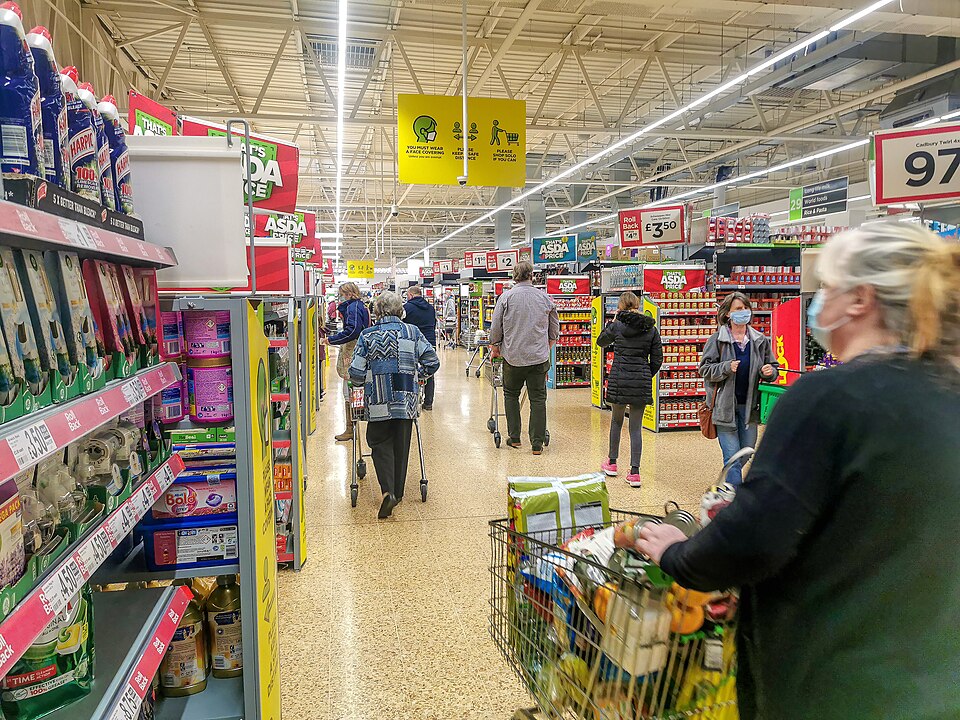
For consumers, the latest forecast suggests that the recent moderation in supermarket inflation may prove temporary. After several years of steep increases, another sustained rise in food prices could place renewed pressure on household budgets — and make the cost of the weekly shop a major economic and political issue heading into 2027. Photo by Taunton : ASDA by Lewis Clarke, Wikimedia commons.