Water giant ordered to pay £964,225 after illegal discharges contaminated eight bathing waters and triggered public health warnings
United Utilities has been hit with a £900,000 fine after admitting five environmental offences linked to a major sewage pollution incident that disrupted some of Lancashire’s most popular coastal resorts.
The company was ordered to pay £964,225 in total at Preston Magistrates’ Court after the Environment Agency established that untreated sewage had been discharged into the Irish Sea outside the conditions of the company’s environmental permits.
The pollution took place over several days between 11 and 22 June 2023, with sewage released from three coastal pumping stations for more than 35 hours in total.
The consequences were felt across the Fylde Coast, including Blackpool, Lytham St Annes and Fleetwood, at a time when the region was preparing for the summer tourist season.
Sewage was reported on beaches and at marine recreational facilities, including Fleetwood Baths. United Utilities’ own modelling indicated that the resulting sewage plume reached seven bathing waters and significantly deteriorated water quality.
The Environment Agency responded by issuing “no bathing” warnings across all eight designated bathing waters along the affected coastline.
Testing carried out during the incident by a trained citizen scientist was also indicative of E. coli.
The Food Standards Agency subsequently closed three shellfish beds temporarily over public health concerns.
Tourism industry caught in the fallout
The pollution episode was not simply an environmental disaster. It also created a serious headache for coastal businesses and local authorities whose economies depend heavily on tourism.
Blackpool and St Annes were among the areas badly affected, with the incident coinciding with efforts to attract visitors and promote the Lancashire coast as a holiday destination.
Blackpool recorded hundreds of thousands fewer summer visitors than the previous year.
The scale of the disruption prompted United Utilities to make a voluntary £250,000 payment to Blackpool Council after images of the town’s iconic tower were used in media coverage of the sewage crisis.
The council had been investing heavily in a tourism advertising campaign, with the pollution reports damaging efforts to promote Blackpool.
The company has separately estimated that responding to the emergency and repairing the underlying infrastructure cost approximately £38 million.
Regulator uncovers permit breaches
The Environment Agency investigation found that the crisis began with the partial collapse of a final effluent pipe at Fleetwood Wastewater Treatment Works.
The failure reduced the amount of sewage the facility could receive, causing wastewater to back up through the wider network.
Following periods of rainfall, sewage was discharged from pumping stations at Manchester Square, Anchorsholme and Chatsworth Avenue.
But investigators concluded that the discharges did not meet the legal conditions set out in United Utilities’ environmental permits.
The permits allow discharges once flows reaching Fleetwood Wastewater Treatment Works exceed 2,300 litres per second, alongside other seasonal conditions.
Analysis of data provided by United Utilities found that the required threshold had not been reached when the spills occurred.
The company admitted the breaches when questioned under caution by the Environment Agency in November 2024 and later pleaded guilty to all five offences.
Environment Agency warns water companies
Andy Brown, the Environment Agency’s Water Regulation Manager, described the incident as unacceptable and said its consequences extended well beyond the immediate pollution.
The regulator said the case demonstrated the importance of water companies properly managing their infrastructure and complying with environmental permits intended to protect rivers, seas and communities.
The Environment Agency classified the incident as Category 1, its most serious classification under the Common Incident Classification Scheme. United Utilities accepted the classification.
For sentencing purposes, the regulator argued that the company’s conduct amounted to reckless culpability and fell within Harm Category 1 under the environmental offences sentencing guidelines.
The court treated United Utilities as a Very Large Organisation, with annual turnover of approximately £2.6 billion.
The company was ordered to pay:
- £900,000 in fines
- £62,225 towards Environment Agency prosecution costs
- £2,000 victim surcharge
- £964,225 in total
£38m response after infrastructure failure
United Utilities mounted a major emergency operation following the incident.
A two-kilometre temporary bypass was constructed around the damaged pipe, additional pumping equipment was installed and tankers were used to transport wastewater to alternative treatment works.
The failed pipe was eventually repaired and Fleetwood Wastewater Treatment Works returned to full operation.
United Utilities said it has since carried out further investment to strengthen the resilience of the wastewater network across the Fylde Coast.
Its own investigation concluded that excessive external loading caused the partial collapse of the effluent pipe. The company said there had been no warning of the failure from previous physical inspections or telemetry systems.
The case is the latest reminder of the intense regulatory and political scrutiny facing Britain’s water industry, where ageing infrastructure, sewage discharges and the financial burden placed on consumers have become increasingly contentious issues.
For communities on the Fylde Coast, however, the consequences were immediate: polluted beaches, public health warnings, disruption to tourism and a major hit to the reputation of some of Lancashire’s best-known seaside destinations.
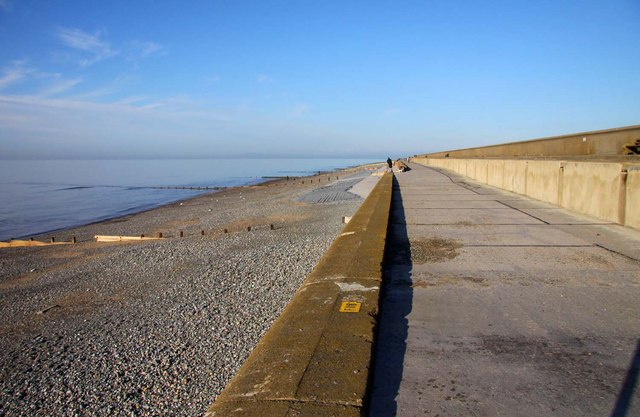
The Environment Agency has made clear that water companies that breach their environmental obligations will face enforcement action. Photo by Steve Daniels, Wikimedia commons.