Liverpool City Region has begun bringing its bus network back under public control, in a major shift that will give local leaders greater say over routes, fares and services.
The move marks the start of a region-wide franchising programme backed by £86.3 million in government funding, with millions of passengers expected to benefit from more reliable services, better connections and potentially lower fares.
St Helens is the first part of the region to move to the new system. Franchising will then expand to the Wirral later this year before being introduced across the rest of Liverpool City Region in 2027.
The reform ends a system in which commercial bus operators have largely determined where and when services run. Under franchising, the Liverpool City Region Combined Authority will be able to plan the network around the needs of passengers and communities.
That includes decisions on routes, service frequencies, fares and branding.
The first signs of the change will be highly visible, with new yellow British-built buses beginning to appear on the streets.
Mayor Steve Rotheram has described the launch as the beginning of a new era for public transport in the region.
For almost four decades, he argues, deregulation has left local communities with too little influence over a service on which millions depend.
“Routes have been chopped and changed, fares have risen and local leaders have been left without the power to shape a service that millions of people rely on every year,” Rotheram said.
He said bringing the network under local control would allow the region to decide where buses should run, how frequently they should operate and what passengers should pay.
The government is presenting the Liverpool programme as part of a broader attempt to shift power away from Westminster and towards elected regional leaders.
Prime Minister Andy Burnham said the Liverpool deal demonstrated what greater local control could deliver after decades of deregulation.
The initiative forms part of the government's No.10 North programme, which is intended to give local authorities greater control over public services and regional economic development.
Local Transport Minister Simon Lightwood said local leaders were best placed to understand what their communities needed from public transport.
“We’re giving those who best know Liverpool’s buses even more power to deliver better, more affordable and reliable services,” he said.
The financial backing includes £86.3 million through to 2029, as well as a share of a separate £3 million fund designed to help mayoral authorities establish franchising systems.
Liverpool City Region is one of six mayoral authorities being supported by the government to introduce bus franchising.
The model is already well established in London and Greater Manchester, where local authorities have greater control over the planning and operation of bus networks.
For Liverpool, the stakes are considerable. More than 93 million bus passenger journeys were recorded across the city region last year, underlining the importance of buses to workers, students, families and people accessing healthcare.
Ministers argue that giving the region greater control will allow services to be designed around passenger demand rather than solely around commercial viability.
The reform is also being introduced alongside wider measures intended to reduce the cost of bus travel.
A £2 national bus fare cap is due to take effect in January, while from April disabled passengers are expected to receive free bus travel throughout the day under expanded concessionary travel arrangements.
The government says the measures will help tackle the cost of living while improving access to employment, education and essential services.
But the real test for Liverpool's new system will come on the streets.
Greater local control will raise expectations that services will become more frequent, reliable and affordable — and that communities previously left with limited or poorly connected routes will see tangible improvements.
With St Helens now at the centre of the first phase, the transformation will soon extend to the Wirral and, by 2027, across the entire Liverpool City Region.
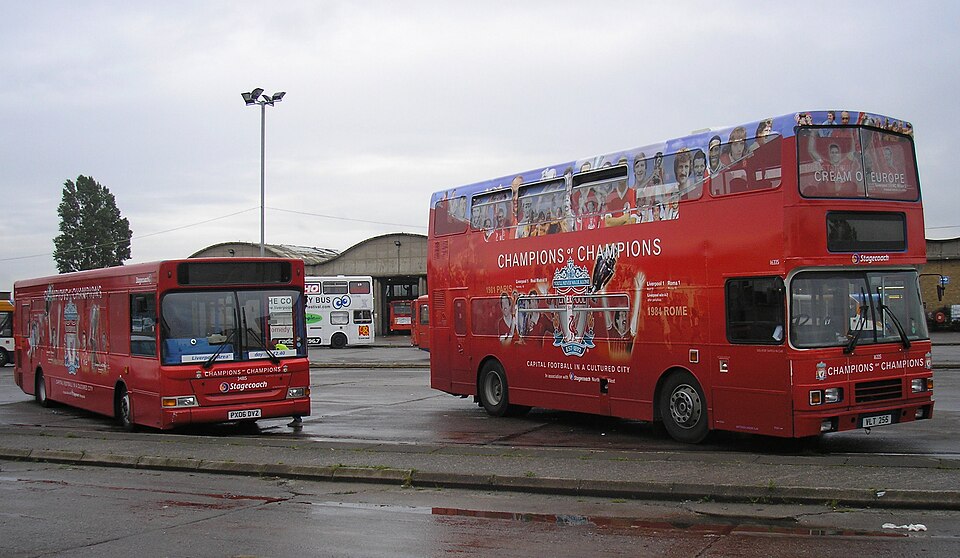
For passengers, the promise is straightforward: better buses, more local control and a network designed around the people who use it. Photo by Karls07, Wikimedia commons.