For decades, Italy was synonymous with political instability. Governments came and went with remarkable frequency, with 68 administrations formed in the eight decades since the
Second World War.
Yet during the latest period of geopolitical upheaval, Italy has looked unusually resilient. Giorgia Meloni has remained in office throughout her coalition’s four-year term, contrasting sharply with France, which has changed prime ministers five times since late 2022, and Britain, which has gone through four.
That record of continuity, however, may soon face its biggest challenge.
Opinion polls indicate that Italy’s 2027 parliamentary election could produce a far more fragmented parliament, potentially bringing back the instability that Meloni’s government has so far managed to avoid.
“There is a genuine risk that we could return to the worst kind of a splintered parliament next time around,” said Roberto D’Alimonte, professor of Italian politics at Rome’s Luiss University.
Meloni is also approaching a symbolic milestone. Her current spell in office is on course to overtake Silvio Berlusconi’s longest uninterrupted term as prime minister. Berlusconi nevertheless remains Italy’s longest-serving premier overall, having spent roughly nine years in office across four governments between 1994 and 2011.
A RECORD OF FISCAL CAUTION
For members of Meloni’s governing coalition, the durability of the government is itself an achievement worth highlighting.
Deputy Foreign Minister Edmondo Cirielli, a member of Meloni’s Brothers of Italy, argues that the government has combined political continuity with greater control over Italy’s finances and a significant improvement in employment.
The number of people in work has risen by around 1.2 million, while unemployment has fallen below 6%.
“The record figures on employment and unemployment are indisputable,” Cirielli told Reuters.
Economists broadly credit Meloni with improving the credibility of Italy’s public finances, an area that has long concerned investors because of the country’s enormous debt burden.
Lorenzo Codogno, a former Treasury chief economist who now runs LC Macro Advisors, said the government had persuaded financial markets that it was serious about controlling spending. It has also moved away from expensive programmes introduced by previous administrations, including the controversial Superbonus housing renovation scheme.
“In terms of fiscal responsibility, I think the government has done a decent job,” Codogno said. “In terms of promoting growth and reforming the economy, not much has been done.”
The government has made limited progress on some of Italy’s longstanding structural problems, including an inefficient public administration, weaknesses in healthcare and education, and broader economic reforms.
Its plans for institutional change have also encountered difficulties. Proposals intended to strengthen the powers of the prime minister have stalled, leaving one of Meloni’s major reform ambitions unresolved.
Lorenzo Pregliasco, head of polling firm YouTrend, believes Meloni’s longevity has partly resulted from her decision to avoid radical changes that could provoke voters.
“Part of the reason Meloni has been able to stay in power for four years is that she did not try to change much or upset voters,” he said.
“That is perhaps the most sobering lesson we can draw from this period.”
IMMIGRATION AND LAW AND ORDER
Where Meloni has pursued a more aggressive agenda is on immigration and public security.
Strengthening police powers and reducing irregular migration were central promises of her election campaign. The government has pointed to a sharp decline in arrivals, with 66,316 migrants reaching Italy last year compared with 157,651 in 2023.
Francesco Filini, who heads the policy programme of Brothers of Italy, described Meloni’s approach as a fundamental change in Italy’s response to irregular migration and claimed other European governments were increasingly examining her policies.
But Meloni’s political fortunes abroad have been less straightforward.
Her relationship with US President Donald Trump, once viewed as potentially giving her a unique role as an intermediary between Washington and European capitals, has deteriorated. In April, Trump publicly criticised Meloni, accusing her of failing to show sufficient courage and of letting the United States down during the war with Iran.
The dispute undermined the image of Meloni as a potential bridge between Europe and the Trump administration.
It followed another setback at home. In March, Italian voters rejected the government’s flagship judicial reform in a referendum, dealing a significant blow to a coalition that had appeared politically dominant for much of its time in office.
The defeat weakened Meloni’s aura of invulnerability. Brothers of Italy remains Italy’s strongest individual party, but some of its coalition partners have lost substantial ground, most notably Matteo Salvini’s League.
AN ELECTORAL GAMBLE
With the next election approaching, Meloni’s government is now attempting to reshape the electoral rules.
Parliament has backed plans to introduce a system under which an electoral bloc securing more than 42% of the vote would receive a majority bonus. Supporters say the change would make it easier for governments to command a stable parliamentary majority.
Opponents argue that it is primarily designed to improve the conservative coalition’s chances of remaining in power.
Meloni insists the objective is broader: to prevent Italy from returning to the unstable coalition politics that characterised much of its post-war history, regardless of which side wins the election.
But the political calculations have become considerably more complicated since the proposal was first developed.
VANNACCI CHANGES THE EQUATION
The biggest new variable is Roberto Vannacci, the former army general who has launched a new far-right political movement.
Vannacci has built support by campaigning on immigration, national security and opposition to what he portrays as rapid cultural change. His rhetoric is considerably more confrontational than Meloni’s, creating a potential challenge from within the broader nationalist right.
A BiDiMedia poll published on August 26 put Meloni’s governing coalition at 38.5%, below the 42% threshold that could trigger the proposed majority bonus.
The broad centre-left opposition was close to that level but remains divided, including over foreign policy, and has repeatedly struggled to maintain a coherent alliance.
Meanwhile, Vannacci’s support has climbed to about 8%, giving him the potential to become a decisive figure in the next election.
For Meloni, that creates an awkward choice.
Bringing Vannacci into the conservative alliance could help the bloc reach the numbers needed for a majority, but it could also alienate centrist voters and create friction with European partners uneasy about his hard-line positions.
Keeping him outside the coalition carries a different risk. If the election produces no clear winner, Meloni could eventually be forced to negotiate with Vannacci after the vote to secure a parliamentary majority.
Either scenario would represent a significant departure from the relatively disciplined political environment Meloni has enjoyed since taking office.
The opposition remains fragmented, while the emergence of Vannacci threatens to divide the conservative camp itself.
After years in which Italy’s political stability has surprised investors and European partners alike, the next election could therefore mark a return to the country’s more familiar political unpredictability.
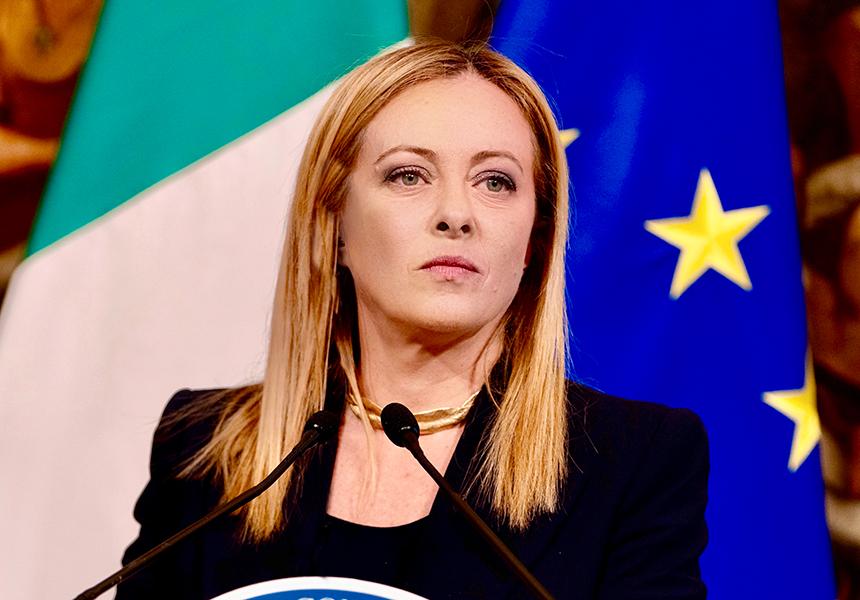
“The markets have liked stability and got used to it,” Codogno said. “But this is Italy. It won’t last forever.” Photo by Italian Government, Wikimedia commons.