Greece is expected to sign a major defence agreement with Israel on Monday covering a new multi-layered air and missile defence network valued at around €3 billion ($3.5 billion),
according to two Greek security officials cited by Reuters.
The agreement forms part of Athens’ sweeping military modernisation programme, which aims to strengthen the country’s ability to detect and intercept threats ranging from drones and aircraft to ballistic missiles.
Greece’s national security council has already granted initial approval for the purchase. The package is expected to bring together Israeli-made systems capable of providing short-, medium- and long-range protection.
Greek representatives are due to sign four agreements in Tel Aviv with Israel’s SIBAT defence cooperation directorate and the MAFAT defence research and development directorate. The contracts will cover three missile systems as well as radar technology, one of the officials said.
A separate agreement focused specifically on countering drones is also expected to be signed.
The purchases are intended to form a central part of Greece’s planned “Achilles Shield”, a nationwide integrated defence architecture designed to protect against ballistic missiles, conventional aircraft and the rapidly growing threat posed by unmanned aerial systems.
Athens has earmarked roughly €28 billion in defence spending through 2036 as it seeks to overhaul its armed forces. Alongside the new air defence network, the programme includes plans to acquire as many as 40 F-35 fighter aircraft from the United States and additional frigates from France and Italy.
Greece already operates a diverse collection of air-defence equipment, including US-built Patriot systems, Russian-made S-300 batteries and a range of shorter-range platforms. The planned Israeli systems would add another layer to this existing network and are expected to improve its ability to respond to different types of threats.
Athens devotes close to 3.5% of its gross domestic product to defence, putting it among NATO’s highest-spending members by this measure. Greece has maintained elevated military spending for years, largely because of its longstanding strategic rivalry and territorial disputes with neighbouring Turkey.
The deal also reflects the increasingly close defence relationship between Greece and Israel. The two countries have expanded military cooperation in recent years, including joint exercises, air-force training and collaboration on counter-drone technologies and cybersecurity.
Greece and Israel also jointly operate an international air-training centre in Greece, strengthening their military ties beyond equipment procurement.
The latest agreement follows Athens’ purchase last year of 36 Israeli-developed rocket artillery systems in a deal worth approximately €650 million.
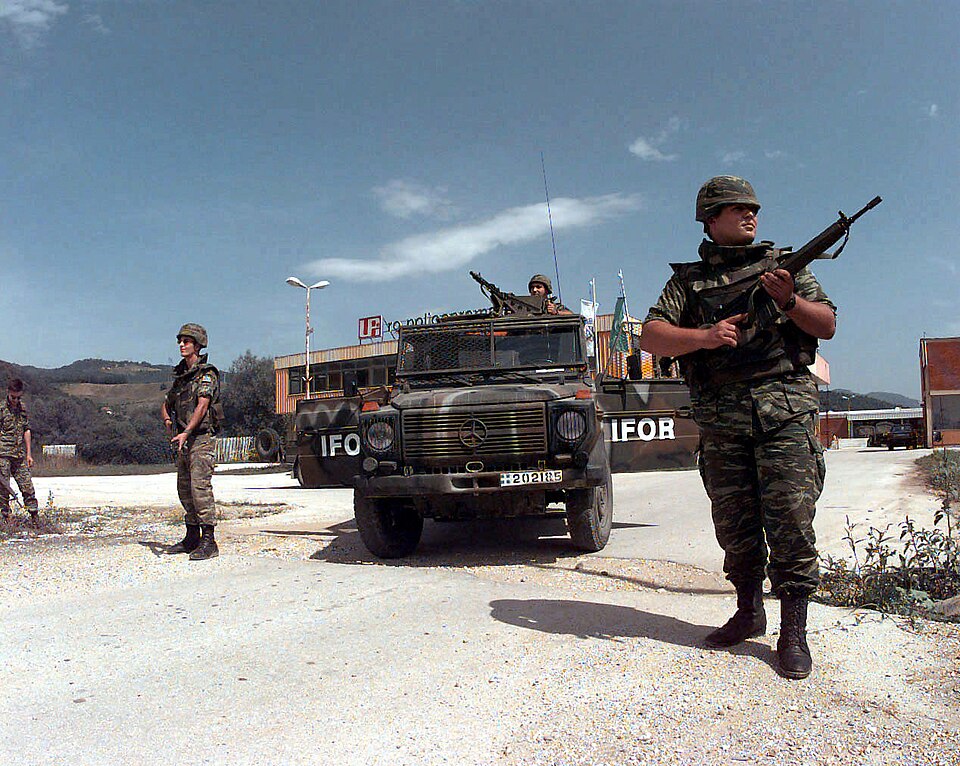
The planned air-defence contract would represent a much larger step in Greece’s effort to build an integrated shield around its territory and modernise its armed forces over the next decade. Photo by SSGT ANDY DUNAWAY, Wikimedia commons.