Britain’s Reform UK has secured another £36 million donation from cryptocurrency billionaire Christopher Harborne, taking the party’s fundraising haul to £72 million in less than 48 hours
and dramatically expanding Nigel Farage’s financial firepower ahead of the next general election.
Harborne announced the contribution on Saturday, matching a £36 million pledge made a day earlier by fellow crypto investor Ben Delo. The two donations represent an unprecedented level of financial backing for Reform and exceed the sums spent by both Labour and the Conservatives during last year’s general election campaign, according to Electoral Commission figures.
The extraordinary fundraising surge comes at a politically sensitive moment for Farage’s party. Reform has faced allegations over its political funding arrangements, with the controversy contributing to a decline in its opinion-poll lead. The party has rejected the allegations and insists it has broken no electoral laws.
Harborne, who is already Reform’s largest donor, said Delo’s decision had prompted him to make an equivalent contribution. In an article published by the Telegraph, he said he expected nothing in return for the money, rejecting the idea that his donation was intended to secure political influence, honours or changes to government policy.
The scale of the contributions nevertheless gives Reform an unusually powerful financial platform as it attempts to transform itself from a disruptive political force into a credible contender for government.
Delo’s £36 million pledge had already shattered the previous British political donation record of £10 million, attributed to businessman John Sainsbury in support of the Conservatives. Harborne’s matching contribution means Reform has now attracted more than seven times that previous benchmark in a matter of days.
The fundraising is also closely aligned with Reform’s political interest in the cryptocurrency sector. The party has proposed measures aimed at increasing crypto adoption if it enters government, including reducing capital gains tax on digital assets and establishing a bitcoin reserve fund at the Bank of England.
Funding controversy raises pressure on Reform
The donations arrive shortly after allegations involving two senior Reform figures intensified scrutiny of the party’s financial and electoral practices.
Earlier in September, Reform said its head of policy, James Orr, and Farage adviser Dan Jukes had stepped down while an internal investigation was conducted. The move followed a Channel 4 undercover investigation alleging that a U.S. company had been used to pay for political polling commissioned by Reform, potentially raising questions under British electoral law.
Reform has rejected the accusations, describing the operation as a hoax by climate activists. Farage has said the party had broken no laws and had not accepted improper donations. Labour has called for a police investigation, while police have said they are assessing information provided to them. The Electoral Commission has also said it is considering the allegations and is in contact with law-enforcement authorities.
Against that backdrop, the new funding gives Farage both an opportunity and a challenge. The money provides Reform with resources on a scale that could allow it to compete much more aggressively with Britain’s established parties, but the circumstances surrounding its funding are likely to remain under scrutiny.
Delo, the British co-founder of cryptocurrency exchange BitMEX, said he wanted Reform to devote less energy to fundraising and more to preparing for government. He argued that the party required substantial resources if it was to compete with Labour and the Conservatives.
Farage welcomed the backing from both donors, saying their support demonstrated confidence in Reform’s ability to win the next general election.
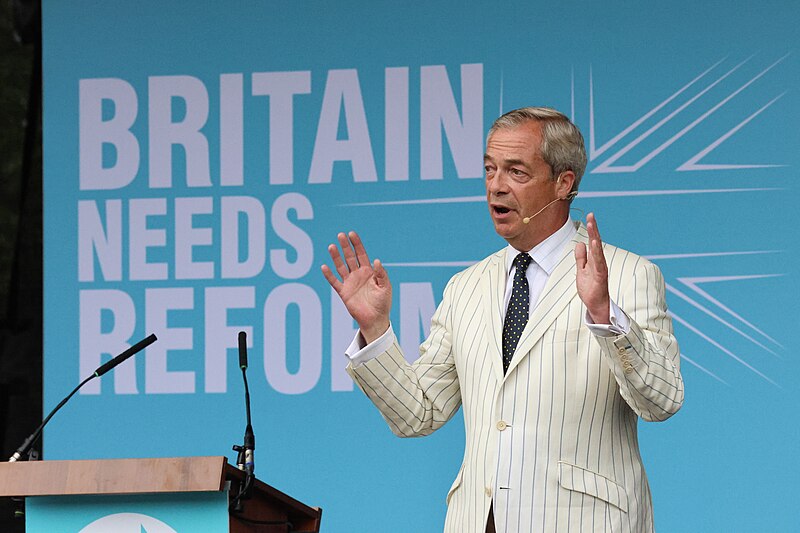
With £72 million arriving from two donors in less than two days, Reform has moved into a new financial league. The scale of the funding could reshape the electoral contest long before Britain next goes to the polls, with the election due by 2029. Photo by Owain.davies, Wikimedia commons.