London Mayor Sadiq Khan has unveiled plans to introduce a unified regulatory system for dockless electric bike services across the capital, aiming to address growing concerns over unsafe
riding, obstructive parking and inconsistent enforcement.
The proposed framework would give Transport for London (TfL) new powers to oversee rental e-bike operators and establish common standards across all London boroughs, replacing the current fragmented system in which individual local authorities apply different rules.
The Mayor announced the initiative on 29 September, following years of calls for stronger regulation of dockless micromobility services. Since these schemes first appeared in London in 2017, their rapid expansion has created new challenges for local authorities, particularly regarding pavement obstructions, public safety and the management of rental fleets.
The legal groundwork for reform was established earlier this year through the English Devolution and Community Empowerment Act 2026. The legislation enables the Secretary of State for Transport to grant TfL statutory authority to introduce a London-wide licensing regime. However, further secondary legislation and government guidance will be necessary before the system can become operational.
The Department for Transport is expected to consult on the remaining legislative measures, while the Mayor and TfL are already preparing proposals in cooperation with London boroughs.
Under the proposed arrangements, rental operators would face consistent requirements governing vehicle numbers, parking, safety, operational practices and regulatory compliance. The framework would also introduce improved data-sharing mechanisms, allowing authorities to monitor services more effectively and respond to problems.
The Mayor's vision centres on five key priorities.
First, a single regulatory framework would replace the existing borough-by-borough arrangements, providing clearer rules for operators, cyclists and residents throughout the capital.
Second, stronger safety requirements would seek to ensure that rental bikes are properly maintained, riders receive appropriate guidance and irresponsible behaviour is addressed through effective enforcement.
Third, dockless e-bikes would be better integrated into London's wider public transport network, supporting connections between residential areas, workplaces and transport hubs.
Fourth, authorities would take more decisive action against inappropriate parking, which can obstruct pavements and create difficulties for pedestrians, particularly older people and those with disabilities. Digital monitoring and improved coordination would help identify problem areas and accelerate enforcement.
Finally, the proposed licensing model would aim to establish a financially sustainable micromobility market, balancing commercial competition and innovation with transparent customer pricing, fair payments to boroughs and investment in public infrastructure.
The initiative comes amid significant growth in cycling across London. Daily bicycle journeys have increased by 43 per cent since 2019, making cycling the capital's fastest-growing transport mode. Over the past decade, the Mayor and TfL have also expanded the protected Cycleways network from approximately 90 kilometres in 2016 to more than 450 kilometres today.
Dockless electric bicycles have become an increasingly important component of this transport transformation. According to TfL estimates, rental bikes accounted for more than one in ten cycling journey stages in 2024, highlighting their growing contribution to urban mobility.
To address existing parking problems, the Mayor and TfL have allocated £1.7 million to London boroughs this year to establish designated micromobility parking facilities. More than 36,000 parking spaces for these services are already available across the capital.
Further details of the Mayor's strategy are expected to be published later this year, alongside additional measures intended to improve dockless bike services in the short term.
Despite their contribution to sustainable transport, rental e-bikes have attracted criticism over poorly managed parking, dangerous riding and collisions. Concerns have also been raised about the protection available to people injured in incidents involving hired vehicles.
The Mayor argues that stronger statutory powers are necessary to ensure that the continued expansion of dockless cycling does not come at the expense of pedestrian accessibility, road safety or the efficient operation of London's transport network.
The proposed reforms would represent a significant shift in how shared bicycles are managed in the capital, placing TfL at the centre of a coordinated system designed to accommodate growing demand while establishing clearer responsibilities for operators.
The Mayor of London, Sadiq Khan, said: “The ‘Wild West’ approach to dockless e-bikes cannot continue. While these services are helping thousands more Londoners to cycle, their rapid growth has also brought challenges around safety, inconsiderate parking, and the lack of data needed to properly manage them.
“I’ve been calling for powers to better manage dockless e-bike schemes since 2017, when the first schemes arrived in London, so I welcome the Government’s plans to give cities the powers they need to do this. For too long, cities have been left without the tools needed to properly manage these services, despite clear evidence that the current approach is not working.
“It’s now vital that the Department for Transport moves quickly to bring forward the secondary legislation needed to make these powers a reality. London cannot afford further delays.
“To speed things up, rather than waiting, I’m today setting out my ambitions for effective management of dockless e-bikes once secondary legislation has passed – a framework to improve safety and data sharing, tackle poor parking and create consistent standards across the capital.
“In the meantime, we will work closely with dockless operators and ensure that they engage fully with London boroughs and TfL to ensure their services work well for all Londoners, as we build a better London for everyone.”
Christina Calderato, TfL’s Director of Transport Strategy and Policy, said: “We welcome the legislation which will provide us with powers to regulate dockless bikes across the capital. Once we have details of the new licensing framework from the Government, we will work at pace with boroughs and other stakeholders to be in a position to take on the powers we expect to be given as a licensing authority.
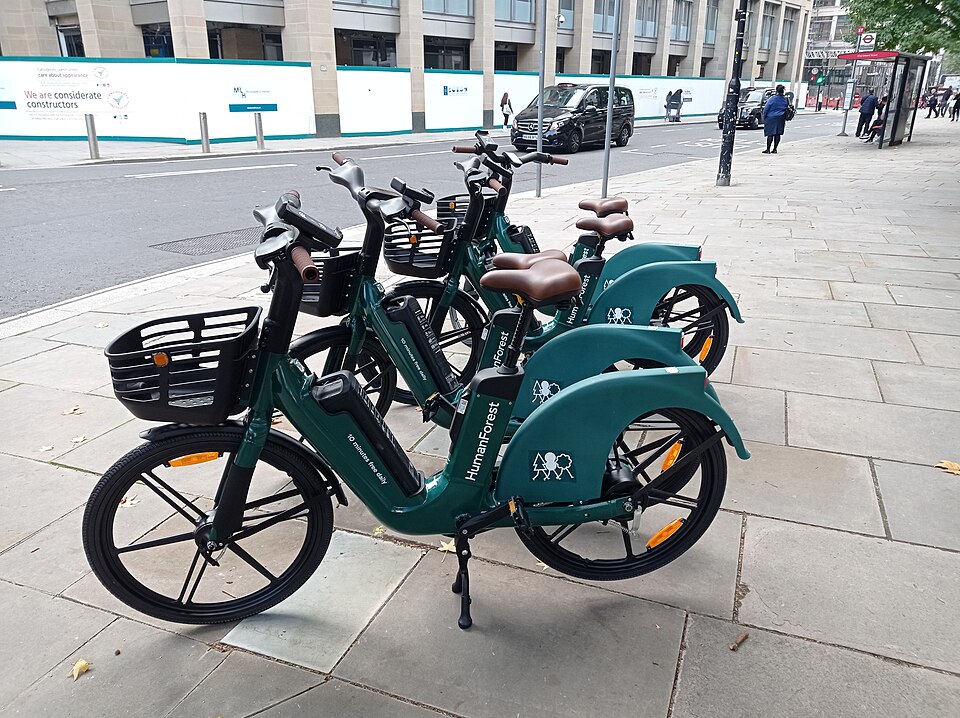
“This will give us the ability to replace the current patchwork, borough-by-borough approach with a consistent London-wide licensing scheme, which will put safety first and tackle unsafe parking, while ensuring dockless bikes can continue to contribute to the capital's cycling boom. We'll be setting out detailed proposals in due course.” Photo by Philafrenzy, Wikimedia commons.