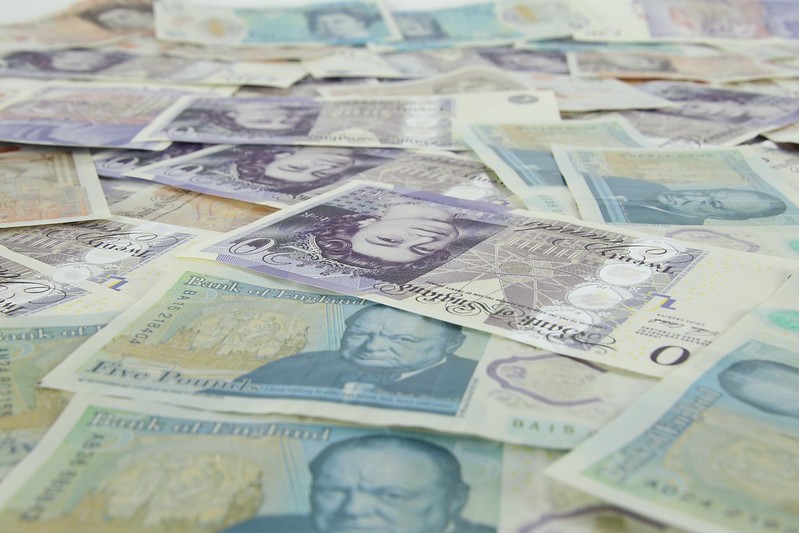
Sterling traded in a narrow range on Tuesday as investors held back from making major bets ahead of a run of closely watched economic figures from the United States and Britain.
The pound was broadly unchanged at around $1.3597 against the dollar and 85.42 pence per euro, remaining near the stronger end of its recent trading range against the US currency.
Thin summer trading in Europe has added to the subdued conditions, with currency markets showing little appetite for sharp moves before the next major economic signals.
The immediate test comes from the United States, where consumer inflation figures due on Wednesday are expected to provide fresh clues about the Federal Reserve's approach to interest rates in the months ahead. Any significant surprise in the data could quickly reshape expectations for US monetary policy and feed through to the dollar.
Britain's focus will shift to Thursday, when official second-quarter GDP figures are due to be released. The figures will offer an early assessment of the economic conditions facing Prime Minister Andy Burnham's government and the scale of the challenges inherited by the new administration.
So far, sterling has shown little reaction to Burnham taking office last month. The muted response may reflect investors' preference to wait for greater clarity on the government's economic priorities and fiscal plans before adjusting their positions.
The lack of movement is particularly striking given the approach of Britain's next budget, scheduled for late October.
Deutsche Bank said on Tuesday that currency markets were pricing in exceptionally limited volatility ahead of the fiscal event. Three-month implied volatility for the euro against sterling stood at about 3.6%, according to the bank, its lowest level at a comparable stage before any major UK budget or fiscal announcement over the past two decades.
Implied volatility, derived from options prices, is widely used as a measure of how much investors expect an exchange rate to move over a specified period.
The unusually calm market suggests traders are not yet positioning for major disruption from the government's first budget under Chancellor John Healey and Burnham's premiership.
"Despite the high likelihood of some twists and turns on the road to the first budget," Deutsche Bank analysts said, the currency market remained "very becalmed", with investors apparently expecting limited turbulence over the coming quarter.
That calm could prove temporary. A combination of stronger-than-expected US inflation, a surprise in Britain's growth figures or clearer signals about the government's fiscal strategy could all force investors to reassess sterling's outlook before the autumn budget.
For now, however, the pound remains caught between cautious investors, thin summer liquidity and a market seemingly unwilling to price in political or fiscal fireworks just yet.