University of Liverpool researchers have secured £1.2 million from UK Research and Innovation (UKRI) to launch an ambitious project designed to improve economic activity in communities
facing high levels of ill-health, disability and unpaid caring responsibilities.
The Liverpool Economic Activity Framework (LEAF) is the only project to receive funding from UKRI’s *Creating Opportunities: Rethinking place-based economic (in)activity* scheme. The programme supports research using cross-disciplinary approaches to understand and reduce worklessness in local areas.
Economic inactivity in the Liverpool City Region (LCR) remains significantly above the national average. The area also experiences some of the poorest health outcomes in England—factors strongly linked to low employment levels and a persistent productivity gap between LCR and the rest of the country.
Building on existing regional initiatives—such as employment schemes Ways to Work and Households into Work, and health programmes including Citizens Advice on Prescriptions and Life Rooms—the LEAF project will develop a new community-centred strategy. It aims to combine insights from local people, employers and policymakers with academic research to understand barriers to work and co-design solutions that support inactive residents back into employment.
The project unites an interdisciplinary team from the University of Liverpool, Liverpool John Moores University and the Liverpool School of Tropical Medicine. They will work closely with partners including the Liverpool City Region Combined Authority, Liverpool City Council, the Cheshire and Merseyside NHS Integrated Care Board, and community organisations such as the Torus Foundation, South Liverpool Homes and the Breckfield and North Everton Neighbourhood Council.
Experts from the University of Liverpool’s Management School, the Heseltine Institute for Public Policy, Practice and Place, and the Institute of Population Health will contribute to the research.
The team plans to blend economics, sociology, public health and public policy expertise, using innovative mixed-methods and large-scale data approaches. Their goal is to reshape understanding of economic inactivity and deliver evidence-based interventions that reflect the lived realities of the region’s communities.
UKRI’s investment marks a major step towards tackling the structural inequalities behind economic inactivity in the Liverpool City Region—and researchers hope LEAF will provide a model for other areas facing similar challenges across the UK.
Professor Ian Burn, Professor of Economics and LEAF Project Lead, said: “The economic inactivity rate in Liverpool has been persistently higher than the national average. It’s crucial to learn the lessons from past efforts to reduce inequality. LEAF’s community-driven, interdisciplinary approach will support joined-up action by stakeholders across the city-region to address the root causes of inactivity. Together, we will co-create a future research agenda to drive long-run change and improve rates of economic activity in communities across the UK.”
Dr Philip McHale, Senior Clinical Lecturer in Public Health and LEAF Project Co-Lead, said: “Economic inactivity is a major issue both locally and nationally and acts as a significant barrier to a thriving economy. This is both an economic and a public health issue. Understanding the causes and consequences of economic inactivity, and effective ways to deal with it, are integral to the policy response.”
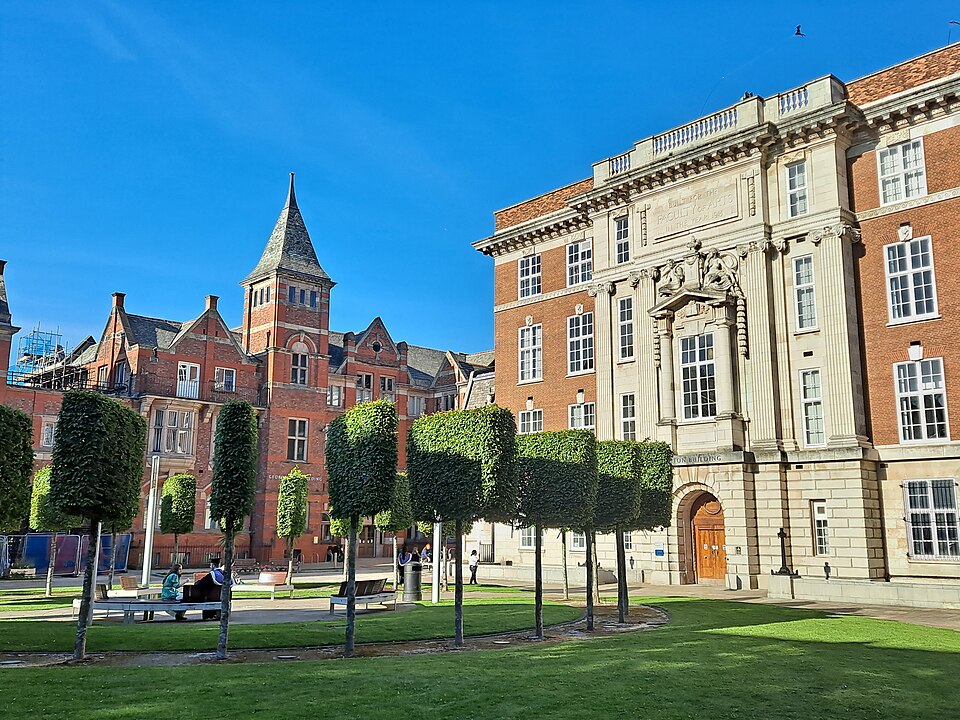
Sue Jarvis, Heseltine Institute of Public Policy and Place Co-Director and LEAF Project Co-Lead, said: “Achieving the Government’s ambition of an 80% employment rate by 2035 is a major policy challenge that demands a whole-system approach to reverse current trends. The insights generated by LEAF will be critical in shaping the next phase of local and national policy.” Photo by Brit in Seoul, Wikimedia commons.