The National Gallery has unveiled the winner of its ambitious architectural competition for a major new wing, marking a pivotal moment in the institution’s 200-year history. The project, part of
the £750 million “Project Domani” initiative, will be led by Kengo Kuma and his firm Kengo Kuma and Associates, working alongside BDP and MICA.
Selected from a competitive international field of 65 entries, the winning proposal was praised by the jury as “exemplary,” combining architectural innovation with a deep sensitivity to the Gallery’s historic surroundings. Six shortlisted teams were invited to develop detailed concepts, but Kuma’s design ultimately stood out for its balance of elegance, sustainability, and public engagement.
The planned extension represents the most significant transformation of the Gallery since its founding in 1824. Once completed, it will allow the institution to expand its collection beyond 1900, enabling visitors to experience a continuous narrative of Western painting—from its earliest traditions to the modern era—within a single museum.
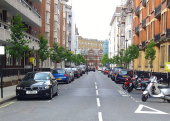
The new wing will rise on the site of St Vincent House, a long-held property near the Gallery that currently houses a hotel and offices. The design aims to strengthen connections between Trafalgar Square and Leicester Square, introducing landscaped public spaces, greenery, and improved pedestrian flow in the heart of central London.
Architecturally, the scheme blends continuity with contrast. The lower galleries will echo the character of the existing Sainsbury Wing, incorporating arches and vaulted forms, while the upper levels adopt a more contemporary geometric style. Natural light and carefully chosen materials—such as Portland stone—play a central role in shaping the visitor experience.
Sustainability and social impact were also key factors in the jury’s decision. The proposal includes a comprehensive framework addressing environmental responsibility and community engagement throughout the building’s lifecycle.
Project Domani is not only a construction effort but a broader transformation strategy. Alongside new gallery spaces, it includes plans to build an acquisitions fund for modern works and secure the institution’s long-term financial stability. To date, £375 million has already been raised, including major contributions from philanthropic foundations and private donors.
Founded in Tokyo in 1990, Kengo Kuma’s practice is internationally recognized for its culturally sensitive and human-centered approach to design, with notable projects across Europe and Asia. His selection signals a continued commitment by the National Gallery to combine global architectural excellence with its historic mission.
Gallery Director Gabriele Finaldi described the project as a defining moment, noting that the new building will “add distinction to some already distinguished buildings” while preparing the institution for the future.
Additional info about the National Gallery:
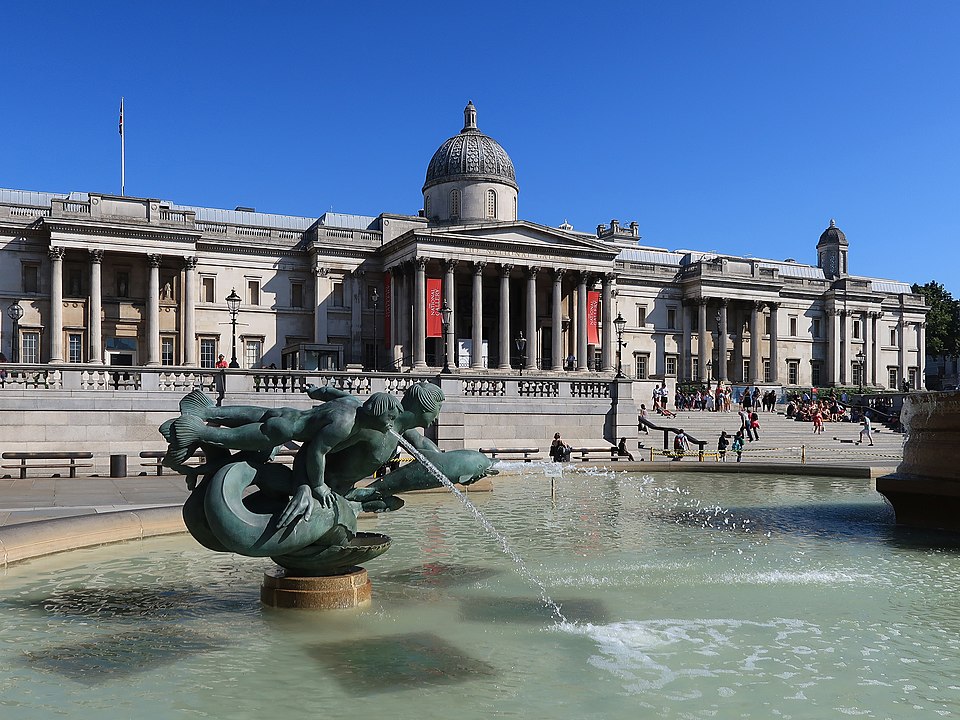
The National Gallery is one of the world’s leading art museums, located in Trafalgar Square. It houses over 2,300 paintings dating from the 13th to early 20th centuries, including masterpieces by artists such as Leonardo da Vinci, Vincent van Gogh, and J. M. W. Turner. The museum is publicly funded and offers free general admission, making it a cornerstone of accessible culture in the UK. Photo by Michael Coppins, Wikimedia commons.