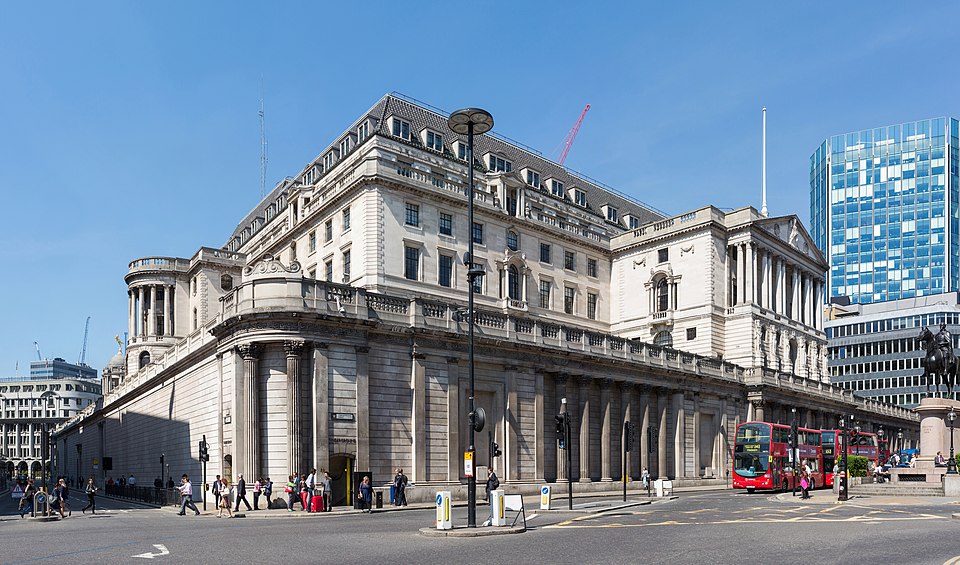
The Bank of England is widely expected to leave interest rates unchanged this week, as policymakers navigate growing uncertainty triggered by the escalating conflict involving Iran and its
broader economic consequences.
Like its counterparts at the U.S. Federal Reserve and the European Central Bank, the Bank of England is facing a difficult balancing act: determining whether rising energy costs will reignite long-term inflation or further weaken already sluggish economic growth.
A unanimous consensus among economists suggests that the Bank Rate will remain at 3.75% following the Monetary Policy Committee (MPC) meeting. However, attention is shifting to how divided policymakers may be. While March saw a rare 9-0 vote to hold rates, analysts now anticipate a possible split, with Chief Economist Huw Pill seen as the most likely to push for tighter policy amid concerns about persistent inflation.
Governor Andrew Bailey has struck a more cautious tone, warning investors against assuming imminent rate hikes given the unpredictable trajectory of the geopolitical crisis.
Economists say the central bank’s challenge lies in distinguishing between temporary inflation driven by surging energy prices and more entrenched price pressures. Rising fuel and utility bills are expected to push inflation higher in the near term, but whether this feeds into wages and broader pricing behavior remains uncertain.
The UK economy is particularly vulnerable due to its reliance on natural gas, leaving it exposed to global energy shocks. Recent data already shows businesses facing higher input costs and anticipating further price increases, raising concerns about a renewed inflation cycle.
At the same time, growth prospects are deteriorating. The National Institute of Economic and Social Research recently downgraded its forecasts, projecting modest expansion of just 0.9% this year. Inflation, meanwhile, may not return to the Bank’s 2% target until 2028.
Adding to economic unease are political pressures. Prime Minister Keir Starmer faces mounting challenges at home, with questions over fiscal policy and political stability contributing to investor caution. UK government borrowing costs have climbed to the highest levels among G7 nations.
Beyond economic concerns, the UK is also grappling with a rise in antisemitic incidents, reflecting broader social tensions heightened by global conflicts. Reports from organizations such as the Community Security Trust indicate a sharp increase in antisemitic abuse and hate crimes in recent months. This trend has sparked concern among community leaders and policymakers, who warn that international crises can often inflame domestic divisions.
As the Bank prepares to release updated forecasts and policy guidance, investors will be closely watching for signals on how officials interpret these overlapping risks — from geopolitical instability and inflation pressures to slowing growth and social cohesion challenges.
A press conference led by Bailey is scheduled shortly after the decision, where further insight into the Bank’s thinking — and the possible path of interest rates — is expected. Photo by DAVID ILIFF, Wikimedia commons.