
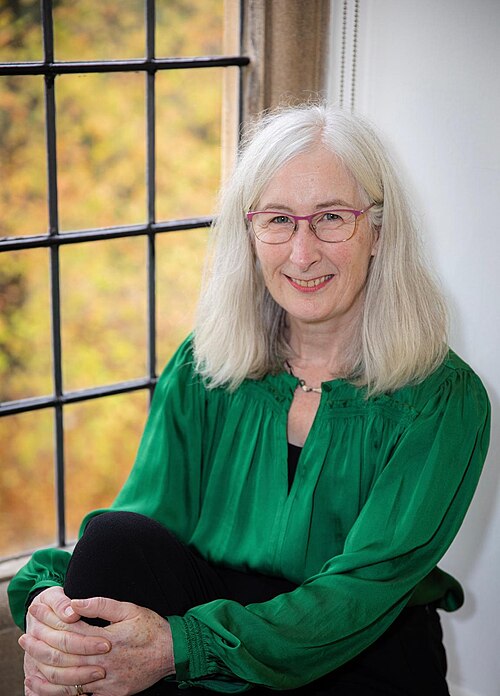
Lyndal Roper, Emeritus Regius Professor of History at University of Oxford, has been named the 2026 laureate of the prestigious Holberg Prize—one of the world’s most significant honours for
scholarship in the humanities and social sciences.
Established by the Norwegian Parliament in 2003, the Holberg Prize recognises outstanding contributions to research in fields including history, law, theology and social science. Roper will receive NOK 6 million (approximately £466,000) at a formal ceremony hosted by the University of Bergen on 4 June.
An internationally acclaimed historian of early modern Europe, Roper is widely credited with transforming the study of key historical phenomena such as witch persecutions, the German Peasants’ War, and the life and legacy of Martin Luther. Her work stands out for its innovative approach, weaving together insights on gender, the human body, psychology and power to reinterpret the social and religious conflicts of the 16th century.
Speaking after the announcement, Roper reflected on her lifelong commitment to “history from below”—a method that foregrounds the lived experiences of ordinary people rather than focusing solely on elites or major events. She has consistently pushed for narratives that include women and marginalized voices, while also exploring how emotion, embodiment and unconscious motivations shape human behaviour.
Roper noted that her personal experiences, including motherhood, deepened her understanding of non-verbal communication and the importance of bodily experience in historical interpretation. These insights have become central to her scholarship, helping redefine how historians approach the past.
Norway’s Minister of Research and Higher Education, Sigrun Aasland, praised Roper’s work, highlighting its relevance in understanding how historical beliefs continue to influence modern society. She emphasized that Roper’s research underscores the enduring importance of the humanities.
At Oxford, colleagues also welcomed the announcement. Dan Grimley, Head of the Humanities Division, described Roper as a scholar whose work has had a “decisive influence on international research.” He pointed to her major contributions across fields including Reformation history, gender studies and early modern German culture, as well as her lasting impact on students and early-career researchers.
Roper used the occasion to stress the importance of humanities scholarship in the age of artificial intelligence. She argued that disciplines such as history and philosophy are essential for developing critical thinking skills—particularly the ability to evaluate evidence, question assumptions and identify logical flaws in seemingly authoritative answers.
Her appointment to the Regius Chair of History in 2011 marked a milestone: she became both the first woman and the first Australian to hold the position at Oxford. Over a distinguished career, she has also taught at King’s College London and Royal Holloway, University of London, and co-founded the Bedford Centre for the History of Women and Gender in 1999.
Roper’s achievements have earned her election to leading academic bodies, including the British Academy and the Berlin-Brandenburg Academy of Sciences and Humanities. In 2016, she received the Gerda Henkel Prize for lifetime achievement—further cementing her reputation as one of the most influential historians of her generation.
About the Holberg Prize
The Holberg Prize is often described as the “Nobel Prize for the humanities.” Awarded annually in Norway, it honours scholars who have made exceptional contributions to research in the humanities, social sciences, law and theology.
- Prize amount: NOK 6 million (one of the largest in its field)
- Scope: International
- Named after: Ludvig Holberg, an Enlightenment-era writer and thinker
- Ceremony location: University of Bergen
Past winners include leading global thinkers whose work has shaped modern understanding of culture, politics, history and society. The prize also aims to raise the visibility and value of humanities research worldwide—especially at a time when its role is increasingly debated. Photo by Winterblw, Wikimedia commons.