Journalists from Ghana and Nigeria have completed a specialised science reporting programme at Imperial College London, equipping them with the tools to translate complex scientific
developments into compelling, accessible stories for millions of readers back home.
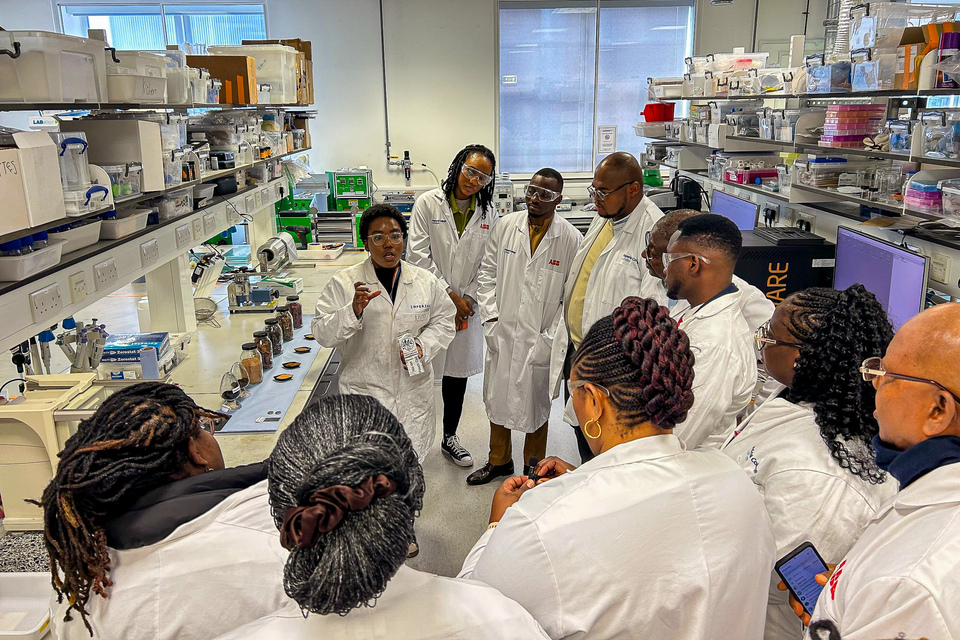
The intensive four-day programme, funded by the UK government through the Science Granting Councils Initiative, brought together selected reporters through a competitive pitching process. Participants engaged in laboratory tours, expert-led workshops and hands-on media training designed to strengthen accuracy and depth in science journalism.
During their stay in London, the journalists explored cutting-edge research spanning gene drive technology in malaria control, artificial intelligence in drug discovery, and innovations in sustainable energy. Visits to the Science Media Centre and the Frontier Tech Centre further introduced them to global best practices in responsible, evidence-based reporting.
The initiative builds on earlier training sessions held in Abuja and Accra, where a broader group of journalists received foundational skills. The London cohort focused on developing in-depth stories with direct relevance to their home countries. Nigerian participants examined biotransformation technologies already being deployed locally, while Ghanaian journalists engaged with academic leaders linked to Imperial’s partnerships in Ghana.
According to Jamie Proctor of the UK’s West Africa Research and Innovation Hub, the programme is designed to strengthen public understanding of science while supporting more informed policymaking. By improving how scientific developments are communicated, the initiative aims to build trust between researchers, governments and the public.
Stephen Johns of Imperial College London highlighted the importance of collaboration between journalists and researchers, noting that strong media partnerships are essential for bringing scientific breakthroughs—ranging from healthcare innovations to climate research—into the public domain.
At the policy and communications level, representatives from British High Commission Abuja and British High Commission Accra emphasised the broader impact of the programme. They noted that empowering journalists with accurate scientific knowledge helps ensure that reporting serves the public interest while amplifying African perspectives in global research conversations.
The initiative reflects a wider UK commitment to strengthening international research partnerships and enhancing the role of journalism in evidence-based decision-making across West Africa.
Additional context: Media freedom in Africa
Media freedom across Africa remains uneven. While countries like Ghana are often ranked among the continent’s more press-friendly environments, others—including Nigeria—face ongoing challenges such as political pressure, regulatory constraints and safety risks for journalists. Strengthening specialised reporting, particularly in areas like science and public health, is increasingly seen as part of a broader effort to improve journalistic independence, credibility and public trust.
Programmes like this not only build technical skills but also reinforce the role of journalists as key actors in democratic societies—ensuring that citizens have access to accurate, evidence-based information in environments where misinformation and restricted press freedom can still pose significant challenges.