British human rights lawyer Helena Kennedy has called for the creation of a dedicated international tribunal to prosecute Islamic State (ISIS) members responsible for the genocide of the
Yazidi religious minority in northern Iraq, arguing that more than a decade after the atrocities began, thousands of victims are still waiting for justice.
Kennedy, a Labour member of the House of Lords, made the appeal on Friday following a series of hearings involving Yazidi survivors in Germany. She said that the systematic rape, sexual enslavement, torture and forced displacement of Yazidi women and girls represented one of the gravest human rights crimes of recent decades.
She warned that international recognition of the atrocities as genocide had not translated into sufficient criminal accountability for those who planned and carried out the attacks.
"International recognition of this genocide is not enough," Kennedy said, arguing that governments must ensure Islamic State members are brought before courts and held individually responsible for their actions. A dedicated international tribunal, she believes, could provide a more comprehensive route to justice and establish that perpetrators of genocide cannot escape punishment.
The Yazidi genocide: Islamic State's campaign of extermination
The atrocities against the Yazidis began on 3 August 2014, when Islamic State fighters launched a coordinated offensive against the Sinjar district in Iraq's Nineveh province, close to the Syrian border.
The Yazidis are an ancient ethno-religious community whose religious traditions combine elements of several historical belief systems. Their faith, which has developed over centuries in the Middle East, is distinct from Islam and Christianity. Before the 2014 offensive, Sinjar was home to one of the world's largest Yazidi populations.
Islamic State regarded the Yazidis as infidels and sought to destroy their religious identity and community. Its campaign was not simply a military operation but a systematic attempt to eliminate a religious minority through mass executions, forced conversion, enslavement and the destruction of family and community structures.
When ISIS captured Yazidi villages, its fighters separated men and older boys from women and children. Thousands of men and boys who refused to convert to the group's extremist interpretation of Islam were executed. Women and girls were abducted, transported to locations across Iraq and Syria, and subjected to an organised system of sexual slavery.
According to United Nations investigations, thousands of Yazidi women and girls were sold, exchanged or distributed among Islamic State fighters. Some were repeatedly transferred between militants, forced into marriages, raped and subjected to physical and psychological torture. Children were also taken from their families, with boys subjected to forced religious indoctrination and military training.
The UN has documented evidence that these crimes formed part of a deliberate campaign to destroy the Yazidi population as a religious group. Its investigations concluded that Islamic State committed genocide, crimes against humanity and war crimes against the community.
The attack also triggered a humanitarian catastrophe. Tens of thousands of Yazidis fled towards Mount Sinjar, where Islamic State fighters surrounded the mountain and cut off escape routes. Trapped civilians, including children, elderly people and injured residents, faced extreme shortages of food and drinking water.
International military intervention helped open humanitarian corridors and prevent further mass casualties. Nevertheless, hundreds of thousands of Yazidis were forced to abandon their homes, creating a displacement crisis that continues to affect the community.
The Islamic State's territorial expansion was eventually reversed by an international military coalition and local forces. The group lost control of Mosul in 2017 and its last significant territorial stronghold in Syria in 2019. However, the collapse of its self-proclaimed caliphate did not end the consequences of its campaign against the Yazidis.
Thousands of victims remain missing
More than a decade after the genocide, the fate of thousands of abducted Yazidis remains unknown.
The United Nations reported in August 2025 that almost 2,600 Yazidis, alongside women and girls from other minority communities, were still missing. Some are believed to have been trafficked to other countries or remain in captivity in territories where Islamic State affiliates operate.
For survivors, the consequences extend far beyond the immediate physical violence. Many women who escaped captivity continue to experience serious psychological trauma, while families remain separated and entire communities struggle to rebuild their lives.
The destruction of homes, religious sites and local infrastructure has also complicated efforts to restore normal life in Sinjar. Although some displaced Yazidis have returned to Iraq, many continue to live in camps or elsewhere in the Kurdistan Region and abroad.
Germany has become particularly important in this process. It hosts the world's largest Yazidi diaspora community and has provided refuge to thousands of survivors of Islamic State atrocities. It has also emerged as one of the most active European countries in prosecuting suspected perpetrators.
European courts increasingly recognise the genocide
Although the international community has widely recognised the crimes committed against the Yazidis as genocide, establishing individual criminal responsibility has proved considerably more complicated.
The International Criminal Court has no straightforward territorial jurisdiction over crimes committed in Iraq and Syria, neither of which is a party to the Rome Statute. As a result, national courts have played a particularly important role in pursuing suspects who have travelled to or settled in Europe.
Germany has been at the forefront of these efforts through the principle of universal jurisdiction, which allows its courts to prosecute certain international crimes regardless of where they were committed or the nationality of the victims and defendants.
A landmark ruling came in November 2021, when a German court convicted former Islamic State member Taha al-J. of genocide. The case concerned the enslavement and abuse of a Yazidi woman and her five-year-old daughter in Iraq. It was the first criminal conviction worldwide recognising Islamic State's persecution of the Yazidis as genocide.
Amnesty International+1
More recently, in July 2026, the Higher Regional Court in Munich convicted an Iraqi couple for genocide, crimes against humanity and war crimes involving the enslavement, sexual abuse and torture of two Yazidi girls. The male defendant received a life sentence, while the woman was sentenced to nine and a half years in juvenile detention.
Other European countries have also pursued similar cases. France, for example, recognised the Yazidi genocide in a landmark criminal judgment in March 2026, sentencing Islamic State member Sabri Essid to life imprisonment. Sweden has also secured convictions involving the enslavement and forced transfer of Yazidi children.
These cases demonstrate that national judicial systems can prosecute international crimes even when the atrocities took place thousands of kilometres away. However, they also illustrate the limitations of relying exclusively on individual national proceedings.
Iraq's reparations programme and the struggle for recovery
Alongside criminal prosecutions, compensation and rehabilitation remain central demands of the Yazidi community.
In March 2021, the Iraqi parliament adopted the Yazidi Female Survivors Law, formally recognising the genocide and establishing a framework for supporting survivors of Islamic State crimes.
The legislation provides for monthly financial compensation, medical and psychological rehabilitation, educational opportunities, housing assistance and employment support. It also covers survivors from other minority communities, including Turkmen, Christians and Shabak, as well as children abducted by Islamic State.
The law also provides for measures to preserve evidence, identify mass graves, return victims' remains to their families and support the search for people who remain missing.
Implementation, however, remains incomplete. A report published in 2026 found that although thousands of survivors have benefited from compensation payments, administrative obstacles and difficulties accessing justice continue to prevent many victims from receiving the full range of assistance available under the legislation.
The United Nations Investigative Team to Promote Accountability for Crimes Committed by Da'esh (UNITAD) also played an important role in documenting the atrocities. Its investigations included the examination of mass graves, collection of forensic evidence and preparation of material for criminal proceedings. The team's mandate ended in September 2024, with important investigative findings shared with Iraqi judicial authorities.
International Truth Commission calls for a new approach to justice
Kennedy chaired a meeting of the International Truth Commission this week in Germany, where Yazidi survivors described their experiences and called for stronger international action.
The initiative seeks to mobilise political and legal support for prosecuting individuals responsible for the genocide. Its participants include Nobel Peace Prize laureate Navi Pillay and Ukrainian human rights advocate Oleksandra Matviichuk, whose organisation received the 2022 Nobel Peace Prize.
The involvement of Matviichuk also highlights the growing connection between international human rights campaigns addressing atrocities in different parts of the world, including Ukraine and the Middle East.
During the hearings, survivors spoke about the continuing consequences of abduction, sexual violence and the destruction of their families.
Among those giving testimony was 39-year-old Najlaa Matto, who was kidnapped from her home village of Kocho as a young woman and subsequently sold into slavery by Islamic State fighters.
Speaking through an interpreter, she said that sharing her experiences was important to ensuring that the crimes were not forgotten and that those responsible would eventually face justice.
She recalled that the experience of captivity had left lasting scars, adding that survivors could not always describe everything they had witnessed but needed opportunities to make their voices heard.
Her testimony illustrated one of the central arguments behind the proposed tribunal: that justice must extend beyond recognising the suffering of victims and include the prosecution of those who organised, facilitated and participated in the crimes.
Why a special tribunal could matter
Kennedy's proposal comes amid continuing debate over how best to establish accountability for the crimes committed by Islamic State.
Existing national prosecutions have produced important precedents, but their geographical reach and resources remain limited. A dedicated international mechanism could potentially coordinate investigations, consolidate evidence, establish responsibility across the organisation's command structure and prosecute senior figures who have not yet faced justice.
Such a tribunal would also have to address difficult questions concerning jurisdiction, cooperation with national governments, access to suspects and the protection of witnesses. Its establishment would require substantial international political and legal support.
For the Yazidi community, however, the issue is about more than criminal punishment. It concerns recognition of the deliberate attempt to destroy an ancient religious community, the restoration of dignity to survivors and the possibility of rebuilding a future after one of the worst genocidal campaigns of the 21st century.
More than 12 years after the attack on Sinjar, the demand for justice remains unresolved. Kennedy's appeal seeks to turn international recognition of the Yazidi genocide into a coordinated legal effort capable of bringing those responsible before the courts.
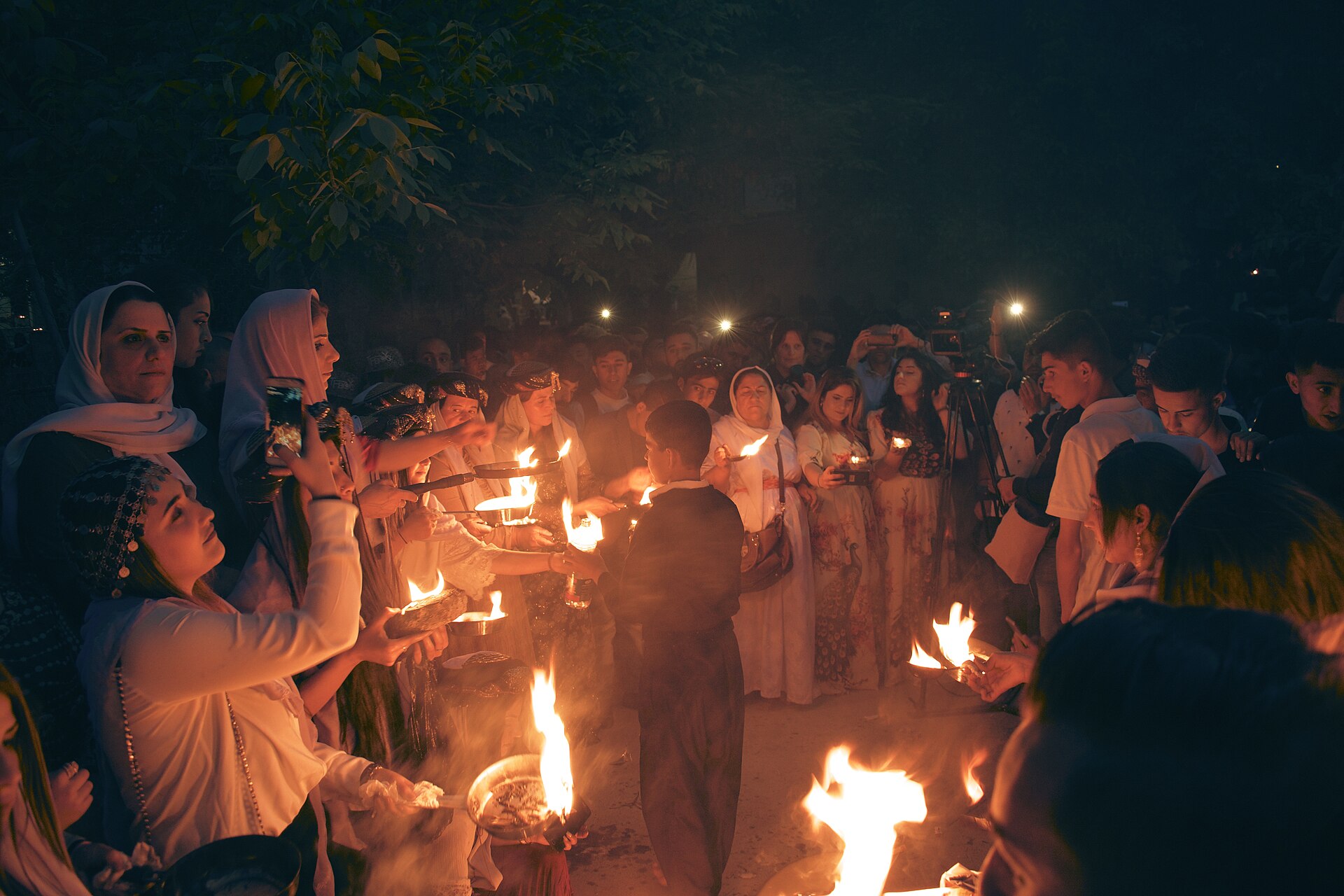
The central message from survivors is that the passage of time must not become an excuse for impunity. Photo by Levi Clancy, Wikimedia commons.