Sport has traditionally been viewed as an important tool for maintaining physical health, improving fitness and promoting an active lifestyle. However, its social significance is equally
important and, in many respects, remains insufficiently recognised. Participation in sporting activities can help people develop friendships, learn teamwork, build trust and establish a sense of belonging. For young people in particular, sport can provide an accessible environment in which communication and social relationships develop naturally.
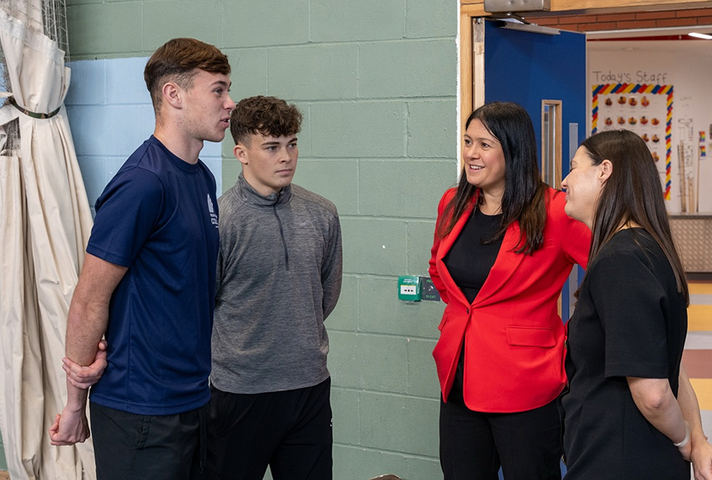
The British government is seeking to make greater use of this potential, introducing a new initiative designed to tackle loneliness and social isolation among boys and young men. By investing in community sport, organised gaming and face-to-face activities, the government hopes to create new opportunities for young people to build friendships, find positive role models and develop stronger connections with their communities.
The initiative, announced on 19 November 2026 to mark International Men's Day, involves £1.3 million in government funding for two programmes aimed at boys and young men who may be particularly vulnerable to loneliness or reluctant to seek assistance through conventional youth services.
The investment reflects growing recognition that social isolation among young men is not simply a private or psychological issue but also a wider societal challenge. Young people who lack meaningful relationships and a sense of belonging can become more susceptible to harmful online communities, extremist narratives and individuals offering simplistic answers to complex personal problems.
Culture Secretary Lisa Nandy said that young men who struggle to establish connections in their local communities may increasingly turn to the internet in search of acceptance and support. The government's approach is therefore intended to provide positive alternatives, using shared interests such as sport and gaming to bring young people together in safe environments.
Sport as a platform for social connection
A central element of the new initiative is the expansion of Sport Cares' Offload programme, which will receive more than £600,000 to extend its activities into 10 additional areas of England.
The programme focuses on boys and young men aged 16 to 24, using sport as an entry point for conversations about mental health, loneliness, confidence and personal development. Activities are delivered by trained current and former professional athletes, who use their sporting experience to establish relationships with participants and encourage open discussions about issues that young men might otherwise find difficult to address.
The programme combines opportunities to participate in sport with team-building exercises and informal discussions. Its underlying idea is that sporting environments can make conversations about emotional wellbeing more accessible, particularly for young men who may feel uncomfortable approaching traditional support services.
The expansion follows pilot projects conducted in Wigan and Wakefield between November 2025 and March 2026. During this period, approximately 1,300 people participated in the programme.
An independent assessment conducted by Edge Hill University identified improvements in several areas, including participants' social relationships, sense of belonging, psychological wellbeing, resilience and personal aspirations. The evaluation also highlighted increased confidence and improvements in emotional regulation.
Participants described becoming more comfortable communicating with others and developing friendships through shared activities. One participant said that the experience had made him more talkative, while another described the initiative as an opportunity for young men to spend time together, get to know one another and establish lasting bonds.
The government expects the expanded programme to reach a further 1,800 participants, demonstrating its intention to move beyond short-term pilot projects towards a broader community-based approach.
Former Great Britain rugby league international Keith Senior, who leads wellbeing programmes at Sport Cares, said the initial projects had demonstrated how sport could provide inspiration and practical support to young men at an important stage of their lives.
Gaming clubs offer another route to friendship
The second component of the government's investment addresses a different challenge: reaching boys who may not naturally participate in organised sports or conventional youth activities.
More than £740,000 will support a new three-year Connections Through Gaming pilot programme, aimed at boys aged 11 to 16.
The initiative will establish structured, face-to-face gaming clubs where participants can meet, play age-appropriate games and develop relationships with their peers. Trained youth workers will supervise activities, while a secure online environment will allow participants to maintain contact between meetings.
The programme recognises that gaming has become an important part of many young people's social lives. Rather than treating digital entertainment exclusively as a source of isolation, the government intends to use shared gaming interests as a way of encouraging real-world communication.
However, the organisers emphasise that physical meetings and relationships with trusted adults will remain central to the project. Online communication will be restricted to a password-protected and actively moderated environment, without public gaming lobbies, open matchmaking or contact with unknown players.
This approach is intended to create a safer alternative to unregulated online spaces, where young people can encounter cyberbullying, manipulation and potentially harmful communities.
The programme also acknowledges that not all boys find it easy to participate in traditional group activities. Gaming can provide a familiar starting point for those who experience social difficulties or lack confidence when meeting new people.
Tackling loneliness through community engagement
The government's announcement forms part of a wider effort to strengthen social connections among men and boys. It also highlights the importance of organisations such as Andy's Man Club, which provide welcoming face-to-face environments where men can discuss personal difficulties, establish friendships and receive peer support.
Prime Ministerial engagement with the organisation on International Men's Day underlined the government's interest in community-based approaches that encourage men to speak openly about their experiences.
Loneliness Minister Vicky Foxcroft stressed that there was no single solution to social isolation. Different approaches are needed to reach young people with different interests, circumstances and levels of confidence. A local football club, a sporting mentor or a gaming group can each provide an opportunity to establish the first meaningful social connection.
The Department for Digital, Culture, Media and Sport will monitor the programmes' results to develop a stronger evidence base on the effectiveness of sport, gaming and trusted adult relationships in addressing loneliness.
Sport's wider social and educational potential
The British initiative highlights an important dimension of sport that deserves greater attention in public policy: its capacity to function as an instrument of social communication and integration.
Sporting activities create situations in which people interact through common objectives, shared responsibilities and collective experiences. Unlike many formal educational or social programmes, they can bring together individuals who might otherwise have little reason to communicate.
Team sports, in particular, encourage cooperation, mutual respect, discipline and the ability to resolve disagreements. They can also help young people develop leadership skills and learn how to support others. These qualities extend beyond the playing field and can influence relationships in schools, workplaces and local communities.
There is also a significant intergenerational dimension. Former professional athletes and experienced coaches can serve as role models, demonstrating that success is built through persistence, cooperation and overcoming setbacks. Their personal experiences can make discussions about confidence, mental health and personal responsibility more accessible to younger participants.
The British approach is particularly interesting because it does not limit social engagement to traditional sports. By incorporating gaming into the programme, the government is acknowledging changes in the way younger generations communicate and interact.
Ultimately, the £1.3 million investment represents more than funding for recreational activities. It is an attempt to use shared interests to strengthen social relationships, prevent isolation and create healthier community environments.
Although the long-term effectiveness of the programmes remains to be established, the initial results from Wigan and Wakefield offer encouraging evidence that sport can contribute to improvements in young people's confidence, wellbeing and sense of belonging.
Britain's initiative also raises a broader question for policymakers across Europe: should sport and other shared leisure activities play a more prominent role in strategies addressing loneliness, social fragmentation and the growing influence of harmful online environments? The British experience suggests that football pitches, sports clubs and even gaming rooms can become important spaces for social development, where young people learn not only how to compete, but also how to communicate, cooperate and build lasting friendships.