British Prime Minister Andy Burnham is meeting European Union leaders in Brussels on 20 November in an effort to reshape relations between London and Brussels, reduce trade barriers
and strengthen economic and security cooperation. The negotiations could mark a significant step towards repairing the economic damage caused by Brexit while creating new opportunities for businesses, workers and young people on both sides of the Channel.
A new chapter in UK-European relations
The Brussels meeting, attended by Burnham, European Council President António Costa and European Commission President Ursula von der Leyen, represents the second major UK-EU summit since the first meeting in London in May 2025. That earlier summit established a new strategic partnership and laid the foundations for closer cooperation following years of political disagreements and uncertainty over the future of relations after Britain's departure from the EU.
The November summit is intended to turn those political commitments into practical agreements capable of delivering tangible economic benefits. Both sides recognise that geographical proximity, extensive commercial links and shared security challenges make cooperation increasingly important, particularly amid international instability and Russia's continuing war against Ukraine.
For the British government, the central objective is to improve access to European markets without reversing Brexit or returning to the EU's institutional structures. Burnham has argued that the existing post-Brexit arrangements have created unnecessary obstacles for British businesses and weakened economic growth. His administration is therefore seeking a more flexible relationship based on closer regulatory cooperation, reduced bureaucracy and mutually beneficial agreements.
The European side, meanwhile, is interested in establishing a more predictable partnership with London, particularly in defence, energy, trade, climate policy and migration management.
Autumn negotiations: economic interests take centre stage
Relations between London and Brussels have become increasingly active during autumn 2026, as officials from both sides intensified preparations for the Brussels summit.
The meeting was formally announced on 12 October, when the British government confirmed that Burnham would travel to Brussels to discuss economic cooperation, trade facilitation and security. The European Council and European Commission subsequently outlined a broader agenda covering agriculture, energy, climate policy, people-to-people contacts, defence and law enforcement.
However, negotiations have not been entirely straightforward. One particularly sensitive issue has been the European Union's proposed 'Made in Europe' industrial policy, which could give preference to European-produced goods in certain sectors and procurement arrangements. London has expressed concern that British manufacturers, particularly in the automotive and chemical industries, could face disadvantages if the new arrangements exclude UK-produced goods.
Disagreements over the details of youth mobility arrangements, regulatory alignment and the financial obligations associated with closer cooperation have also complicated the negotiations. The summit itself was postponed from an earlier timetable, reflecting the difficulty of reconciling the priorities of both parties.
Nevertheless, the economic incentives for reaching an agreement remain substantial.
One of the most important proposals concerns trade in agricultural products, food and drink. The planned sanitary and phytosanitary (SPS) agreement would establish closer alignment between British and European rules governing food safety, animal health and plant health.
Such an arrangement could significantly reduce the number of certificates, inspections and administrative procedures currently required when agricultural products cross the UK-EU border.
According to estimates published by the British government, an agreement on food and drink trade could generate up to £5.1 billion annually for the UK economy. British farmers, food manufacturers, exporters and retailers would be among the potential beneficiaries. Consumers could also benefit from lower administrative costs and more efficient supply chains, potentially helping to ease pressure on supermarket prices.
GOV.UK+2
Another important element is the proposed linking of the British and European emissions trading systems. The agreement could reduce the risk of additional carbon-related charges on industrial exports and make it easier for manufacturers to operate across both markets.
The British government estimates that linking the systems could contribute up to £3.8 billion annually to the economy. It could also protect exports worth approximately £6.5 billion from the impact of the EU's Carbon Border Adjustment Mechanism, particularly in industries such as steel and aluminium.
For British industrial regions, where manufacturing remains an important source of employment, these arrangements could have considerable economic significance.
New opportunities for young people
Youth mobility is another major issue on the summit agenda.
The end of free movement following Brexit significantly changed opportunities for British and European citizens to study, work and spend extended periods in each other's countries. The proposed Youth Experience Scheme aims to restore some of these opportunities through a limited-term arrangement.
Under the proposal reported ahead of the summit, up to 100,000 young people could be allowed to participate in the scheme over three years, enabling eligible participants to live, study and work across the Channel for a defined period.
The initiative would also help British universities, employers and cultural organisations attract young European talent, while giving young Britons greater access to educational and professional opportunities across Europe.
However, the arrangements have exposed differences between the negotiating positions. One unresolved question concerns university tuition fees, particularly whether EU students studying in Britain should receive home-fee or reduced-fee treatment. The two sides have not yet reached a final agreement on this issue.
The scheme is politically significant because it addresses one of the most visible consequences of Brexit for younger generations without restoring unrestricted freedom of movement.
Security and migration become central priorities
Economic cooperation is only one part of the changing relationship between London and Brussels. Security, defence and migration have also become increasingly important areas of common interest.
The British government wants to strengthen cooperation with European partners to combat organised criminal networks involved in people smuggling and dangerous crossings of the English Channel.
The proposed arrangements would improve information-sharing, operational coordination and cooperation between law enforcement agencies. The government argues that closer collaboration with neighbouring countries is essential to tackling the criminal organisations responsible for facilitating irregular migration.
Defence cooperation is equally important. Britain's military capabilities, intelligence resources and diplomatic influence make it a significant partner for European countries, despite no longer being an EU member.
The importance of this relationship has been underlined by Russia's continuing aggression against Ukraine and the wider security challenges facing Europe.
Immediately before travelling to Brussels, Burnham attended a meeting of the Coalition of the Willing in Berlin, where he announced a new £260 million support package for Ukraine, including the provision of 1,000 long-range drones.
The announcement demonstrated that London intends to remain actively involved in European security initiatives and support Ukraine's ability to defend itself against Russian aggression. It also reinforced the argument that Britain and the EU have substantial shared interests in defence, intelligence and maintaining European stability.
Energy and climate cooperation offer further opportunities
Energy policy is another area where closer UK-EU relations could deliver long-term benefits.
The British and European energy markets are closely interconnected, and cooperation is particularly important as both sides seek to accelerate the transition towards renewable energy, improve energy security and reduce dependence on unstable external suppliers.
Negotiations have included the possibility of enabling Britain to participate more closely in the EU's internal electricity market. This would require appropriate regulatory arrangements and financial contributions, but could improve cross-border electricity trading and support the development of interconnected energy infrastructure.
Climate policy is also becoming an important component of the relationship. Linking emissions trading systems would help reduce differences between the two regulatory frameworks and provide greater certainty for businesses investing in low-carbon technologies.
These discussions build on the common understanding reached at the 2025 London summit and subsequent negotiations authorised by the EU in 2025 and 2026.
Brexit remains a political dividing line
Despite the growing momentum behind closer cooperation, neither side is proposing an immediate return to the UK's former EU membership.
The British government has maintained its political commitments against rejoining the European Union, the customs union or the single market, as well as restoring unrestricted freedom of movement. Instead, Burnham is pursuing agreements designed to reduce the practical consequences of Brexit while preserving Britain's formal independence from EU institutions.
Nevertheless, the debate about the country's long-term European future has become more prominent during autumn.
The Prime Minister has indicated that Britain should reconsider its relationship with Europe, while acknowledging that any fundamental change would require a clear political mandate and support from the British public. European officials have also signalled that they want greater clarity about London's long-term intentions rather than relying indefinitely on a series of separate agreements.
This creates a delicate political balance. Britain wants the economic advantages of closer integration, but Brussels needs assurances that future UK governments will maintain commitments made under the new partnership.
A strategic partnership beyond Brexit
The Brussels summit comes at a time when the economic and geopolitical environment is encouraging European countries to strengthen cooperation. International trade uncertainty, security threats, technological competition and the need to protect industrial capacity are all increasing the importance of closer relations between neighbouring economies.
For Britain, the European Union remains its largest trading partner and one of its most important economic and political counterparts. For the EU, the UK is a major European economy with significant defence capabilities, global diplomatic influence and extensive experience in intelligence and international security.
The challenge for both parties is to translate these common interests into practical arrangements that benefit businesses and citizens without reopening every political disagreement associated with Brexit.
The outcome of the 20 November meeting could therefore become an important milestone in the development of a new UK-European relationship. If the proposed agreements are implemented successfully, they could reduce trade costs, improve industrial competitiveness, expand educational opportunities and strengthen Europe's collective security.
Rather than simply revisiting the arguments of the Brexit years, London and Brussels are now attempting to establish a more pragmatic model of cooperation — one based on shared economic interests, political realism and the recognition that Britain's future prosperity and Europe's stability are closely interconnected.
Sources and further reading
UK-EU Summit package: factsheet and mythbuster.
European Council: EU-United Kingdom Summit, 20 November 2026.
Reuters: Britain and EU set to agree to reset but divisions persist.
European Council: Post-Brexit agreements and progress in UK-EU relations.
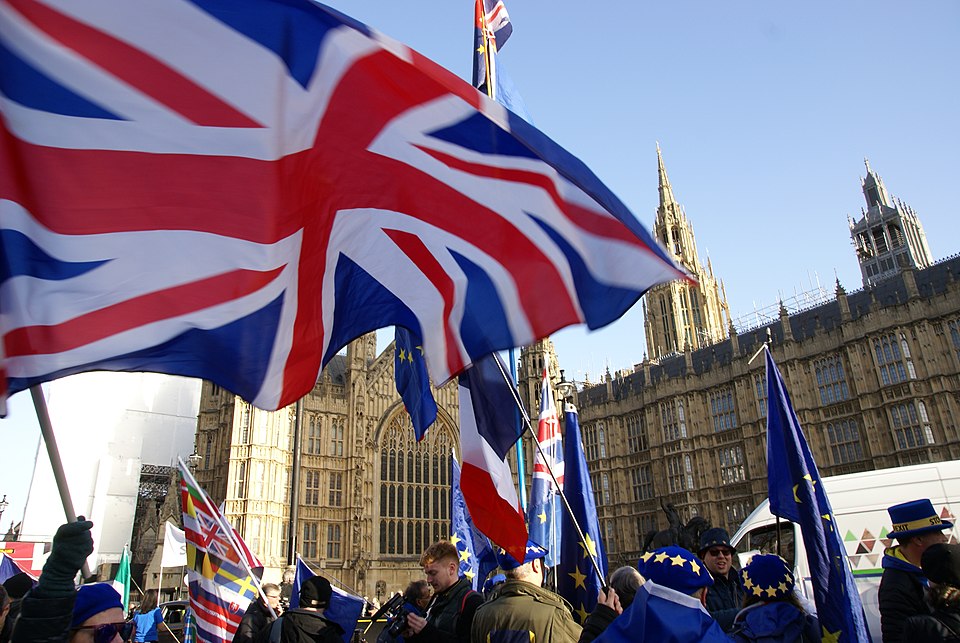
Photo by ChiralJon, Wikimedia commons.