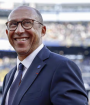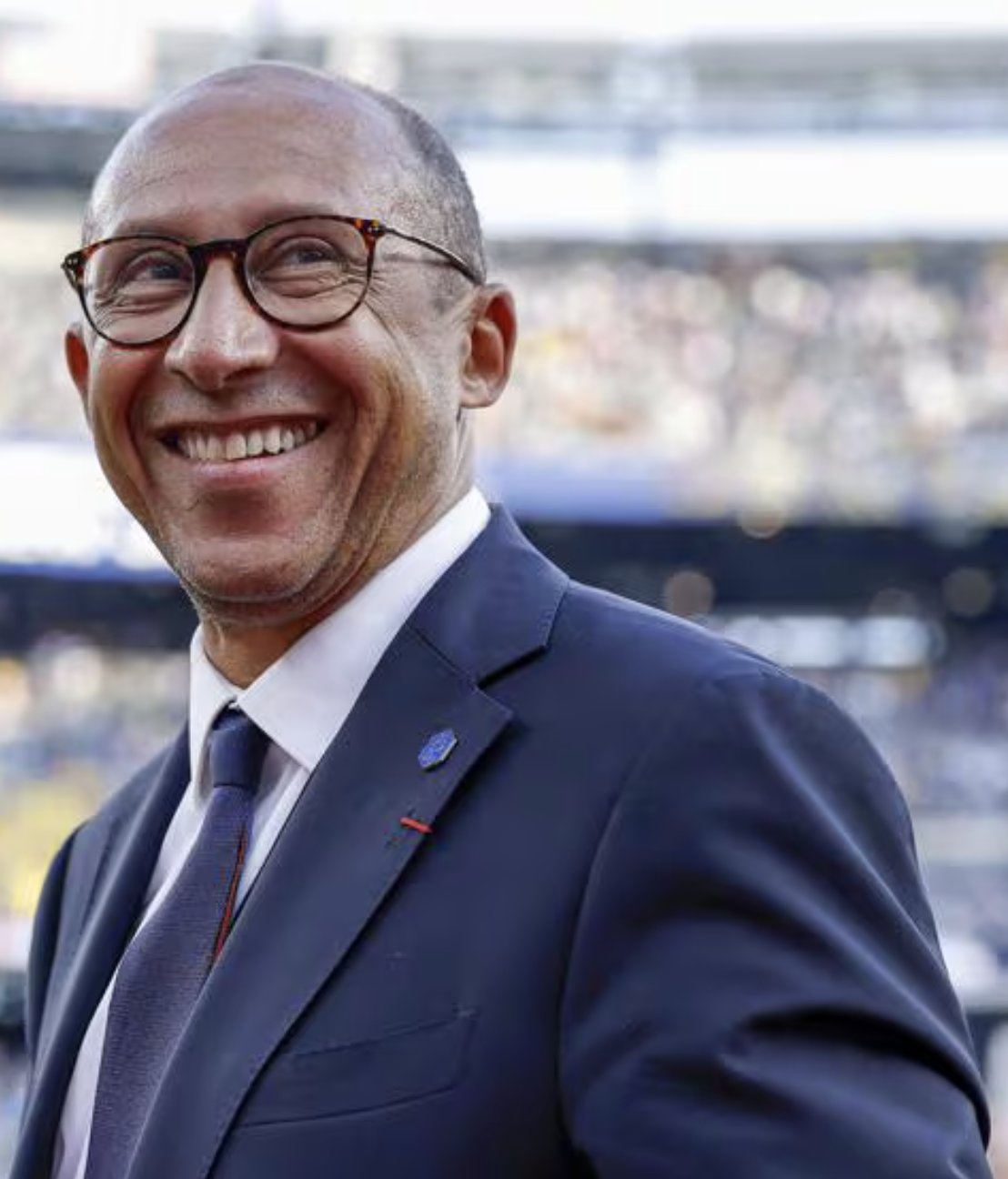
European football is preparing for a potentially significant confrontation over the future leadership of FIFA, with French Football Federation president Philippe Diallo emerging as the
candidate backed by UEFA to challenge incumbent Gianni Infantino in the March 2027 presidential election.
The move reflects growing dissatisfaction among European football associations with Infantino's leadership, particularly over questions of transparency, governance and the increasing concentration of commercial and political influence within world football's governing body.
UEFA announced on November 16 that its member associations represented on the organisation's executive committee and FIFA Council had unanimously endorsed Diallo's candidacy. The French official accepted the nomination, with formal approval from the French Football Federation's executive committee expected to follow.
The election is scheduled for March 18, 2027, in Rabat, Morocco. Infantino is seeking another term, which would extend his presidency beyond a decade after he first took office in 2016.
Diallo, 63, has led the French Football Federation since 2023, initially taking over on an interim basis following the departure of Noël Le Graët. He was subsequently elected president and secured a new four-year mandate in December 2024.
His candidacy represents a direct political challenge to Infantino, whose relationship with European football authorities has deteriorated considerably. In September 2026, the French federation formally withdrew its support for the FIFA president's re-election campaign. Diallo argued that confidence in Infantino's leadership had been seriously undermined, reflecting wider concerns within UEFA.
FIFA's governance crisis and Infantino's controversial record
The challenge comes at a particularly difficult moment for Infantino, whose decade at the head of FIFA has been marked by repeated controversies involving ethics, political relationships, financial transparency and the organisation's decision-making processes.
Although Infantino was elected in 2016 promising to restore FIFA's credibility after the corruption scandals surrounding his predecessor Sepp Blatter, his own presidency has repeatedly faced allegations of questionable governance.
One of the earliest controversies concerned private aircraft flights, employment decisions within FIFA's presidential office and the terms of Infantino's employment contract. FIFA's independent Ethics Committee investigated the allegations and concluded in August 2016 that he had not breached its code of ethics.
Further questions emerged over Infantino's undisclosed meetings with Switzerland's then Attorney General Michael Lauber in 2016 and 2017. The meetings took place while Swiss authorities were investigating alleged corruption involving FIFA officials. In 2020, a special prosecutor opened criminal proceedings amid suspicions of abuse of office, breaches of official secrecy and related offences.
The affair became a major institutional embarrassment for Swiss football administration. Lauber eventually resigned following criticism of his handling of the FIFA investigation. However, an important distinction is that the criminal proceedings against Infantino were discontinued in October 2023. Swiss prosecutors said their investigation had failed to substantiate suspicions of criminal conduct, while Infantino denied wrongdoing throughout the affair.
More recently, concerns have increasingly focused on FIFA's financial arrangements and the extent of presidential control over the organisation.
A particularly damaging controversy erupted in 2026 over Infantino's proposal to establish FIFA Forward Enterprise (FFE), a new commercial company intended to manage important revenue-generating assets, including rights connected with the World Cup and other major competitions. The plan envisaged attracting private investment and potentially selling investors a minority stake in the business.
The proposed structure was reportedly valued at around $20 billion, with plans to raise approximately $4.2 billion from private investors. Critics questioned why such a far-reaching commercial initiative had been developed without adequate consultation with FIFA's 211 national associations and expressed concern about the potential privatisation of football's most valuable assets.
The proposal provoked particularly strong opposition in Europe. Several football confederations rejected the initiative, while UEFA threatened to boycott FIFA competitions if the plans proceeded. Infantino eventually abandoned the project in August 2026, but the episode significantly damaged relations between FIFA's leadership and European football authorities.
The controversy also raised questions about the role of influential financial and political figures connected with the proposed investment structure. Infantino subsequently acknowledged that the initiative had caused concern and indicated that he would consider an independent assessment of FIFA's governance arrangements.
The financial questions intensified further in November, when French newspaper Le Monde published an investigation based on confidential FIFA documents. It reported that the organisation had paid almost $4 million in US taxes on Infantino's behalf for 2024–2026, using a tax-equalisation arrangement originally designed for employees temporarily working abroad.
The investigation also alleged that FIFA had revised its senior officials' compensation rules in ways that benefited its president, including introducing performance bonuses and relaxing restrictions on private travel, accommodation, gifts and guests. According to the documents examined by the newspaper, Infantino's annual remuneration had reached approximately $6.13 million in 2024, excluding certain additional benefits.
The report further raised questions about the involvement of individuals close to Infantino in drafting compensation rules and approving financial arrangements. FIFA rejected suggestions that it had breached its regulations, maintaining that all payments, benefits and tax arrangements complied with applicable laws and internal procedures. These revelations have nevertheless added to demands for independent oversight and greater financial accountability.
UEFA has responded by demanding explanations from FIFA on a much broader range of issues. In October, European football's governing body sent 42 questions covering 12 subjects, including the abandoned investment project, Infantino's remuneration and the controversial FIFA Peace Prize awarded to US President Donald Trump.
UEFA insisted that FIFA should provide immediate answers rather than postponing scrutiny until its December Council meeting. The dispute illustrates the depth of the institutional divide between European football authorities and Infantino's administration.
Political controversies have also contributed to criticism of the FIFA president. His close relationship with Trump, particularly during preparations for the 2026 World Cup, raised questions about FIFA's commitment to political neutrality. The decision to award Trump the inaugural FIFA Peace Prize during the World Cup draw in December 2025 attracted criticism from football observers, while the circumstances surrounding an intervention in the suspension of US forward Folarin Balogun also generated controversy, as described in the original Reuters report.
Infantino has also faced criticism over his public interventions in international political affairs and his increasingly visible association with political leaders. Critics argue that the president's approach risks turning FIFA into a platform for political relationships rather than an organisation governed primarily by sporting principles.
A difficult election for Infantino
Despite the growing opposition, Infantino remains a powerful candidate. He enjoys considerable support among national football associations, particularly in Asia and other regions where FIFA development funding has played an important role in building his political influence.
His position received a boost in October when the Asian Football Confederation's leadership publicly endorsed his re-election. FIFA has 211 member associations, and candidates must secure the backing of at least five national federations to enter the presidential contest.
Diallo is not the only challenger. Japan Football Association honorary president Kozo Tashima has announced his intention to compete, while former Tottenham Hotspur defender Ramon Vega has also declared his candidacy. However, UEFA's collective endorsement gives Diallo a significantly stronger platform than the other declared opponents.
The French candidate's main challenge will be to turn European support into a broader international coalition capable of overcoming Infantino's influence among FIFA's global membership.
For UEFA, the election is about more than replacing an individual. European football officials are seeking a different approach to FIFA's governance, with greater transparency in financial decisions, meaningful consultation with national associations and stronger institutional safeguards against conflicts of interest.
The outcome will determine whether Infantino can retain control of world football despite mounting criticism or whether his opponents can build a sufficiently powerful coalition to bring about a change in leadership.
The March 2027 election in Rabat is therefore shaping up to be one of the most politically significant contests in FIFA's recent history. Photo by Footballnerd2007, Wikimedia commons.