The British education system remains one of the United Kingdom’s most valuable national assets, strengthening its international reputation, supporting its global influence and creating
lasting connections with countries around the world. For generations, British universities and academic institutions have attracted talented students from abroad, offering not only recognised qualifications but also opportunities to develop professional expertise, leadership skills and international networks.
The relationship between the United Kingdom and Pakistan in education is particularly significant. Rooted in longstanding historical, cultural and institutional ties, educational cooperation has become an important dimension of bilateral relations. Today, this partnership is evolving to address the challenges of a rapidly changing global economy, with particular emphasis on technology, innovation and the development of future leaders.
The latest initiative announced by the British Government illustrates how this cooperation can be strengthened through partnerships between public institutions and the private sector.
A new scholarship partnership
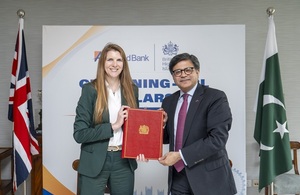
On 6 November 2026, the British High Commission in Islamabad announced a new partnership between the UK Government’s flagship Chevening scholarship programme and Pakistan’s Allied Bank Limited (ABL). The initiative will create additional opportunities for talented Pakistani students to pursue fully funded master's degrees at leading British universities.
The agreement is particularly notable because Allied Bank has become the first organisation in Pakistan to establish a locally funded partnership with Chevening. It demonstrates the growing role of private-sector institutions in supporting international education and investing in the development of future professionals and leaders.
Under the new arrangement, two Pakistani students will receive scholarships annually over three academic years, beginning in 2027–28. Their studies will focus on disciplines considered essential to Pakistan's future economic development, including artificial intelligence, technology, cybersecurity, digital transformation, economics and financial inclusion.
The initiative also highlights the long-term impact of educational exchanges. Allied Bank's President and Chief Executive, Aizid Gill, previously studied for an MSc in Business Economics at the University of Manchester in 2001 as a Chevening Scholar. A quarter of a century later, he is helping to create similar opportunities for a new generation of Pakistani students.
GOV.UK
A tradition of educational cooperation
The new agreement builds on decades of cooperation between British and Pakistani educational institutions. The Chevening programme itself has played an important role in this relationship since its establishment in 1983, providing talented individuals with opportunities to study in Britain and subsequently contribute to the development of their home countries.
According to the British Government, nearly 2,000 Pakistanis have benefited from Chevening scholarships, while almost 60,000 people from more than 160 countries and territories have participated in the programme worldwide. Pakistani alumni have gone on to pursue careers in education, public administration, healthcare, business, climate policy and civil society.
Cooperation extends well beyond individual scholarships. The British Council and Pakistan's Higher Education Commission have facilitated partnerships between approximately 160 Pakistani universities and 65 British higher education institutions. These arrangements have supported academic exchanges, joint research, institutional development and improvements in educational standards.
The importance of these links was also reflected in the 2026 discussions between British and Pakistani officials on expanding cooperation in university education, STEM disciplines, healthcare and technology.
Education as an instrument of British soft power
For the United Kingdom, international education is much more than an economic sector. It is an important instrument of soft power, allowing Britain to maintain relationships with emerging generations of political leaders, business executives, researchers and professionals around the world.
British universities benefit from an international reputation for academic excellence, research and innovation. Their ability to attract talented students from different countries strengthens the UK's position as a global centre of knowledge and helps maintain its influence in international academic and professional networks.
For Pakistan, access to British higher education offers an opportunity to develop the expertise needed to address economic and technological challenges. Scholarships in areas such as artificial intelligence, cybersecurity and financial inclusion are particularly relevant as Pakistan seeks to modernise its economy and strengthen its position in the global digital marketplace.
The benefits are also reciprocal. Pakistani students and researchers contribute to the UK's universities, scientific institutions and wider economy, while their professional networks help establish lasting connections between the two countries.
Investing in a shared future
The Chevening-ABL partnership illustrates how historical relationships can be translated into practical cooperation that delivers tangible benefits for both sides. It also demonstrates the importance of involving businesses and private institutions in expanding access to international education.
Applications for the 2028–29 Chevening-ABL scholarships are expected to open in August 2027, with successful candidates due to begin their studies in Britain in 2028.
Ultimately, the strength of British education lies not only in its universities, qualifications and research achievements, but also in its capacity to build international partnerships that endure across generations. The cooperation with Pakistan is a good example of this approach: a longstanding historical relationship being renewed through investment in young people, knowledge and innovation.
For London and Islamabad, education remains one of the most promising foundations for a stronger bilateral relationship and a shared response to the challenges of the future.