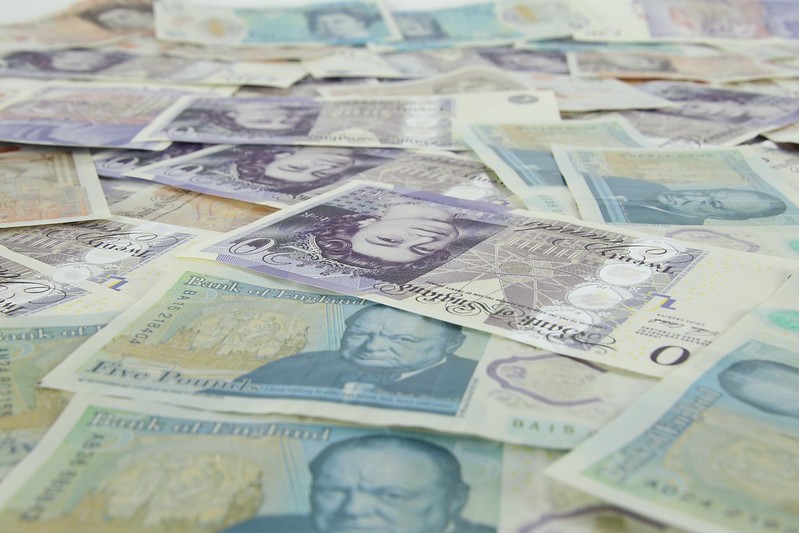
The British pound edged higher on Friday after fresh official data showed that UK retail activity performed considerably better than expected in August, adding to evidence that
the economy has retained momentum despite persistent inflationary pressures.
Retail sales volumes increased by 0.5% from July, according to the latest figures. The result significantly exceeded economists’ expectations, with a Reuters poll having pointed to a 0.2% decline. On an annual basis, sales volumes were 2.4% higher than in August 2025.
The stronger-than-anticipated figures provided modest support for sterling, which rose around 0.1% to $1.337 after the data were released. Against the euro, the pound was broadly unchanged, with the euro trading at approximately 85.91 pence.
The figures add to a series of relatively resilient economic indicators that are complicating the Bank of England’s efforts to balance weak growth against renewed inflation risks.
Paul Dales, chief UK economist at Capital Economics, said the latest evidence of economic resilience was another factor pushing the central bank toward potentially raising borrowing costs. However, he cautioned that inflation has not yet reached its expected peak and could weigh more heavily on economic activity later this year.
The retail figures came just one day after the Bank of England left its benchmark interest rate unchanged at 3.75%. At the same time, policymakers warned that inflation could rise above 4% early next year, while indicating that further increases in borrowing costs could become necessary if the conflict involving Iran continues to push energy prices higher.
The central bank has also recently upgraded its assessment of near-term economic growth. Earlier this week, data showed that UK economic output expanded in July at its fastest annual pace in 18 months, strengthening the case that activity has been more robust than previously anticipated.
Financial markets have consequently increased expectations for additional monetary tightening. Money-market pricing on Friday indicated roughly a 65% probability of a Bank of England rate increase in November. Traders were also anticipating approximately four quarter-point increases by the end of 2027.
Sterling's modest advance on Friday, however, did little to reverse its recent losses. The currency remained on course for a 1.2% decline for the week, which would represent its largest weekly fall since June.
A major source of pressure has been the US dollar. The Federal Reserve raised interest rates on Wednesday and delivered guidance that investors interpreted as relatively hawkish, suggesting that additional tightening could follow. Sterling fell approximately 0.7% against the dollar immediately after the Fed decision as the US currency strengthened.
Energy markets have added another layer of uncertainty. Higher oil and other energy prices linked to the conflict in Iran have intensified concerns about renewed inflation across major economies. In response, investors have raised their expectations for interest-rate increases, contributing to sharp increases in government bond yields in Britain and other major markets.
For the pound, the latest retail figures therefore offer a mixed picture. Strong consumer spending provides evidence of underlying economic resilience, but the prospect of higher inflation, elevated energy costs and tighter monetary policy could continue to create volatility for sterling and the broader UK economy.