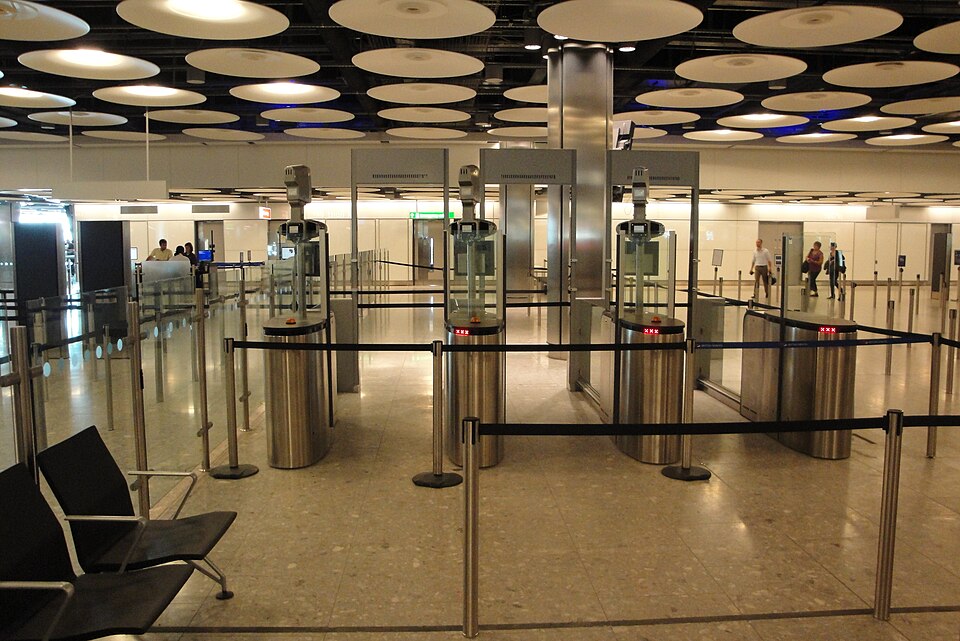
UK airports are preparing for a major overhaul of the arrival process, with new contactless eGates designed to make border checks faster while retaining existing security safeguards.
The Home Office said the new technology began rolling out on 6 October, with all eligible eGates across the UK expected to be converted by early 2027. East Midlands Airport is the first to introduce the system, initially for British citizens, with additional airports and eligible nationalities to follow.
Under the new system, passengers will no longer normally need to present their passport at the eGate. Instead, a camera will capture a live image of the traveller and compare it with verified information held in immigration, travel and passport records.
Once the identity and security checks have been completed, the gate will open automatically, allowing the passenger to continue their journey without physically scanning their passport.
The Home Office said trials have shown that the contactless process can be up to 25% faster than the existing passport-based procedure.
The technology relies on facial recognition to establish a traveller's identity before the full border-security assessment is completed. Passengers who require additional checks may still be asked to scan their passport or speak to a Border Force officer.
Travellers will also be required to keep their passport with them, while Border Force staff will continue to supervise the eGates and assist passengers when necessary.
Phil Douglas, Director General of Border Force, said the technology would make arrivals "smoother and faster" while maintaining the UK's border controls.
He also linked the project to the government's wider digitalisation programme, pointing to the recent expansion of eGate access to children aged eight and over, which was intended to make international travel easier for families.
AirportsUK chief executive Karen Dee welcomed the introduction, describing it as an important step towards delivering faster border processing while maintaining security. She said airports would work with the government to ensure the new system is introduced smoothly across the country.
East Midlands Airport, where the rollout began, said the initiative would complement recent improvements to its immigration hall aimed at speeding up passenger flows.
Birmingham Airport is also among the first airports to adopt the technology. The airport said it had worked with Border Force and other government and industry partners to prepare for the new system.
Millions of passengers already use Britain's eGates every year, making them one of the principal routes into the country for travellers eligible for automated border checks. The government sees the contactless upgrade as another element of its broader programme to modernise the UK's immigration and border infrastructure.
The move follows the introduction of the Electronic Travel Authorisation (ETA) system, which allows the UK authorities to conduct pre-travel checks on eligible visitors and identify potential security concerns before they arrive.
The government has also highlighted the new eGate technology alongside its wider efforts to strengthen immigration enforcement. According to the Home Office, small-boat arrivals during June, July and August 2026 were at their lowest level for six years, while a new payment-by-results arrangement with France has increased the number of personnel deployed on French beaches by 40%.
The government also said that more than 80,000 people without the right to remain in the UK had been removed or returned since the 2024 general election, representing a 52% increase. Removals of foreign national offenders rose by 36%, with almost 12,000 such individuals returned during the same period.
The contactless eGate rollout therefore forms part of a broader attempt to combine faster passenger processing with tighter digital border controls, as the UK continues to modernise the way people enter the country. Photo by Home Office, Wikimedia commons.