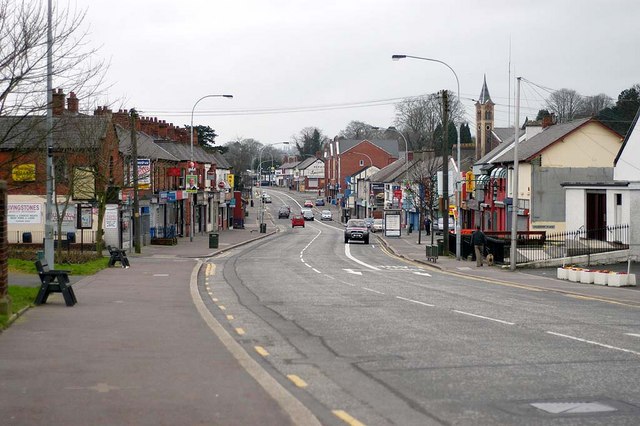
A car bomb detonated outside a police station in the Dunmurry district of south Belfast late Saturday night, following the hijacking of a delivery vehicle, authorities in Northern Ireland
confirmed.
Police reported that the vehicle was seized in the Twinbrook area shortly before 10:50 p.m., when a driver was threatened and forced to transport an explosive device concealed in the trunk to the nearby station. The suspect or suspects then abandoned the vehicle outside the premises before the explosion occurred.
Deputy Chief Constable Bobby Singleton said officers acted quickly to secure the area, triggering alarms and evacuating residents. Several people, including families with young children, were being escorted to safety when the device exploded, sending flames and debris across the scene.
Remarkably, no injuries were reported. Officials described the outcome as “nothing short of miraculous,” given the potential for casualties. The driver involved in the hijacking was left severely shaken.
Authorities have launched an attempted murder investigation led by the Terrorism Investigation Unit. The attack is being treated as part of a pattern of sporadic violence linked to dissident groups that continue to oppose British governance in the region.
UK Northern Ireland Secretary Hilary Benn condemned the bombing, calling it a “shameless and cowardly act.” Meanwhile, evacuation measures remained in place into Sunday, with some residents still unable to return home.
Context: Northern Ireland’s history of terrorism
The incident highlights the lingering shadow of violence in Northern Ireland, despite the landmark Good Friday Agreement, which largely brought an end to three decades of conflict known as 'The Troubles'.
From the late 1960s to 1998, the region experienced sustained sectarian violence between mainly Protestant unionists, who supported remaining part of the United Kingdom, and mainly Catholic nationalists, who sought unification with Ireland. Paramilitary groups such as the Irish Republican Army and loyalist militias carried out bombings, shootings, and assassinations, resulting in over 3,500 deaths.
Although large-scale violence has subsided, smaller dissident republican factions—often referred to as “New IRA” or similar splinter groups—continue to mount occasional attacks, particularly targeting police officers and security infrastructure. Authorities currently assess the terror threat level in the region as “substantial,” meaning an attack is considered likely.
Saturday’s bombing underscores ongoing security challenges and the enduring presence of militant elements, even in a post-conflict society striving for stability. Photo by Wilson Adams, Wikimedia commons.