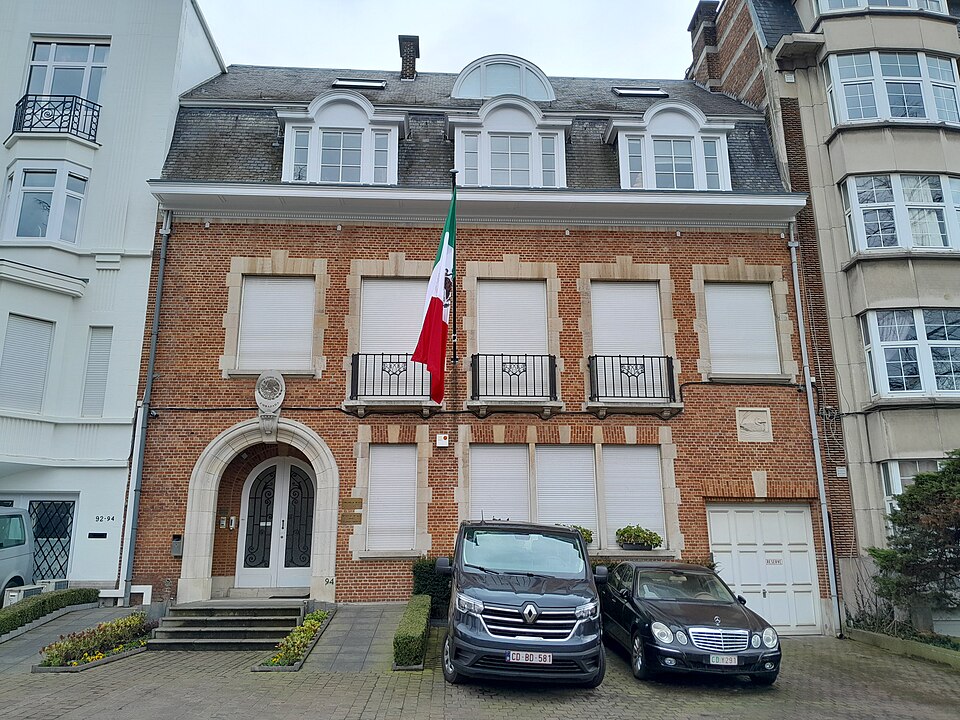
The European Union and Mexico have signed a sweeping new set of agreements aimed at deepening political, economic and strategic ties, marking what leaders described as a major milestone
in relations between the two partners.
The agreements — the Modernised Global Agreement (MGA) and the interim Trade Agreement (iTA) — were signed during the 8th EU-Mexico Summit in Mexico City, where officials from both sides pledged closer cooperation in trade, investment, clean technologies and global governance.
Representing the EU at the summit were European Commission President Ursula von der Leyen, European Council President António Costa, EU foreign policy chief Kaja Kallas and Trade Commissioner Maroš Šefčovič.
The new framework is designed to strengthen supply chains, expand investment opportunities and support climate objectives at a time when geopolitical tensions and economic uncertainty are reshaping global trade patterns.
“The EU and Mexico are committed to a close strategic partnership,” von der Leyen said following the signing ceremony. “Today’s modernised agreements set out our shared vision of the future and will deliver many benefits for both sides.”
Stronger trade and investment ties
The EU and Mexico already conduct around €100 billion in annual trade in goods and services, but both sides expect the updated agreements to significantly expand economic activity.
The deal opens new opportunities for European agricultural exports to Mexico, which remains a major food importer with relatively high tariffs. Under the agreement, Mexico will also protect hundreds of European geographical indications, including wines, spirits, beers and specialty foods.
European companies are expected to gain broader access to Mexican public procurement contracts, while service providers in sectors such as finance, maritime transport, digital services and professional consulting will benefit from reduced barriers.
The agreements also include measures aimed at simplifying regulations, strengthening intellectual property protections and expanding cooperation in e-commerce and digital trade.
At a business forum held alongside the summit, EU and Mexican officials discussed future collaboration in advanced technologies, digital commerce and clean-transition industries.
Shared commitment to multilateralism
Leaders at the summit reaffirmed their support for multilateral institutions and the rules-based international order, stressing the need for closer coordination on global security, governance reform and human rights.
The EU and Mexico also agreed to establish a permanent ministerial-level Strategic Dialogue to coordinate responses to international and regional challenges.
Both parties highlighted their role in strengthening ties between the EU and the Community of Latin American and Caribbean States (CELAC), describing the relationship as increasingly important in a rapidly shifting geopolitical landscape.
Sustainability and human rights at the core
Sustainability commitments feature prominently in the agreements, including legally binding provisions on labour rights, environmental standards, climate action and responsible business practices.
The two sides also signed a Joint Declaration on Trade and Gender Equality, aimed at promoting women’s economic participation and empowerment.
In addition, a separate declaration on the circular economy seeks to address climate change, biodiversity loss and pollution while supporting economic resilience and sustainable job creation.
On the sidelines of the summit, EU and Mexican representatives hosted an event focused on increasing women’s participation in international trade under the new framework.
Von der Leyen also announced more than 4 million pesos in EU funding to support projects aimed at empowering indigenous women in Mexico.
Billions in investment through global gateway
The summit placed significant emphasis on the EU’s Global Gateway initiative, which both sides described as a cornerstone of their strategic partnership.
More than €5 billion in European-backed investments are expected across sectors including renewable energy, sustainable transport, healthcare, agriculture, water infrastructure and digital connectivity.
European firms are also expected to contribute to Mexico’s railway development plans, green finance initiatives and circular economy projects.
The EU and Mexico agreed to deepen cooperation in energy security, healthcare and digital infrastructure, while also relaunching the EU-Mexico Digital Dialogue focused on innovation, regulation and emerging technologies.
Ratification process begins
The agreements must now undergo ratification procedures on both sides.
Within the EU, the Modernised Global Agreement will require approval by all member states according to their national procedures, while the interim Trade Agreement will follow an EU-only ratification process involving the European Parliament and the Council of the European Union.
The interim agreement will remain in force until the broader MGA formally enters into effect. Photo by August Dominus, Wikimedia commons.