The government has announced a £96 million funding package aimed at creating tens of thousands of work placements for construction students, as ministers seek to address chronic labour
shortages and accelerate housebuilding across the UK.
Funding will be distributed to regional providers from Friday 22 May and will support students beginning construction-related courses from September. The initiative is designed to expand access to on-site industry placements and improve employment prospects for young people entering the sector.
The move comes amid mounting pressure on the construction industry, where more than 35,000 vacancies remain unfilled, according to the latest figures from the Office for National Statistics. More than half of those vacancies are linked to skills shortages.
Alongside the funding announcement, the government has published its long-awaited plan for reforming post-16 vocational education. The strategy outlines the transition from existing qualifications, including BTECs, to a streamlined system centred on V Levels, T Levels and A Levels from 2027.
Ministers said the overhaul is intended to place vocational learning on equal footing with academic routes while simplifying choices for students after GCSEs.
New vocational subjects due to launch in 2028 include construction design, bricklaying and plumbing, all aimed at addressing workforce shortages in key industries such as housebuilding. The government has also published rollout timelines and guidance for schools and colleges to support the transition.
Skills Minister Jacqui Smith said the reforms would help “remove the snobbery from hands-on learning” and equip young people with practical skills sought by employers.
Under the new system, V Levels — first announced in the Post-16 Education and Skills White Paper — will sit alongside A Levels and T Levels. Equivalent to one A Level, they will allow students to combine academic and vocational subjects before specialising.
Two additional qualifications are also being introduced for students who are not yet ready to progress beyond GCSE level. Occupational Certificates will provide a two-year route into employment or apprenticeships while supporting students to achieve English and maths qualifications. Foundation Certificates will offer a one-year programme designed to help students progress to A Levels, T Levels or V Levels.
The next phase of vocational expansion will include new V Levels in construction design, engineering design and engineering manufacturing, as well as new T Levels in sport and social care.
Occupational Certificates will also be introduced in trades and sectors facing recruitment pressures, including bricklaying, plumbing, painting and decorating, finance, and adult social care.
To support implementation, the government has established a new sector-led group known as “Qualification Practitioners” to help providers manage the transition and share best practice.
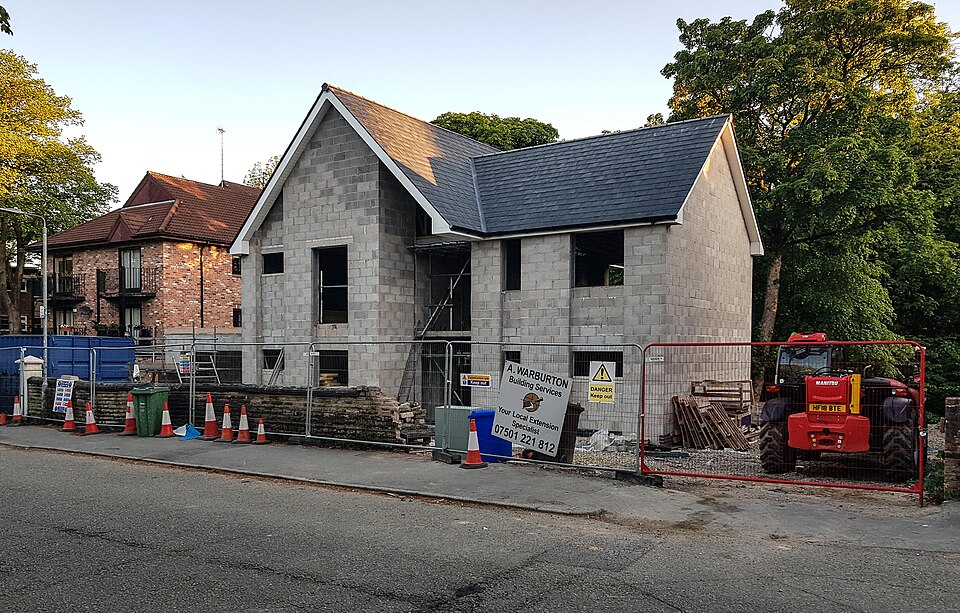
New guidance has also been issued to simplify T Level industry placements, including the removal of limits on remote working hours and restrictions on the number of employers students can work with during placements. Ministers said the changes would make placements more accessible for students and easier for employers to offer. Photo by New House by Peter McDermott, Wikimedia commons.