The UK government has put its proposed Chagos Islands agreement on hold after failing to secure formal approval from the United States, exposing growing tensions between Keir Starmer and
Donald Trump.
Although the deal had previously received verbal backing from Washington, the absence of a required legal confirmation—an official exchange of letters—has stalled progress. Behind the scenes, relations between London and Washington have deteriorated, with Trump publicly urging the UK to abandon the agreement, describing it as an “act of total weakness.”
A deal in limbo
The proposed agreement would see Britain transfer sovereignty of the Chagos Islands—officially known as the British Indian Ocean Territory—to Mauritius. In return, the UK would lease back the strategically critical military base on Diego Garcia, jointly operated with the US, at an estimated annual cost of £101 million.
Despite nearing the final stages in Parliament, the legislation required to implement the deal will not be completed before the current session ends. Officials have also confirmed that a new bill is unlikely to appear in the upcoming King’s Speech, effectively shelving the plan for now.
A government spokesperson stressed that the future of the Diego Garcia base remains central: maintaining its long-term operational security is the driving force behind the agreement. However, ministers have consistently maintained that the deal would only proceed with firm US support—something that has yet to materialise.
What are the Chagos Islands?
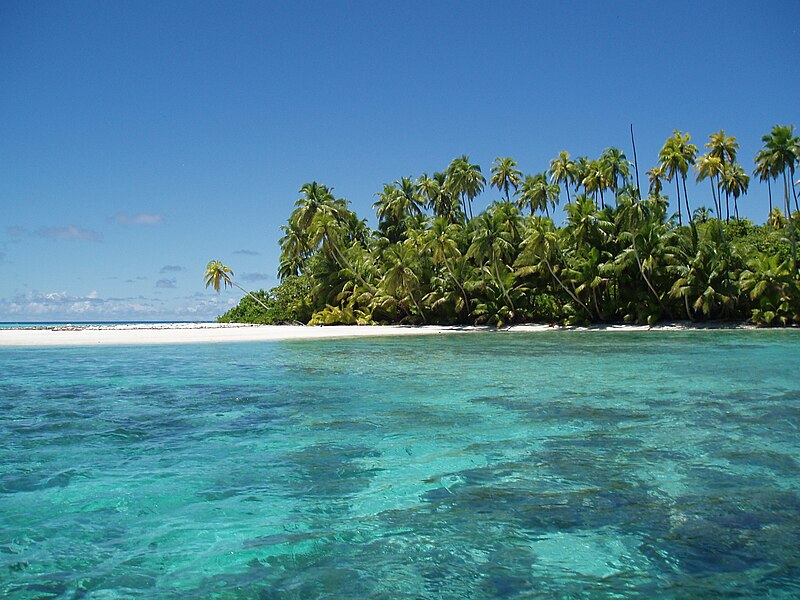
The Chagos Islands are a remote archipelago in the Indian Ocean, under British control since the early 19th century. The territory gained global attention during the Cold War when Diego Garcia was developed into a major military hub.
One of the most contentious aspects of the islands’ history is the forced displacement of the Chagossian people in the 1960s and 1970s to make way for the military base. Many Chagossians and their descendants continue to campaign for the right to return, making the sovereignty debate deeply tied to issues of human rights and historical justice.
Mauritius has long claimed the islands, arguing they were unlawfully separated before its independence in 1968—a position supported by international legal bodies, including the International Court of Justice.
Political divisions deepen
The delay has been welcomed by opposition parties in the UK. Kemi Badenoch criticised the deal as a costly surrender of British territory, while Nigel Farage called for renewed efforts to allow Chagossians to resettle.
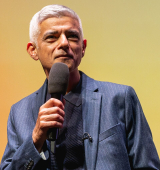
Meanwhile, Calum Miller described the handling of the agreement as “shambolic,” pointing to inconsistencies under both Conservative and Labour governments. He also warned that Trump’s shifting stance has introduced instability into what had been a reliable transatlantic defence partnership.
Uncertain path ahead
Originally signed in May 2025, the deal once appeared to mark a significant shift in UK foreign policy, balancing international legal pressure with strategic military interests. However, Trump’s subsequent criticism and the lack of formal US endorsement have thrown its future into doubt.
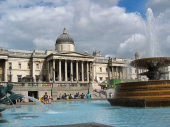
For now, the agreement remains in limbo—caught between geopolitical realities, domestic politics, and the unresolved claims of the Chagossian people. Photo by Anne Sheppard, Wikimedia commons.