The UK has taken a major step toward its clean energy ambitions after Great British Energy – Nuclear signed a landmark contract with Rolls-Royce SMR to begin work on the country’s first
Small Modular Reactors (SMRs).
The agreement formally kicks off the design phase of the project, marking a critical milestone in the government’s strategy to expand low-carbon, domestically produced energy. The SMR programme is expected to play a central role in reducing reliance on volatile fossil fuel markets while strengthening long-term energy security.
At peak construction, the first SMR project could support around 3,000 jobs, with thousands more expected across the UK supply chain. Officials say the initiative will also boost local economies and help build industrial expertise in next-generation nuclear technologies.
Rolls-Royce SMR was named the government’s preferred partner in June 2025, backed by £2.6 billion in public funding announced in the same year’s spending review. Since then, both organisations have worked to finalise the contract, which now moves the project into detailed planning, regulatory engagement, and site-specific design.
The deal comes at a time of heightened global uncertainty, with policymakers increasingly emphasising energy independence as a national priority. The UK government has argued that expanding clean, homegrown power sources is essential to shield the country from geopolitical disruptions affecting global energy markets.
Industry leaders have described the agreement as transformative. Simon Bowen, chair of Great British Energy – Nuclear, called it a “defining moment” for the UK’s nuclear sector, highlighting years of collaboration between government and industry.
Chief executive Simon Roddy said the partnership would drive long-term investment into the UK’s industrial base, supporting innovation, skills development, and supply chain growth.
The government has also positioned the project as a key pillar of its economic strategy. Chancellor Rachel Reeves said the investment would create skilled jobs and support economic growth while advancing clean energy goals. Energy Secretary Ed Miliband added that the programme would help the UK “take back control” of its energy future.
From an industry perspective, Chris Cholerton, chief executive of Rolls-Royce SMR, said the contract provides certainty for the delivery of the first three reactor units. He also noted growing international interest, with additional projects under consideration in Europe.
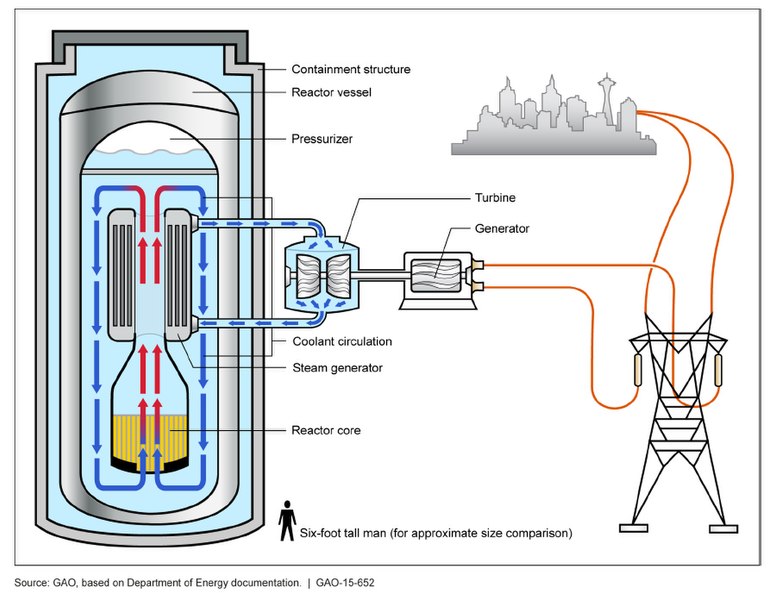
SMRs are designed to be smaller, faster to build, and more cost-effective than traditional nuclear power stations. Built using factory-based modular components, they aim to reduce construction risks and timelines while limiting environmental disruption at installation sites.
The initial three-unit project is expected to generate at least 1.4 gigawatts of electricity—enough to power roughly three million homes for more than six decades.
Financial backing is also being reinforced by the National Wealth Fund, which has pledged up to £599 million to support the development of the technology. Officials say this funding will help attract private investment and position the UK as a global leader in SMR exports.
The contract represents not just a technical step forward, but a broader signal of the UK’s intent to anchor its future energy system in reliable, low-carbon nuclear power. Photo by U.S. Government Accountability Office from Washington, DC, United States, Wikimedia commons.