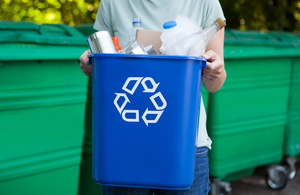
Households across England are now operating under a new, simplified recycling system as nationwide rules come into force on Tuesday, 31 March 2026. The changes aim to eliminate
long-standing confusion over bin sorting while boosting recycling rates and reducing environmental impact.
Under the government’s Simpler Recycling scheme, councils and waste collectors are required to standardise how waste is separated and collected. The reform introduces a clearer structure, ensuring that households only need to manage four main waste streams.
What are the new recycling categories?
From now on, waste collection services must separate household rubbish into the following groups:
- Food and garden waste
- Paper and card
- Dry recyclables (including glass, metal, plastic, and cartons)
- Residual waste (non-recyclable materials sent to landfill or energy recovery)
This means most homes will have a maximum of four bins or collection types, replacing the patchwork of systems that previously varied by postcode.
In some areas, councils may still combine paper and card with other dry recyclables, allowing flexibility based on local infrastructure and efficiency.
Why these changes matter
The overhaul is designed to make recycling easier and more effective. By simplifying sorting rules, the government hopes to improve the quality of recyclable materials, allowing more waste to be processed within the UK and reused in manufacturing.
The initiative also plays a key role in reducing carbon emissions and limiting the environmental damage caused by landfill and incineration.
The reforms form part of a broader strategy that includes:
- Extended Producer Responsibility (EPR) for packaging
- A Deposit Return Scheme (DRS) launching in October 2027
Together, these measures aim to help England reach a target of recycling 65% of municipal waste by 2035.
Government and local support
To ensure a smooth transition, councils are receiving significant financial backing. More than £78 billion has been allocated to local authorities this year, including funding to introduce weekly food waste collections. An additional £340 million is being provided specifically to help councils adapt to the new system.
Some areas facing logistical challenges will be allowed phased or delayed implementation under transitional arrangements.
Circular Economy Minister Mary Creagh said the reforms would “end the bin collections postcode lottery” and make recycling easier for everyone, while also improving communities and reducing carbon emissions.
Practical recycling tips for households
Even with simpler rules, knowing how to sort waste correctly remains essential. Here are some key tips to help households comply:
- Rinse recyclables: Food residue can contaminate entire batches of recycling.
- Don’t bag recyclables unless your council specifically asks for it.
- Separate food waste: This includes leftovers, peelings, and expired food—never mix it with general rubbish.
- Flatten cardboard boxes to save space and improve processing efficiency.
- Check local guidance: While rules are standardised, some minor differences may still apply.
Common mistakes to avoid
- Putting greasy pizza boxes in paper recycling (they belong in general waste or food waste if heavily soiled)
- Mixing glass with general waste instead of recycling
- Disposing of soft plastics incorrectly (check if your local authority accepts them)
Towards a circular economy
The Simpler Recycling scheme is a key step toward building a circular economy, where materials are reused and kept in circulation for as long as possible. By improving recycling quality and consistency, the UK aims to reduce reliance on raw materials, cut emissions, and support green jobs in the recycling and manufacturing sectors.
Pascal Hauret, Veolia UK Managing Director, Municipal said: “This is a great step forward in ensuring more of what we use is collected, recycled and ends up back on our shelves.
Veolia will be helping to roll out this generational change to more than 16 million residents across England and we expect to collect over 40,000 additional tonnes of plastics alone.
We know the public wants to recycle and recycle right; so as the volume of materials we collect increases, we also need to invest in the critical national recycling infrastructure that will ensure more of our products are made from recycled content”.
Carla Brian, Biffa’s Director of Public Affairs & Partnerships, said: “Simpler Recycling will give households clear, consistent guidance on what can be recycled wherever they live, making it much easier for people to know which bin to use - removing confusion, reducing contamination and driving higher recycling rates.
This single system across England will play a key role in delivering a circular economy, helping to keep materials in use for longer, cutting waste, accelerating the journey to net zero, and driving investment in vital infrastructure and green jobs.
As part of preparing for these changes, we’ve already created 250 new frontline jobs to support our local authority partners, demonstrating the real economic benefits this transition brings to communities.
We look forward to continuing our work with government and our customers to ensure Simpler Recycling is implemented in a practical and efficient way that delivers long-term value for the environment and the public”.
Claire Shrewsbury, Director Insights and Innovation at climate action NGO WRAP said: “Simpler Recycling is the biggest shakeup in recycling policy in England in twenty years. Now, wherever you are you’ll have the same service at home, at work, and when out and about.
We’re a nation of recyclers, but most households put two or more items in the rubbish each week that could be recycled - because of confusion. Making recycling simpler will help end this and if we all recycled one more trigger spray each week, we’d save enough energy to power every home in Birmingham for a year.
Food waste is where we’ll see the big win. It’s difficult to prevent all food waste and so recycling one kitchen caddy of unavoidable food waste could power your fridge for 18 hours, and a whole truck would keep that fridge cool for five years. Recycling is good for the environment and the economy, and Simpler Recycling will make things easier for all of us as well”.