Innovative trial uses aerial seeding technology to reach inaccessible ravine slopes in the Peak District
A pioneering drone-seeding project has been launched in the Peak District to help restore ravine woodlands devastated by ash dieback, marking what is believed to be one of the first trials of its kind in steep, densely wooded valleys.
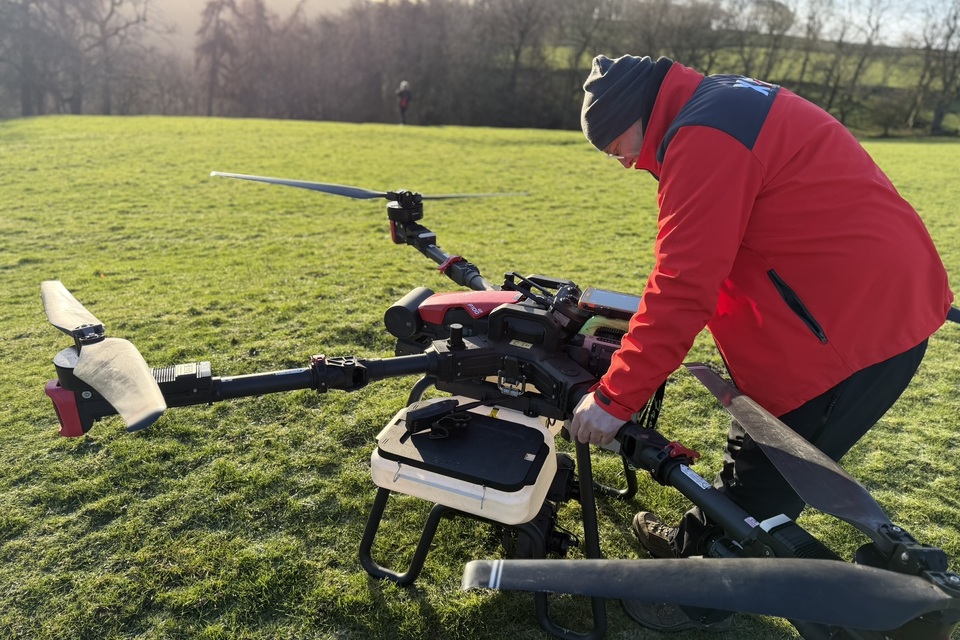
Led by Natural England as part of the LIFE in the Ravines programme, the initiative is testing whether specially adapted drones can safely and effectively spread native tree seeds across some of the region’s most inaccessible terrain.
The trial has been carried out on 0.75-hectare plots at Dovedale and Lathkill Dale, where drones dispersed a carefully selected mix of native species, including field maple, wych elm, alder, small-leaved lime, birch, rowan, yew, goat willow, crab apple and holly.
Ash dieback has caused significant losses across the Peak District’s woodland habitats, creating an urgent need for restoration. However, the steep and rocky slopes of many ravines make conventional tree planting difficult, costly and, in some areas, unsafe for conservation teams.
Project leaders believe drone seeding could offer a practical alternative by replicating natural seed dispersal processes while reducing the risks associated with working on challenging terrain.
Martin Evans, Woodland Restoration Manager at Natural England, said:
“The ravine woodlands of the Peak District Dales are among the most precious and challenging habitats we work in. Ash dieback has created an urgent need to act, but the sheer steepness of these slopes means we must think creatively about how we restore them.
This drone trial is an exciting step forward. By testing what technology can achieve in places our teams simply cannot safely reach, we hope to unlock new tools to support woodland recovery at scale.
Every seed that takes root is a step towards healthier, more resilient woodlands for the future”.
Adam Linnet, Lead Ranger at the National Trust in the White Peak, said:
“This trial will help us to explore new techniques and technology to work at the pace and scale needed to help the woodlands in the area recover and thrive again.
The trees in the steep sided ravines in and around the National Nature Reserve at Dovedale support wildlife, store carbon, stabilise the ground, prevent erosion and flooding, and make the area look beautiful throughout the seasons.
The technology used in this trial mimics natural seed dispersal so we are hopeful it could provide a solution to help trees establish in harder to reach areas, creating healthier and more resilient woodlands”.
Kevin Gornall, Director at Quadrotor Services Ltd, said:
“Our primary focus was ensuring precise seed dispersal that could successfully penetrate the existing tree canopy to reach the woodland floor below.
After months of collaborative planning, working alongside the dedicated team from the project, we were thrilled to demonstrate how this technology could provide a safe solution for restoring these inaccessible habitats at the same time as gathering vital real-world data that will help shape the future of conservation.
The success of the trial will be carefully monitored. Trays have been placed within and around the seeding areas to check accuracy of seed dispersal, and one-metre-square monitoring plots will be established both inside and outside the seeded areas”.
Researchers will monitor the success of the trial over the coming years using seed collection trays and dedicated monitoring plots to assess dispersal accuracy, germination rates and sapling survival. Control plots outside the seeded areas will provide a benchmark for comparison.
The findings will also be used to evaluate whether drone seeding can offer a cost-effective alternative to traditional woodland restoration methods.
The project forms part of the wider LIFE in the Ravines programme, which has already overseen the planting of more than 100,000 trees across the Peak District Dales. Conservation partners hope the work will help create more diverse and resilient woodlands capable of withstanding future environmental pressures. Photo by gov.uk