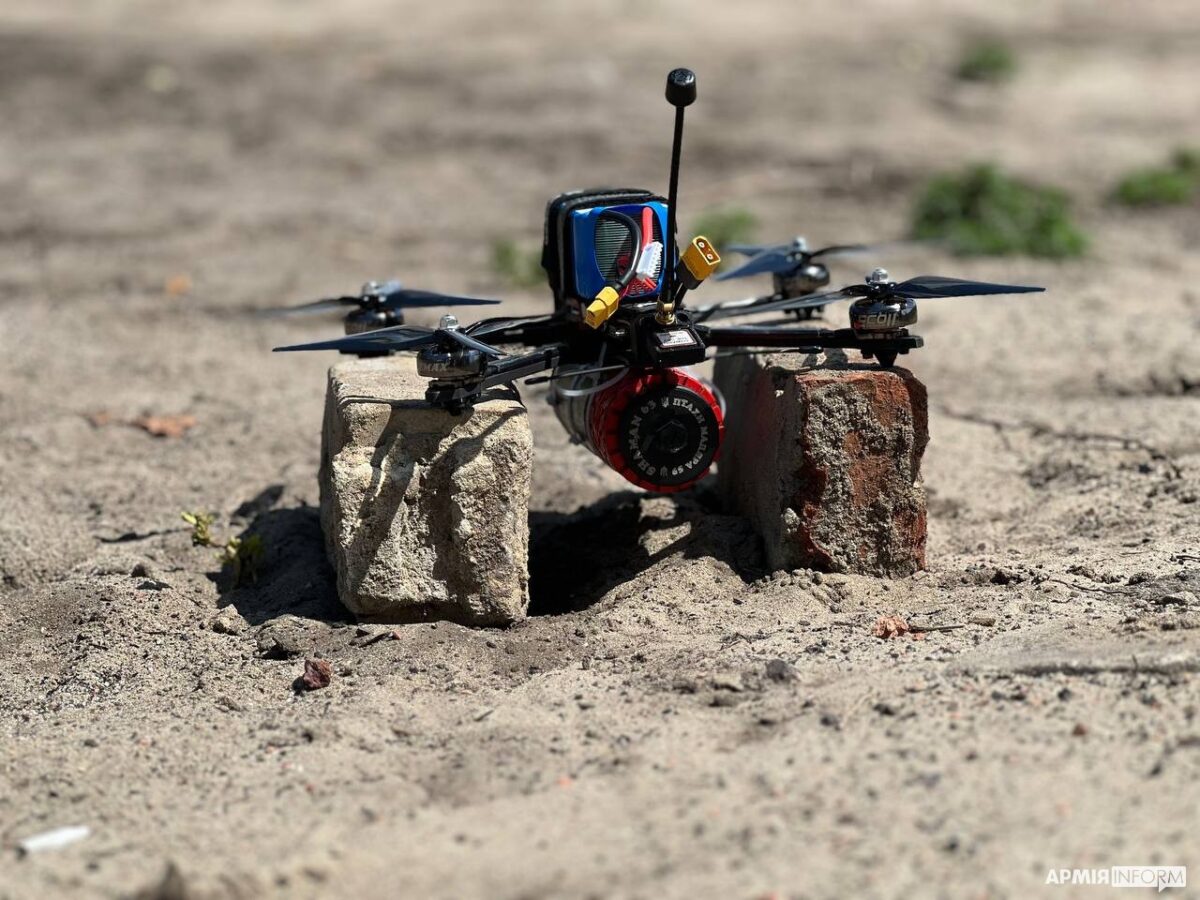
Ukraine has launched its largest reported overnight drone offensive against Russian territory since the beginning of the full-scale invasion in February 2022, highlighting Kyiv's growing
ability to conduct large-scale, long-range operations against military, transport and energy infrastructure.
According to figures released by Russia's Defence Ministry on Monday, November 16, Russian air defence systems intercepted or destroyed 1,336 Ukrainian drones across 16 regions during the night. If confirmed, the figure would exceed the previous reported record of 1,254 drones recorded on October 29, illustrating the increasing scale and frequency of Ukraine's unmanned aerial campaign.
The latest offensive forms part of a broader Ukrainian strategy aimed at weakening Russia's military-industrial capacity, disrupting logistics and reducing the revenues generated by its energy sector. Ukrainian forces have increasingly focused on targets far beyond the immediate front line, demonstrating that Russia's geographical depth no longer provides the same protection against aerial attacks.
The Russian Defence Ministry reported drone interceptions over several strategically important areas, including Crimea, the Black Sea and the Sea of Azov. Crimea, occupied and illegally annexed by Russia in 2014, remains a critical military and logistical hub for Moscow's operations in southern Ukraine.
Russian-backed Crimean leader Sergei Aksyonov said that Ukrainian forces had also struck the strategically important road and railway bridge connecting the peninsula with Russia's Krasnodar region. The incident temporarily disrupted road traffic while repair work was carried out. Russian authorities described the damage as limited and said railway services continued operating normally.
The attacks on Russian territory have coincided with an intensification of Ukraine's campaign against the country's oil infrastructure. Since the end of October, Ukrainian forces have repeatedly targeted refineries and other energy facilities. President Volodymyr Zelenskyy said on Sunday that the strikes had disabled more than half of Russia's oil-refining capacity, although this assessment had not been independently verified by Reuters at the time of reporting.
The operation also underlines the rapid development of Ukraine's domestic drone industry, which has become one of the most important elements of the country's military strategy. Since Russia launched its full-scale invasion, Ukraine has transformed from a country heavily dependent on imported unmanned aerial technology into a major producer of combat drones, developing systems for reconnaissance, battlefield operations and attacks deep inside Russian territory.
Among the most significant Ukrainian developments are the FP-1 long-range strike drone, manufactured by the defence company Fire Point, and the Liutyi, developed by the Ukrainian aviation industry. The FP-1 is designed to strike targets at distances of up to approximately 1,600 kilometres, with reported upgraded capabilities extending further. The Liutyi has a declared operational range of up to 2,000 kilometres and is designed to attack military installations, industrial facilities and energy infrastructure.
Ukraine has also developed a new generation of missile-drone systems, including Peklo, Palianytsia and Ruta. These platforms combine characteristics of conventional unmanned aircraft and cruise missiles, providing additional options for long-distance attacks. According to information published by the Ukrainian presidency, Peklo has a reported range of up to 700 kilometres, while Palianytsia is a turbojet-powered missile-drone developed for long-range operations. Ruta is designed for both strike and reconnaissance missions.
The expansion of production has been equally significant. In April 2025, Ukraine's Ministry of Defence reported that its Defence Procurement Agency had signed drone supply contracts with 76 domestic manufacturers, allocating UAH 104.2 billion to the sector during 2024–2025. These companies produce a wide range of systems, from inexpensive frontline FPV drones to sophisticated long-range strike platforms.
The production capacity of individual manufacturers has also increased considerably. In March 2026, Fire Point representatives said the company was producing approximately 200 long-range FP-1 and FP-2 drones per day, with the possibility of substantially expanding output. The company also reported distributing production across more than 50 locations in Ukraine, reducing the vulnerability of its manufacturing operations to Russian attacks.
This growing technological capacity is changing the economic and military calculations of the war. Ukrainian long-range drones allow Kyiv to target facilities responsible for producing fuel, maintaining military equipment and supplying Russian armed forces, while forcing Moscow to devote additional resources to protecting infrastructure far from the front line.
Oil refineries have become particularly important targets. Damage to these facilities can reduce the availability of petroleum products, disrupt fuel supplies to the military and affect Russia's ability to export energy. Even when installations are not completely destroyed, repair costs and repeated interruptions can create substantial economic pressure.
The latest offensive therefore represents more than another exchange of drone attacks. It demonstrates the increasing importance of unmanned systems in modern warfare and Ukraine's determination to use its expanding domestic defence industry to compensate for Russia's advantages in conventional military resources.
At the same time, the conflict remains far from one-sided. Russia continues to launch large-scale missile and drone attacks against Ukrainian cities, industrial facilities and energy infrastructure. The Ukrainian Air Force reported that Russia launched 158 attack drones against Ukraine during the same night, including 77 jet-powered Shahed drones. Ukrainian air defences said they had neutralised 131 of them, although impacts were recorded at 19 locations.
The growing role of drones on both sides suggests that the ability to manufacture, deploy and continuously improve unmanned systems will remain a decisive factor in the military and economic confrontation between Ukraine and Russia. Photo by АрміяInform, Wikimedia commons.