US Director of National Intelligence Jay Clayton has sought to distinguish President Donald Trump’s personal relationship with Vladimir Putin from Washington’s strategic interests in
Ukraine, declaring that the Russian leader is no friend of the United States when it comes to the war.
Speaking on ABC News’ This Week programme on Sunday, Clayton said Putin could be described as a friend in the diplomatic context of discussions between the leaders of the world’s three major nuclear powers, but stressed that Russia’s actions in Ukraine made such a description inappropriate when assessing Moscow’s broader relationship with Washington.
Asked directly by ABC anchor Jonathan Karl whether Putin was a friend of the United States, Clayton initially defended Trump’s language, referring to the recent high-profile summit involving Trump, Putin and Chinese President Xi Jinping.
"That conversation, that picture – historic, historic picture – was in the context of the three nuclear powers, the three main nuclear powers, getting together and saying, ‘we cannot have a nuclear incident’," Clayton explained.
He argued that maintaining communication between Washington, Moscow and Beijing was essential to preventing a potentially catastrophic confrontation between nuclear-armed states.
However, when Karl pressed him to clarify whether Putin could genuinely be considered an American ally, Clayton delivered a considerably more direct assessment.
"He is not America's friend in Ukraine. Not at all. Not at all," the intelligence chief replied.
His comments came amid renewed controversy over Trump's increasingly cordial public language towards the Russian president. During his recent visit to China, the US president referred to Putin as a friend, subsequently defending the description by pointing to Russia's enormous nuclear arsenal.
"It's nice to have people that have 4,000 nuclear weapons as a friend as opposed to an enemy," Trump said on Thursday.
Nevertheless, the president appeared less willing to make a broader statement about the nature of the relationship between Washington and Moscow. Asked on Friday whether Putin was a friend of the United States as a whole, Trump replied: "I can't speak to America."
The difference between Trump's diplomatic approach and Clayton's assessment highlights the challenge facing the administration as it attempts to maintain dialogue with Moscow while addressing Russia's continuing military aggression against Ukraine.
Who is Jay Clayton?
Clayton, who became the ninth Director of National Intelligence on August 3, 2026, is one of the most important figures in the US national security establishment. His position places him at the head of the American Intelligence Community and makes him the principal intelligence adviser to the president.
Unlike many of his predecessors, Clayton built much of his career in corporate law, financial regulation and business rather than through a traditional intelligence or military background.
Before taking charge of the intelligence community, he served as chairman of the US Securities and Exchange Commission (SEC) between 2017 and 2020, during Trump's first presidential administration. In that role, he oversaw financial market regulation, corporate disclosure requirements and enforcement activities.
He subsequently held senior positions in the private sector, including chairman of the board of Apollo Global Management, and worked as a senior adviser at the international law firm Sullivan & Cromwell.
Clayton also previously served as US Attorney for the Southern District of New York, where his responsibilities included prosecuting major financial and national security-related cases.
His academic background includes degrees in engineering and economics, as well as a law degree from the University of Pennsylvania. He has also held teaching positions at the university's Wharton School and Carey Law School.
As Director of National Intelligence, Clayton oversees the coordination of intelligence activities across US agencies, bringing together information and assessments for the White House, Congress, military leadership and national security policymakers.
His appointment therefore places him in a particularly influential position at a time when Washington faces simultaneous challenges involving Russia, China, cybersecurity and international security.
Ukraine remains the central point of disagreement
Clayton's remarks come against the backdrop of Russia's continuing war against Ukraine, which began with Moscow's full-scale invasion in February 2022.
Russian forces currently control approximately one-fifth of Ukrainian territory, while diplomatic efforts to end the conflict remain complicated by fundamental disagreements over territorial sovereignty and security guarantees.
Russian President Vladimir Putin has continued to demand that Ukraine surrender the entire eastern Donbas region as part of a potential peace settlement. Kyiv has repeatedly rejected demands that would require it to abandon territory and compromise its sovereignty.
The latest diplomatic discussions have also exposed the difficulties facing Trump's efforts to bring the war to an end. Although the US president has repeatedly expressed confidence in his ability to negotiate with Putin, Moscow has shown little indication of abandoning its principal territorial demands.
Trump's approach has caused concern among several European governments, which fear that excessive concessions to Moscow could undermine Ukraine's security and encourage further Russian aggression.
Polish Prime Minister Donald Tusk was among the European leaders to respond critically to Trump's description of Putin as a friend.
"Mr Putin is not our friend and will never be," Tusk said, reflecting the position of countries in eastern Europe that regard Russian military ambitions as a direct threat to European security.
Ukrainian President Volodymyr Zelenskyy also appeared uncomfortable when asked about Trump's remarks. During a public encounter on Thursday, he shrugged and walked away rather than commenting directly on the American president's description of the Russian leader.
A delicate balance for Washington
Clayton's intervention illustrates the increasingly complicated balance between Trump's personal diplomacy and the institutional responsibilities of the US national security establishment.
Washington has strong reasons to maintain communication with Moscow, particularly given Russia's nuclear capabilities and its influence over international security. However, diplomatic engagement does not necessarily mean that the two countries share strategic interests or that Putin's policies are compatible with American objectives.
The intelligence chief's comments attempted to preserve that distinction: maintaining dialogue with the Kremlin may be necessary, but it does not make Russia a partner in resolving the conflict on terms favourable to Ukraine.
For Kyiv and its European supporters, the critical question remains whether Washington's diplomatic engagement with Moscow will ultimately translate into meaningful pressure on Putin to end the war, or whether the pursuit of an agreement could place additional demands on Ukraine.
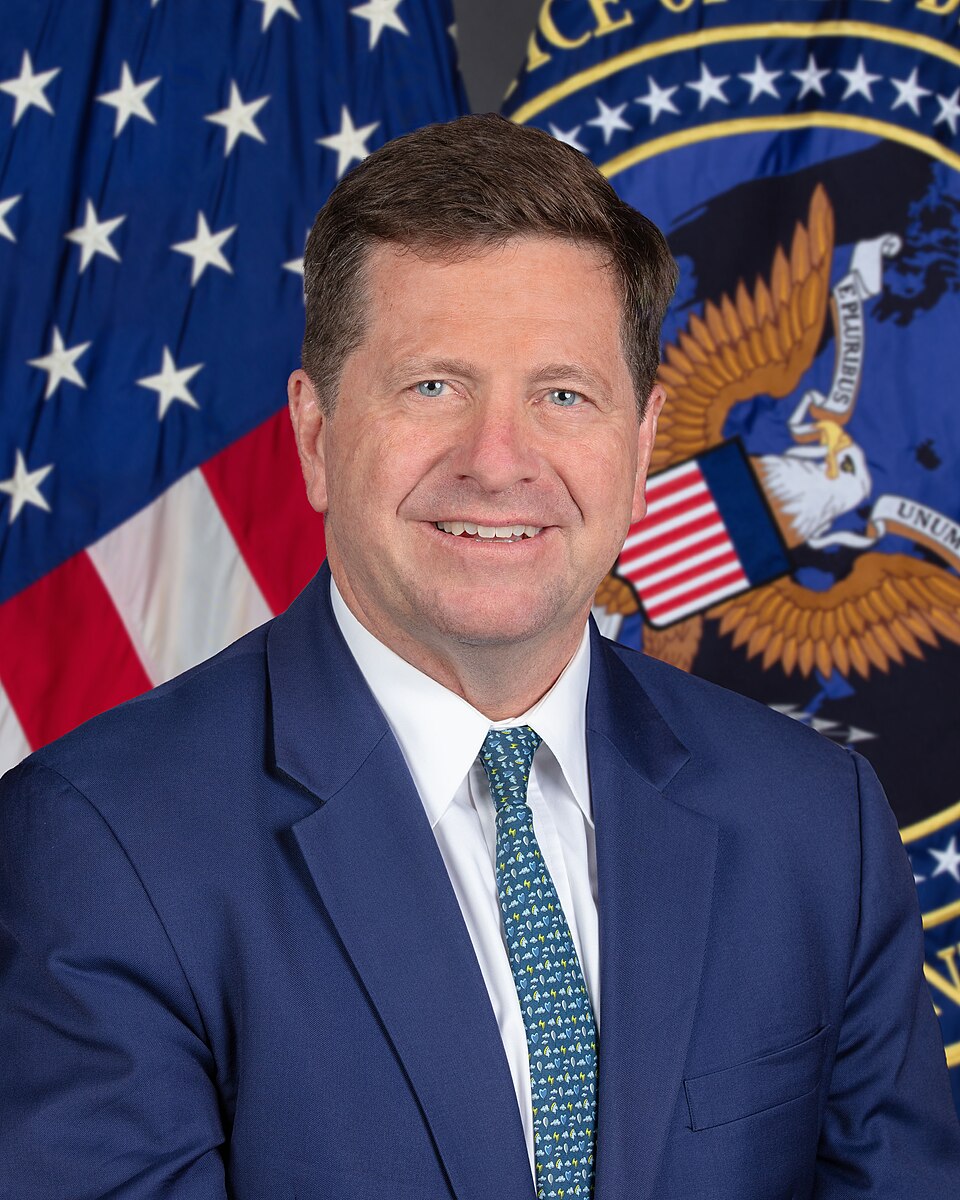
Clayton's remarks offer some reassurance that at least within the US intelligence leadership, Russia's conduct in Ukraine remains a fundamental obstacle to regarding Putin as a genuine American friend. Photo by Office of the Director of National Intelligence, Wikimedia commons.