The Republican Party is already looking beyond its recent electoral defeat and preparing for the next major political confrontation in the American two-party system: the 2028 presidential
election. Following the Democrats' success in the midterm elections and their return to control of Congress, leading Republicans are increasingly aware that the party must address growing public dissatisfaction with the Trump administration. Among those seeking to reposition themselves is US Secretary of State Marco Rubio, whose recent actions suggest that he is attempting to establish himself as a responsible and disciplined political figure ahead of the next electoral cycle.
For Rubio, the challenge is particularly complicated. As a senior member of the Trump administration, he has been closely associated with its foreign policy decisions, while simultaneously having ambitions that could extend beyond his current position. Although he has played down speculation about a possible presidential campaign in 2028, he has not ruled out the possibility. His approach to managing the State Department and his efforts to distance himself from controversies surrounding the administration could therefore become important elements of his political strategy.
According to Reuters, Rubio recently instructed senior State Department officials to exercise greater discipline, avoid conflicts of interest and refrain from pursuing political or administrative initiatives outside their areas of responsibility. During a meeting with senior officials, including several assistant secretaries of state, he reportedly warned that unethical conduct would result in dismissal, regardless of an individual's political connections. He also insisted that significant policy decisions should be coordinated with him or Deputy Secretary of State Christopher Landau.
The initiative followed a series of controversies involving Trump administration officials. One of the most prominent cases concerned Kimberly Guilfoyle, the former US ambassador to Greece, who resigned in October after media reports raised questions about whether she had offered access to senior administration figures in exchange for financial benefits, gifts and favours. Guilfoyle has rejected the allegations and said she intends to defend her reputation.
Rubio's efforts to strengthen internal discipline have also coincided with personnel changes at the State Department. Policy chief Jeremy Lewin left his position after disagreements reportedly emerged over his independent approach to policy matters and insufficient coordination with departmental leadership. Lewin, however, has denied being dismissed, stating that his departure had been planned in advance. Other officials have also faced criticism over activities outside their assigned responsibilities, while Rubio has introduced additional controls over overseas travel by political appointees.
These developments illustrate a broader problem confronting the Republican Party. The administration has faced persistent accusations of conflicts of interest and the use of political positions for personal benefit. With Democrats preparing to take control of Congress and launch investigations into the business dealings of Trump administration figures, Republican politicians have strong incentives to demonstrate that they support higher standards of transparency and accountability.
The political consequences of the midterm defeat are already becoming apparent. Vice President JD Vance and Senator Ted Cruz have begun outlining their interpretations of the Republican Party's electoral setbacks, with their public statements increasingly viewed as preliminary positioning for the 2028 presidential contest. Rubio is also part of this emerging competition, although he has so far avoided openly declaring his intentions.
For the Republican Party, the coming period will be about more than simply defending the Trump administration's record. It will involve identifying a new political direction, rebuilding confidence among voters and determining which figures can represent the party in the next presidential election. The challenge is to preserve the Republican electoral base while attracting independent voters and those who have become dissatisfied with the current administration.
Rubio's strategy of strengthening administrative discipline and distancing himself from controversial practices may therefore serve two purposes. On the one hand, it is an attempt to improve the functioning and reputation of the State Department. On the other, it could help him establish a political identity distinct from the most controversial aspects of Trump's presidency.
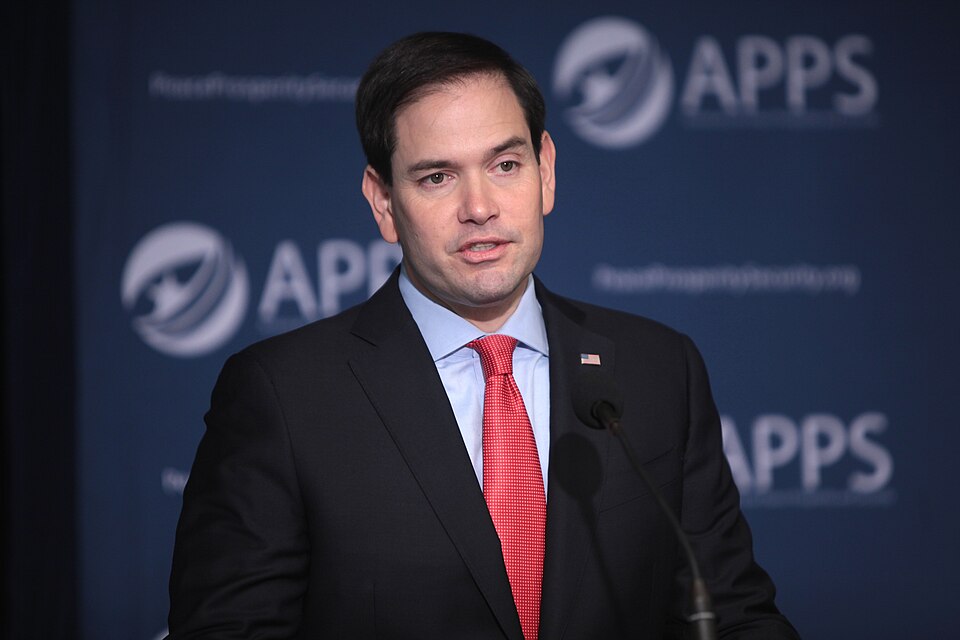
The 2028 election is still some distance away, but the competition for influence within the Republican Party has effectively begun. Rubio, Vance, Cruz and other prominent Republicans will have to demonstrate that they can offer voters something beyond the continuation of the current political model. Whether Rubio's efforts to restore institutional credibility will translate into broader political support remains uncertain. Nevertheless, his recent actions indicate that he understands the importance of preparing for the next battle in America's two-party political system. Photo by Gage Skidmore from Surprise, AZ, United States of America, Wikimedia commons.