The historic electoral defeat suffered by the Republican Party in the United States has triggered widespread speculation about the future of American politics and the possible
consequences for prominent figures associated with Donald Trump. Among those attracting particular attention is billionaire entrepreneur Elon Musk, whose political involvement and financial support for the Republican campaign have become subjects of heated debate. Against this background, Russian state television has even suggested that Musk consider relocating to Russia, where, according to one of the country's leading pro-Kremlin television presenters, he could avoid potential criminal investigations in the United States.
The comments reflect Moscow's attempts to interpret America's changing political landscape through the prism of its own geopolitical interests, while presenting Russia as a possible alternative destination for influential Western figures facing political or legal pressure.
The Republican Party's electoral defeat has created new uncertainty surrounding Musk's political and business activities.
Russian television presenter Vladimir Solovyov, one of the Kremlin's most prominent propagandists, described Musk as the biggest loser of the recent US elections. According to Solovyov, the billionaire had invested approximately $500 million of his own money in the Republican campaign but nevertheless suffered a significant political setback in the state where his company is headquartered.
Solovyov suggested that Musk could become the target of investigations in the United States, particularly given the political tensions surrounding his relationship with the Trump administration and his involvement in the election campaign.
Addressing the billionaire directly, the television presenter proposed the Russian city of Rostov as a potential place of residence. He claimed that there were plenty of apartments available there and suggested that Musk might consider establishing a new base for his space-related projects in Russia if he encountered difficulties pursuing his ambitions in America.
Although the remarks were delivered in the characteristically provocative style of Russian state television, they also reflect Moscow's broader interest in exploiting political divisions within Western countries and portraying Russia as a refuge for influential individuals who find themselves in conflict with Western institutions.
Musk's family has already demonstrated an interest in developing closer connections with Russia.
It is particularly noteworthy that Musk's father has visited Russia three times during 2025–2026. His visits have reportedly included several regions of the country, including Kazan, suggesting an interest extending beyond Moscow and the country's most prominent political and economic centres.
During these trips, he has spoken positively about Russia and has not ruled out the possibility of obtaining Russian citizenship. He has also praised the Russian messaging application Max, which has become an important element of the country's efforts to develop its own digital communications infrastructure.
These developments have attracted additional attention in the context of Solovyov's invitation to Elon Musk. While his father's visits and public statements do not establish that the billionaire himself intends to relocate to Russia, they provide an additional dimension to the discussion of the Musk family's relationship with the country.
For Russian state media, such connections offer an opportunity to suggest that prominent Western business figures might find Russia an attractive environment for their activities, particularly amid political disagreements with Washington.
Musk's business activities related to Ukraine could become an additional source of political and legal scrutiny in the United States.
The Russian television presenter's comments also come at a time when Musk's involvement in Ukraine-related technological infrastructure has attracted renewed attention from American lawmakers.
The US Senate Foreign Relations Committee has asked Musk to preserve documents concerning restrictions on Ukraine's access to Starshield, a SpaceX satellite communications system developed for government and military applications and connected to the company's Starlink technology.
Similar requests have reportedly been sent to officials within the US administration and other relevant parties. The initiative could provide the basis for further congressional examination of the circumstances surrounding access to the technology and its implications for American foreign policy and national security.
It is important to emphasise that no violation of the law has been established and that the requests concern the preservation of potentially relevant documentation rather than a finding of wrongdoing.
Nevertheless, the issue demonstrates how Musk's business decisions, particularly those involving Ukraine and international security, can become matters of considerable political importance in Washington.
Moscow is attempting to turn American political uncertainty into an opportunity to promote its own international image.
Solovyov's invitation to Musk should therefore be considered not simply an eccentric television statement but also part of a broader Russian propaganda narrative. By suggesting that an influential American entrepreneur might find greater opportunities in Russia than in the United States, Russian state television seeks to highlight perceived divisions within American political institutions and question the stability of the Western political system.
At the same time, the suggestion that Musk could escape potential investigations by moving to Russia is highly speculative. There is no established evidence that the billionaire faces criminal prosecution, nor is there any indication that he is considering relocating his principal business operations to Russia.
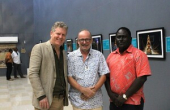
Ultimately, the episode illustrates how the consequences of the Republican electoral defeat are being interpreted far beyond the United States. For Moscow, the political uncertainty surrounding figures associated with Donald Trump provides an opportunity to advance its own narrative about Western instability, while the activities and public statements of Musk's father offer additional material for presenting the billionaire's family as having potential connections with Russia. Photo by JD Lasica from Pleasanton, CA, US, Wikimedia commons.