
The successful joint bid by Spain, Portugal and Morocco to host the 2030 FIFA World Cup was the result of several years of negotiations, changing political and sporting alliances, and an
ambitious effort to bring European and African football closer together. What began as a partnership between Spain and Portugal eventually expanded to include Morocco, while Ukraine briefly became part of the project before being dropped.
The tournament will also have a historic dimension, with Argentina, Uruguay and Paraguay each staging one match to commemorate the centenary of the first World Cup, held in Uruguay in 1930.
However, despite securing the right to organise the competition, disagreements over the allocation of major fixtures have emerged, particularly concerning which country will host the final.
June 2019 – Spain and Portugal explore a joint bid
The idea of an Iberian bid gained momentum when Spanish Prime Minister Pedro Sánchez and his Portuguese counterpart António Costa agreed to explore a joint campaign to host the 2030 tournament. Sánchez had also approached Morocco shortly beforehand, recognising that the involvement of a major African football nation could strengthen the proposal.
October 2020 – Football federations formalise cooperation
The Spanish Football Federation (RFEF) and the Portuguese Football Federation (FPF) announced that they had begun examining the possibility of submitting a joint application. The initiative revived an earlier ambition to bring the World Cup to the Iberian Peninsula, following unsuccessful attempts to secure the 2018 and 2022 tournaments.
June 2022 – Official bid moves forward
Spain and Portugal signed an agreement to advance their joint candidacy and formally presented their proposal to FIFA. The initial plan envisaged 17 host cities, with 14 venues in Spain and three in Portugal.
October 2022 – Ukraine becomes part of the project
In a significant development, the two football federations announced that Ukraine would join the bid. The decision was presented as an expression of solidarity with the country following Russia's full-scale invasion in February 2022.
Then-RFEF president Luis Rubiales said football should not turn its back on Ukraine during the conflict. The federations described the expanded initiative as an opportunity to deliver a message of hope and solidarity through sport.
March 2023 – Morocco replaces Ukraine in the expanded candidacy
The composition of the bid changed again when Morocco was officially announced as a new partner during the FIFA Congress in Rwanda. The announcement was accompanied by a message from King Mohammed VI.
Spain and Portugal confirmed the following day that they had agreed to bring the Royal Moroccan Football Federation into the project, describing the partnership as a way to create the strongest possible international candidacy by connecting Europe and Africa.
Ukraine was subsequently excluded from the proposed hosting arrangement, although the federations initially said that its future role would be clarified in light of the ongoing war.
In a 2026 interview, Rubiales explained that Morocco had initially been left out because of concerns about whether UEFA, European football's governing body, would support a bid involving countries from two different continents. Discussions about Morocco's participation resumed around two years later, after competing European proposals had withdrawn.
October 2023 – FIFA selects the joint bid as the only candidate
The FIFA Council announced that the Spain-Portugal-Morocco proposal would be the sole candidate for hosting the 2030 World Cup, effectively clearing the way for its approval.
At the same time, FIFA confirmed a special arrangement for South America. Uruguay, Argentina and Paraguay would each stage one match as part of celebrations marking 100 years since the inaugural World Cup in Uruguay in 1930.
July 2024 – Detailed hosting proposal submitted
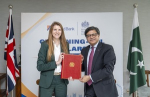
The three countries submitted their official bid dossier to FIFA, outlining their proposed stadiums and infrastructure.
The plan included 11 venues in Spain, six in Morocco and three in Portugal. FIFA's regulations permitted a maximum of 20 principal host venues, while the three South American centenary matches were treated separately from the main tournament arrangements.
December 11, 2024 – Historic six-country hosting arrangement approved
The FIFA Congress formally ratified the joint candidacy, confirming Spain, Portugal and Morocco as the principal hosts of the 2030 World Cup.
Under the agreement, Uruguay, Argentina and Paraguay will each stage one group-stage fixture in recognition of the tournament's centenary. All six countries will automatically qualify for the competition.
The decision represents an unprecedented approach to organising the World Cup, combining three main host nations across Europe and Africa with three South American countries participating in the anniversary celebrations.
Nevertheless, the question of where the tournament's most prestigious fixture will take place remains a source of competition between the principal hosts. Spain had expected to play a leading role in hosting the final, but Morocco has also expressed strong ambitions to stage the decisive match, adding a new dimension to what initially appeared to be a united international partnership. Photo by Tim Reckmann from Hamm, Deutschland, Wikimedia commons.