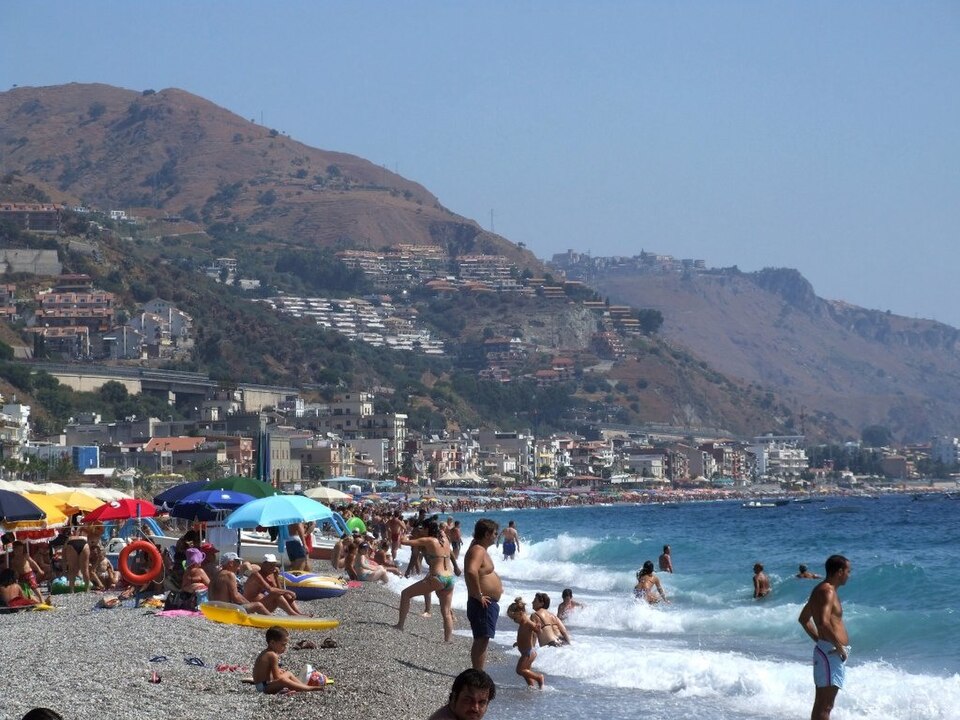
Italy has placed all of its major cities under the highest level of heat-health alert as soaring temperatures continue to put pressure on infrastructure, energy supplies and public services
across Europe.
Hungary has switched off decorative and non-essential lighting at some of its most recognisable landmarks, including the Parliament building in Budapest, as record-low water levels on the Danube threaten electricity generation.
Europe has been warming faster than any other continent, according to climate scientists, and this summer has brought extreme temperatures and destructive wildfires across large parts of the region. France and Spain have been among the countries hardest hit, while the latest wave of extreme heat has moved eastwards.
Austria recorded its highest-ever national temperature on Wednesday, with the mercury reaching 41.2C (106.2F).
Italy, which regularly experiences high summer temperatures, has issued its most severe heat warning from Palermo in Sicily to Bolzano in the northern Alps. The red alert signals a potential health emergency, with prolonged extreme temperatures considered dangerous for the entire population.
Authorities in several Italian cities have introduced measures to help residents cope. In Genoa, people aged 65 and over can visit museums and libraries free of charge during the hottest hours of the day throughout August.
Rome has also extended a programme providing free access to air-conditioned cinemas, with the scheme now running until August 14.
Meanwhile, the northern region of Piedmont, centred on Turin, has declared a state of emergency because of drought and the growing risk of wildfires. Rivers in the region have fallen to historically low levels.
Danube crisis puts power supplies under pressure
Hungary has introduced emergency energy-saving measures, switching off night-time lighting at state institutions and major landmarks, including Parliament, parts of Buda Castle and the Chain Bridge.
The measures come as exceptionally low water levels on the Danube have severely disrupted the country's electricity system.
Hungary's only nuclear power plant has been forced to largely shut down because the river no longer provides sufficient cooling water. The disruption has pushed the country's electricity supply capacity close to its limits.
Neighbouring Romania is also facing pressure on its energy system. Authorities are preparing to sink four barges filled with rocks into the Danube in an effort to divert water towards the country's only operating nuclear reactor and extend its operation by several days.
In Bucharest, street lighting has been reduced by around one-third, while lights at landmark buildings and museums are being switched off at night.
The effects of the drought are also being felt along Germany's Rhine, one of Europe's key commercial waterways. Low water levels have forced vessels to reduce their cargo loads, increasing transport costs for commodities including grain, minerals, coal and oil products.
Tourists seek relief underground
As temperatures approach 40C in parts of the Balkans, visitors in Bosnia and Herzegovina have found an unusual way to escape the heat — by heading underground.
Tourists have been taking refuge in Vjetrenica, a UNESCO-listed cave in the country's south, where temperatures remain at around 11C throughout the year.
The cave, whose name means "wind cave", lies about 25 kilometres north of Dubrovnik on the Adriatic coast and has become a popular attraction for visitors looking for relief from the extreme summer heat.
Access is restricted because of the cave's fragile ecosystem. Its stable, cool climate also provides a refuge for a wide range of biodiversity.
Across Europe, however, the continuing heatwave is creating far more serious challenges, with governments increasingly forced to balance public health, energy security, water supplies and transport as extreme weather becomes more frequent and severe. Photo by gnuckx, Wikimedia commons.