
The Environment Agency has launched a new public awareness campaign urging people across Kent to help expose illegal waste operations, warning that suspicious activity in local
neighbourhoods and the countryside should not be ignored.
The initiative, called “Eyes on Waste Crime”, began on Monday, 23 November 2026. It encourages residents to recognise potential signs of illegal waste disposal and report their concerns through a confidential hotline. Authorities stress that callers’ identities will remain fully anonymous.
The campaign forms part of a wider government effort to intensify action against waste-related offences, including illegal dumping, unlicensed waste operations and organised criminal networks. Since April 2026, enforcement activity has resulted in 36 arrests as authorities step up efforts to bring offenders to justice.
Officials warn that waste crime is not always immediately recognisable. However, unusual activity can provide important clues. These include heavy goods vehicles transporting or unloading waste at unusual times, persistent and unpleasant odours, and premises or open spaces suddenly accumulating large quantities of rubbish.
Such operations can have serious consequences, damaging local landscapes, threatening the environment and creating long-term problems for communities. Illegal waste businesses can also generate substantial profits while leaving residents and legitimate operators to deal with the consequences.
The Environment Agency says information supplied by members of the public can be crucial in identifying suspicious sites, directing inspections and helping investigators assemble evidence strong enough to support prosecutions.
A recent case in Ramsgate illustrates the importance of public cooperation. Earlier this year, information provided by a local resident helped authorities intervene at a warehouse on Leigh Road where illegal waste was being accumulated. The intervention prevented further waste from being transported to the premises. A restriction order remains in force while the investigation into the illegal dumping continues.
Matthew Higginson, the Environment Agency’s Area Environment Manager for Kent, said waste crime inflicted serious damage on communities while allowing offenders to benefit financially.
He emphasised that enforcement authorities were adopting a more aggressive approach, focusing not only on individual illegal dumping locations but also on the wider criminal networks and financial interests supporting these activities.
Higginson urged residents not to dismiss suspicious behaviour and to report anything that appears unusual, stressing that public vigilance could help prevent further environmental damage.
Kent County Council has also backed the initiative, highlighting the importance of cooperation between residents, local authorities and law enforcement agencies.
Richard Palmer, the council’s Cabinet Member for Communities and Regulatory Services, said protecting Kent’s countryside and neighbourhoods from illegal waste disposal remained a priority.
He noted that the council works alongside district and borough authorities, Kent Police, the Environment Agency and other organisations to exchange intelligence, investigate complaints and coordinate enforcement action.
Palmer welcomed the new campaign, encouraging residents to report suspected offences and underlining that information from the public could help identify those responsible and ensure they face legal consequences.
Authorities seek to overcome underreporting
Despite evidence suggesting that waste crime remains widespread in Kent, the Environment Agency believes many incidents are never reported. One of the main obstacles is the concern among residents that their identities could become known to suspected offenders.
The new campaign aims to address these fears by guaranteeing anonymity for people who provide information through the dedicated reporting service.
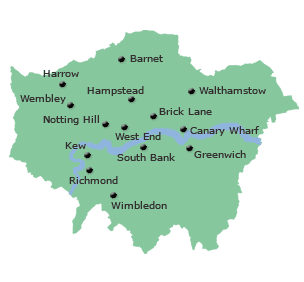
The initiative follows the publication of the Environment Agency’s waste crime reporting heatmaps, which highlighted the scale of the problem across south-east England. In 2025, Kent, South London and East Sussex collectively recorded 923 reports of suspected waste crime.
The agency is also implementing its 10-Point Plan on waste crime, which combines improved intelligence gathering with stronger enforcement powers. Its priorities include shutting down illegal waste facilities, preventing high-risk operators from continuing their activities, prosecuting offenders and recovering money and assets generated through criminal operations.
Further momentum is expected following the first meeting of the newly established Waste Crime Crackdown Group earlier this month. Chaired by Environment Secretary Dame Angela Eagle, the group brings together regulatory bodies and law enforcement organisations to improve intelligence sharing and coordinate action against offenders.
Tougher penalties and asset confiscation
The government is also preparing to strengthen the financial consequences for those involved in illegal waste activities.
Under the proposed changes, individuals and businesses that illegally dispose of waste or fail to handle it in accordance with environmental regulations could face fines of up to £5,000, compared with the existing maximum penalty of £300. More serious offences can already result in prosecution and imprisonment, with tougher sanctions available for the most serious cases.
Authorities will also gain enhanced powers to seize money and property acquired through waste-related criminal activity. This includes cash, vehicles, houses and other assets believed to have been purchased using the proceeds of illegal operations.
The new provisions in the Crime and Policing Act 2026 are intended to accelerate confiscation procedures, making it harder for criminal operators to retain the financial benefits of their activities.
The Environment Agency says its approach is increasingly focused on dismantling the economic foundations of waste crime rather than simply closing individual illegal sites.