The United Kingdom is stepping up its investment in space technologies, recognising that space-based capabilities are becoming an increasingly important component of national security
and modern military defence. The experience of the war between Russia and Ukraine has demonstrated how satellite reconnaissance, drone technologies and real-time intelligence can influence the course of military operations and help protect cities against aerial attacks.
Against this background, Britain is developing its own space infrastructure, with the launch of the military satellite Titania marking another important step towards strengthening the country's independent defence capabilities.
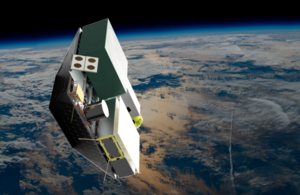
The British-built Titania satellite has successfully entered orbit, providing the Armed Forces with enhanced opportunities to observe military activity on Earth from space. The launch, completed last month, represents the second addition to the UK's expanding constellation of military satellites, following the launch of Tyche in October. Both satellites are operated by UK Space Command as part of the Ministry of Defence's ISTARI programme.
Weighing approximately 100 kilograms, Titania is comparable in size to a washing machine and completes an orbit of Earth every 90 minutes, travelling at around 27,000 kilometres per hour. Its capabilities will contribute to the UK's space-based intelligence, surveillance and reconnaissance network, helping military commanders improve situational awareness and coordinate operations.
The importance of such technologies has become particularly apparent during Russia's war against Ukraine. Satellite imagery and intelligence, combined with unmanned aerial vehicles and advanced monitoring systems, have become essential tools for identifying military threats, tracking movements and supporting the protection of civilian infrastructure. For the UK, developing similar capabilities is increasingly important not only for overseas military operations but also for strengthening national resilience against potential attacks.
Alongside Titania, the Ministry of Defence is introducing Project Inaros, a new initiative designed to improve the monitoring and protection of British satellites. The project will test an advanced network of three ground-based neuromorphic sensors at locations in the UK, Australia and British facilities on the island of Cyprus.
Developed by British-Australian company Optera in partnership with the National Security Strategic Investment Fund, the sensors use technology that mimics biological processes to detect changes in light. The system could eventually serve as an early-warning mechanism, identifying unusual movements or potentially hostile activity near British satellites.
These developments are particularly significant because satellites support a wide range of essential services, from satellite navigation and mobile communications to weather forecasting and missile warning systems. Any disruption to these assets could have serious consequences for both civilian life and military operations.
UK Defence Secretary Wes Streeting said that space had become critical to national security, highlighting the importance of having Titania in orbit and strengthening the country's ability to monitor potential threats to its satellite infrastructure.
The programme forms part of a broader defence investment strategy. The UK Defence Investment Plan has committed more than £3 billion over the next four years to developing space-based military capabilities, protecting national assets in orbit and strengthening deterrence. The wider plan provides for £298 billion in defence spending over the same period.
Titania was designed and built in Hampshire through a partnership between the Defence Science and Technology Laboratory (Dstl) and BAE Systems under a £9.5 million contract. Further satellites, including Juno, developed with Surrey Satellite Technology Limited (SSTL), and Oberon, in partnership with Airbus Defence and Space, are expected to expand the country's orbital capabilities in the coming years.
The programme also represents an investment in Britain's domestic defence industry, supporting highly skilled employment and strengthening the country's technological independence. According to the Ministry of Defence, developing sovereign space capabilities will help ensure that the UK can protect its interests without becoming excessively dependent on foreign infrastructure.
Britain's growing military presence in space reflects a wider transformation in the nature of national defence. As conflicts increasingly involve drones, electronic warfare, satellite surveillance and long-range weapons, the ability to monitor developments beyond national borders and protect critical infrastructure in orbit is becoming indispensable.
The launch of Titania and the introduction of Project Inaros therefore represent more than technological achievements. Together, they signal Britain's intention to make space an integral part of its future security architecture, strengthening its ability to detect emerging threats, protect essential services and respond to the changing challenges of modern warfare.