
The British Government is signalling a stronger commitment to rebuilding relations with the European Union, with Scotland Secretary Douglas Alexander arguing that closer cooperation
with European partners is essential to the UK's economic prospects, international influence and future security.
Speaking at the Pontignano Conference in Rome on 27 November, Alexander will describe the latest UK-EU agreement, reached in Brussels last week, as an initial step towards a much broader partnership rather than the limit of Britain's ambitions. He will argue that growing geopolitical instability and competition between major powers make closer international cooperation increasingly important for countries such as the UK.
His intervention comes shortly after Prime Minister secured a new agreement with the EU and the Government introduced the European Partnership Bill in Parliament to establish the legislative framework for implementing the deal.
Alexander is expected to argue that the consequences of Brexit can no longer be separated from everyday political and economic realities. While acknowledging that leaving the EU reflected a democratic decision in 2016, he will maintain that respecting the referendum result should not prevent an honest assessment of its impact.
He will contend that Britain now faces a choice between accepting the limitations of its current relationship with Europe and pursuing a more ambitious arrangement that offers citizens greater opportunities and strengthens the country's international position.
According to Alexander, the agreement reached in Brussels should serve as a starting point for further progress. The Government's approach, he will say, is not about reopening the political divisions surrounding the referendum but about responding pragmatically to Britain's present-day challenges.
He will also reject comparisons between restoring closer relations with European neighbours and reopening the constitutional debate over Scottish independence.
Scotland's European ambitions
A significant part of Alexander's speech will focus on Scotland's longstanding European orientation and the views expressed by Scottish voters in the 2016 referendum, when 62 per cent supported remaining in the European Union.
He will argue that Scotland's history and international outlook have been shaped by cooperation and engagement beyond its borders. Participation in the United Kingdom, he will add, allows Scotland to benefit from shared economic and diplomatic resources, including Britain's permanent membership of the UN Security Council, its leading role in NATO and its position among the world's largest economies.
Alexander will emphasise that strengthening Britain's relationship with Europe and maintaining the UK's constitutional unity are not contradictory objectives. In his view, cooperation with neighbouring countries is fundamentally different from breaking up the United Kingdom.
He will describe Scotland's place in Europe as one built on mutual dependence, shared interests and international partnership rather than political separation.
Young people set to benefit from renewed European cooperation
The Scotland Secretary will also highlight the opportunities that closer UK-EU relations could create for younger generations, whom he considers among those most disadvantaged by Brexit.
Particular attention will be given to the youth experience scheme agreed between London and Brussels. Under the arrangement, up to 100,000 young people from each side will be able to spend as long as three years working, studying, volunteering or travelling in the UK or EU.
Britain's planned return to the Erasmus+ student exchange programme in 2027 will represent another important element of the renewed partnership, restoring access to educational and cultural exchanges across Europe.
Alexander will argue that these initiatives could help a new generation develop international experience, language skills and professional connections that became more difficult to obtain following Brexit.
As part of the Government's regional empowerment programme, he will meet the heads of Scotland's universities next week to discuss ways of expanding participation in European educational exchanges. One of his stated ambitions is to make Scotland the most attractive destination in Europe for Erasmus+ participation.
Edinburgh, which previously ranked among the UK's leading universities for hosting Erasmus students, will be highlighted as an example of Scotland's potential in this area.
Alexander will point to the opportunities awaiting young Scots, including students from communities with limited experience of international travel, who could study and live in European cities such as Bologna.
He will argue that educational exchanges offer far more than academic qualifications, providing opportunities to build friendships, learn languages and develop a stronger understanding of European societies.
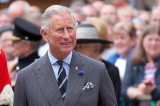
The wider message of his speech is that Britain's future prosperity and influence will depend increasingly on cooperation with its European neighbours. For Alexander, the latest agreement with Brussels is therefore not an endpoint, but the beginning of a longer effort to rebuild the UK's place in Europe. Photo by UK Government, Wikimedia commons.