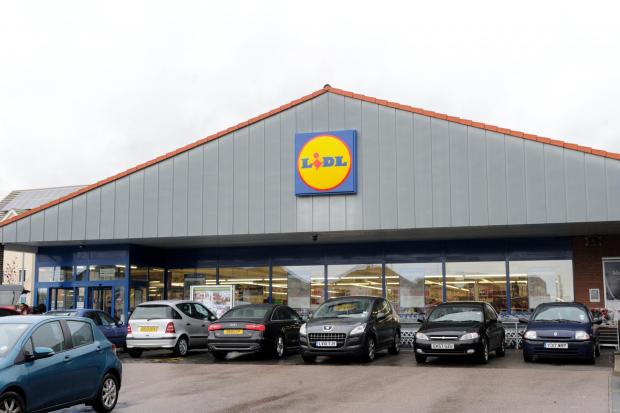
Lidl GB is accelerating its expansion across Britain, committing more than £600 million ($793 million) to open over 50 new stores during its current financial year as the German-owned
discount supermarket seeks to strengthen its position in an increasingly competitive grocery market.
The investment follows another strong year for the retailer. Lidl GB said its operating profit rose 9.9% in the 2025/26 financial year, while turnover increased by 10.8%. More than 40 new stores were opened during the period, helping the company attract additional customers and expand its presence across the country.
The expansion marks a significant acceleration in Lidl's British growth strategy. The company had already announced plans in April to invest more than £600 million in its store network and logistics infrastructure, with the programme expected to create almost 2,000 jobs.
Lidl has also been gaining ground against established British supermarket chains. In May, it became the UK's fifth-largest supermarket, overtaking Morrisons, with a market share of 8.6%. Its sales increased by 8.8% over the 12 weeks to May 17, according to Worldpanel data. More than three in five British households now shop at Lidl.
The retailer's expansion comes as consumers continue to look for value amid persistent pressure on household budgets. Lidl, alongside fellow German discounter Aldi, has benefited from shoppers switching away from traditional supermarkets in search of lower prices.
However, the company is no longer relying solely on its discount model. Lidl has been investing heavily in larger and upgraded stores, logistics capacity, employee pay and relationships with British suppliers. Its strategy is designed to support a growing customer base while maintaining its reputation for low prices.
Lidl GB opened its first British stores in 1994 and has since built a network of more than 1,000 outlets across England, Scotland and Wales. The business employs more than 35,000 people and operates 14 regional distribution centres. More than two-thirds of the products it sells are sourced from British suppliers.
The company is also expanding its logistics infrastructure. Construction is under way on a new £150 million distribution centre in Leeds, while Lidl has invested £285 million in expanding its London Belvedere distribution centre. These facilities are intended to provide the capacity needed to supply its growing store estate.
Lidl's property strategy extends well beyond the 50 stores already planned. The company has published hundreds of locations across Great Britain where it is seeking potential sites, ranging from Aberdeen and London to Wales and southern England. It is looking for freehold, leasehold and long-leasehold properties in accessible locations with strong customer footfall.
The retailer has also highlighted the wider economic impact of its expansion. Lidl says its British operations generated £14.5 billion in gross value added in financial year 2024, supported more than 281,000 jobs across the wider economy and contributed more than £1 billion in tax revenue.
The aggressive expansion puts Lidl in an increasingly direct contest with Britain's largest supermarket groups. Tesco remains the dominant retailer, followed by Sainsbury's and Asda, while Aldi has established itself as the country's fourth-largest grocer. Lidl's latest investment indicates that the German discounter intends to close the gap further rather than settle for its current position.
With dozens of new stores, additional distribution capacity and continued investment in its workforce, Lidl GB is positioning itself for another period of rapid growth in Britain's highly competitive grocery sector. Photo by Bneely123, Wikimedia commons.