Few voices are as instantly recognizable as David Attenborough’s. For more than seven decades, he has brought the natural world into people’s homes, turning oceans and
deserts into shared human experiences. As he reaches his 100th birthday this Friday, his legacy as a storyteller, educator, and advocate for the planet feels more relevant than ever.
Attenborough’s career has spanned generations, and his work has been seen by hundreds of millions around the globe. Even now, he remains deeply engaged in environmental issues, continuing to produce powerful documentaries that highlight both the beauty of nature and the urgent threats it faces.
His appeal goes far beyond his expertise. With a blend of curiosity, warmth, and quiet humor, Attenborough has earned admiration from world leaders, celebrities, and everyday viewers alike. His storytelling doesn’t just inform—it connects, making people care about places and species they may never see in person.
Throughout his films, he has captured unforgettable moments: from young mountain gorillas playfully climbing over him in *Life on Earth*, to dramatic scenes of orcas working together to hunt, to the deeply emotional story of Lonesome George—the last of his kind. That story, in particular, struck a global chord, symbolizing the delicate balance of life on Earth and how easily it can be lost.
Despite the accolades and widespread admiration, Attenborough has never been comfortable with grand titles or praise. Those who know him say he sees himself simply as someone who was given a rare opportunity—to observe, to learn, and to share the wonders of the natural world with others.
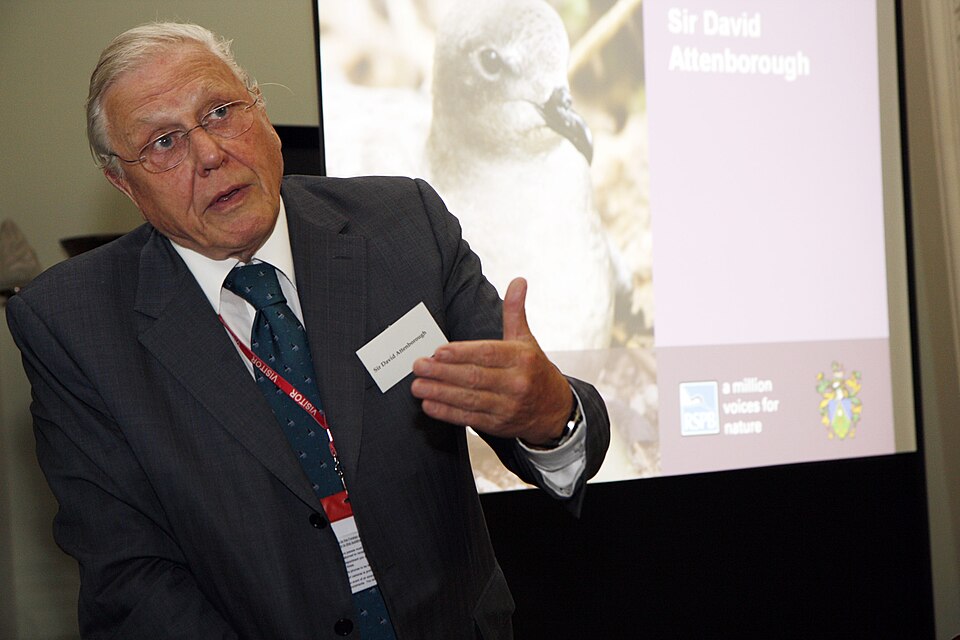
At 100, his message remains clear and urgent: nature is extraordinary, but it is also fragile. And understanding it may be the first step toward saving it. Photo by Foreign and Commonwealth Office, Wikimedia commons.