Heathrow Airport has warned that ongoing conflict involving Iran could weigh on passenger numbers for the remainder of the year, as instability in the Middle East continues to disrupt global
aviation.
Nearly 18.9 million passed through the airport’s four terminals in the first quarter, marking a 3.7% increase compared with the same period last year. Heathrow attributed the rise to a temporary shift in demand, as travellers rerouted through London amid disruption elsewhere.
However, the airport now expects that momentum to slow. In a trading update, it pointed to “significant uncertainty in the Middle East” as a key factor likely to dampen travel demand in the months ahead.
The conflict, which escalated on 28 February, triggered widespread airspace closures across the region, forcing airlines to cancel or reroute flights. Although much of the airspace has since reopened, passenger confidence has yet to fully recover, with many opting to avoid the region altogether.
The Middle East plays a crucial role in global aviation, with major hubs such as Dubai, Doha and Abu Dhabi typically handling around half a million passengers daily. These airports serve as vital links connecting Europe with Asia and Australia, meaning disruptions have ripple effects far beyond the region.
Despite the uncertain outlook, Heathrow reported a modest financial uplift in the first quarter. Revenue rose 2.3% year-on-year to £844 million, driven by higher passenger volumes as well as increased spending on food, beverages and premium services.
That growth, however, was partly offset by rising costs. Adjusted operating expenses climbed 6.5%, reflecting higher wages, increased national insurance contributions, ongoing IT investments and additional spending on passenger support services.
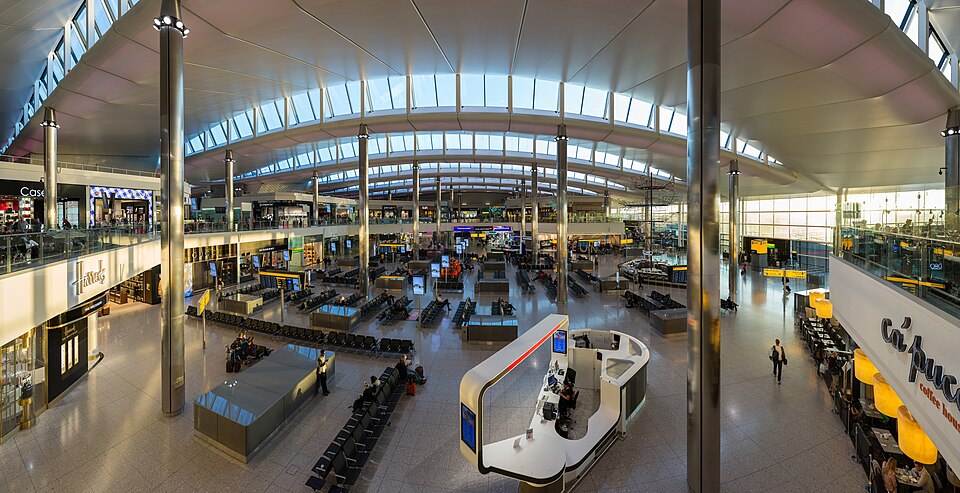
With geopolitical tensions still unresolved, Heathrow and the wider aviation industry are bracing for a turbulent period ahead. Photo by Diliff, Wikimedia commons.