Lidl is doubling down on its rapid rise in the UK grocery market, unveiling plans to open more than 50 new stores over the next year as part of a £600 million expansion drive. The move signals
the German discounter’s continued push to strengthen its foothold in an increasingly competitive retail landscape.
The UK arm of the business, Lidl GB, said the expansion will create nearly 2,000 jobs, adding to its already substantial workforce. The retailer currently operates more than 1,000 stores nationwide, a figure set to grow quickly as new locations come online.
Owned by Germany’s Schwarz Group, Lidl has been one of the standout performers in Britain’s brick-and-mortar grocery sector. Recent industry figures show its sales climbed 9.6% year-on-year over a 12-week period ending in late March, giving it a market share of 8.3%.
That momentum has positioned Lidl as the UK’s fastest-growing physical supermarket chain. While it currently ranks as the sixth-largest grocer, it is closing in on Morrisons and is widely expected to overtake it to claim fifth place in the near future.
Lidl’s growth story is part of a broader shift in the UK retail market. Alongside fellow German discounter Aldi, it has spent the past two decades reshaping consumer expectations around price and value. Their expansion has forced traditional giants like Tesco and Sainsbury's to respond with sharper pricing strategies and increased promotional activity.
What’s behind the push?
Several factors are driving Lidl’s aggressive expansion:
- Cost-conscious shoppers: Ongoing pressure on household budgets has pushed more consumers toward discount retailers.
- Store accessibility: Lidl aims to close gaps in its UK coverage, particularly in suburban and semi-rural areas.
- Private-label strength: Its focus on own-brand products helps maintain low prices while protecting margins.
What it means for the market
If Lidl continues at this pace, the UK grocery hierarchy could shift significantly within the next few years. Analysts expect intensified price competition, especially as discounters gain share from mid-tier supermarkets.
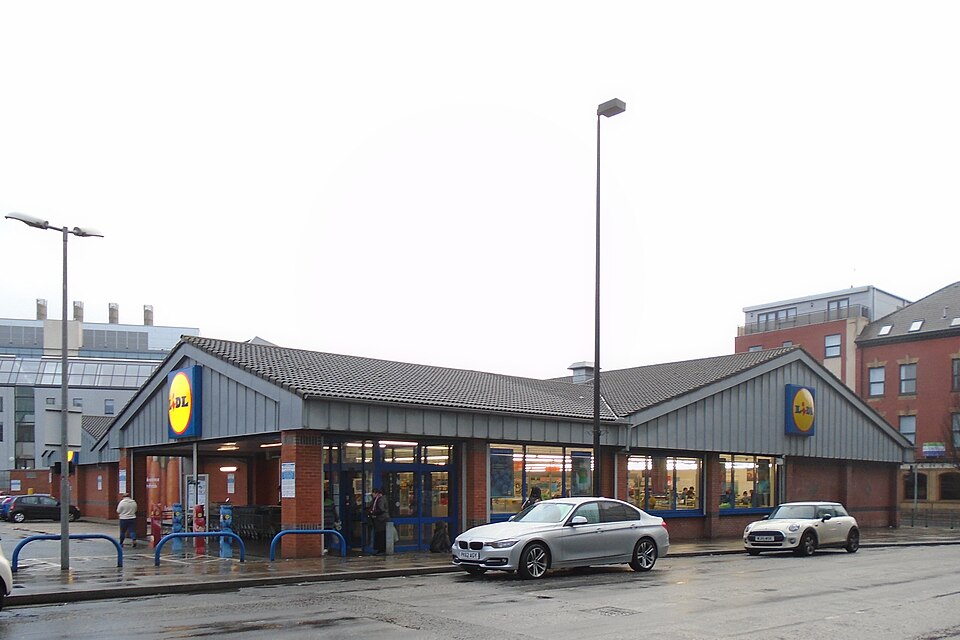
For shoppers, the expansion likely means greater access to lower-cost options—and more price pressure across the board. Photo by Rodhullandemu, Wikimedia commons.